HiBy RS8 II - The mature R2R
What do you think about when you think about R2R DAC? Mellow? Fuzzy? Expensive? Well, with the latest R2R flagship from HiBy, the RS8 II, at least one of those guesses is right. But it’s also full of surprises. Let’s talk about it.
Preambles
- In this review, I use the term “source” to denote a DAC+amp combo for brevity and convenience.
- Sources do not make sounds. Therefore, when I say sources “sound” a certain way, I talk about the change they make to my IEMs and earphones.
- I want my music to be crisp, clear, well-separated and form a 3D soundstage around my head. Sources that intensify those characteristics of my IEMs are considered “better”.
- This review is based on a review sample from HiBy. The unit will be sent back to HiBy after this review. No free DAP or money is being exchanged for this review.
- The unit retails for $3,899.00. Unaffiliated link: https://store.hiby.com/products/hiby-rs8-ii
General Information
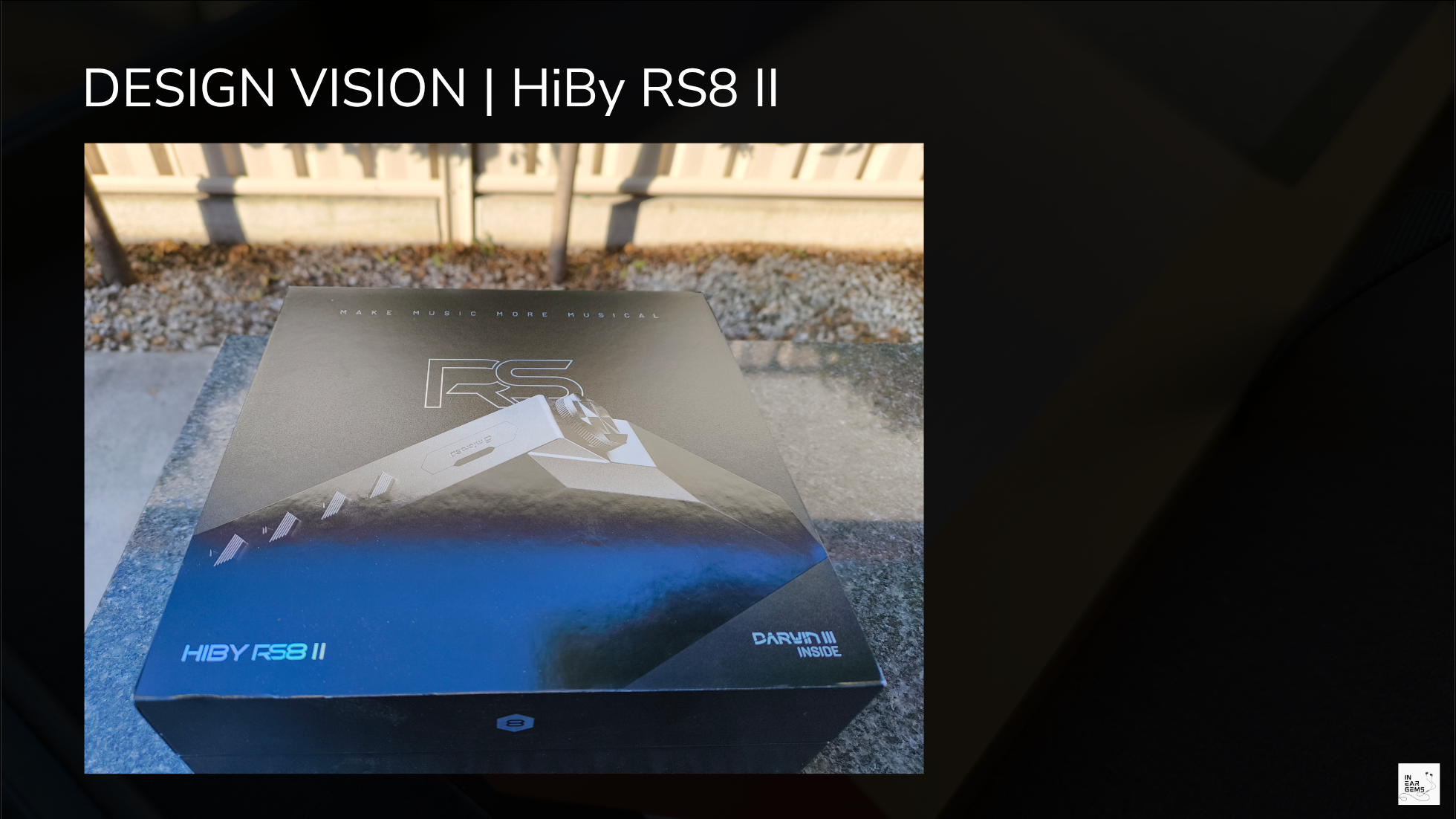
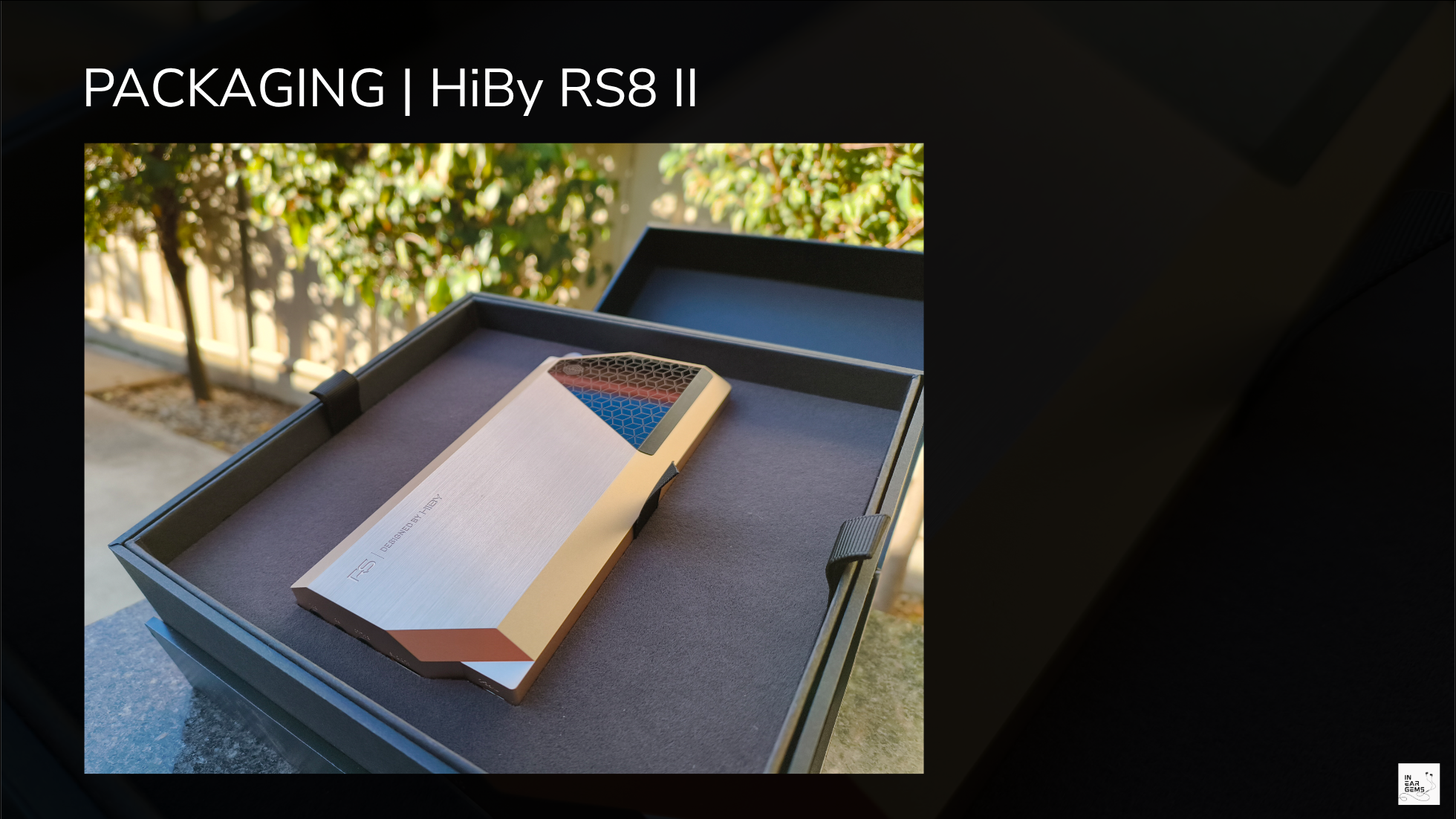
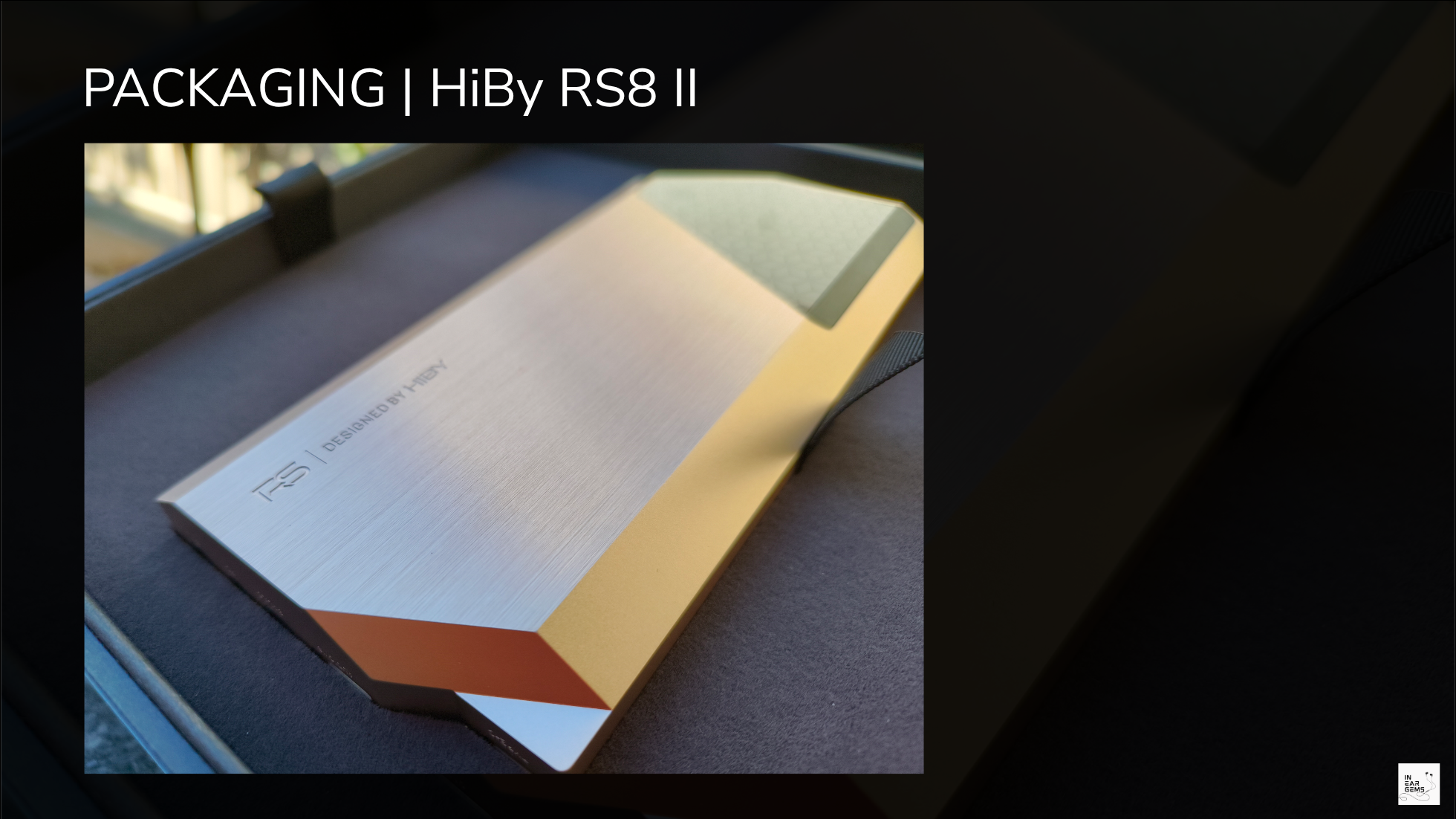
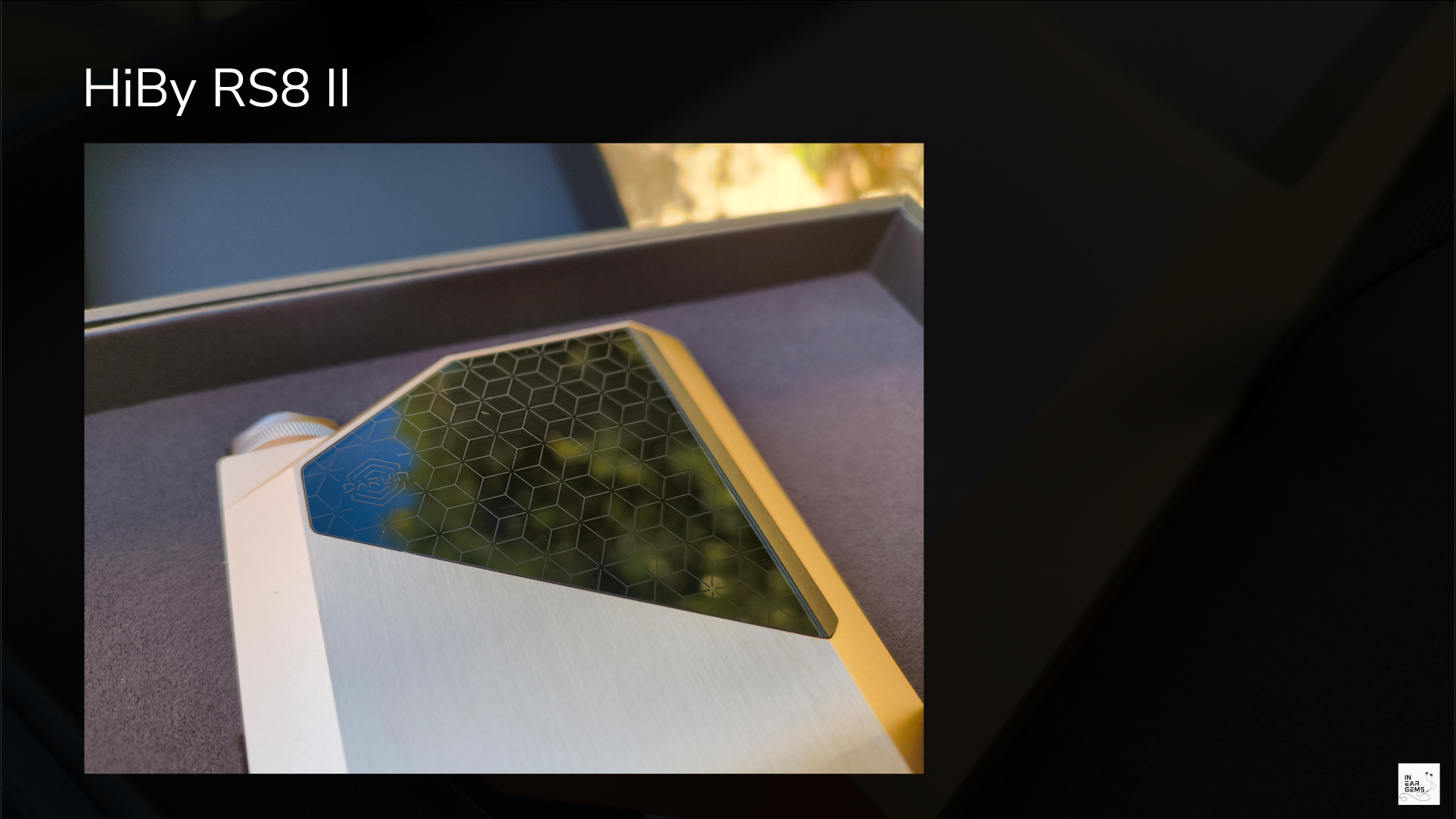
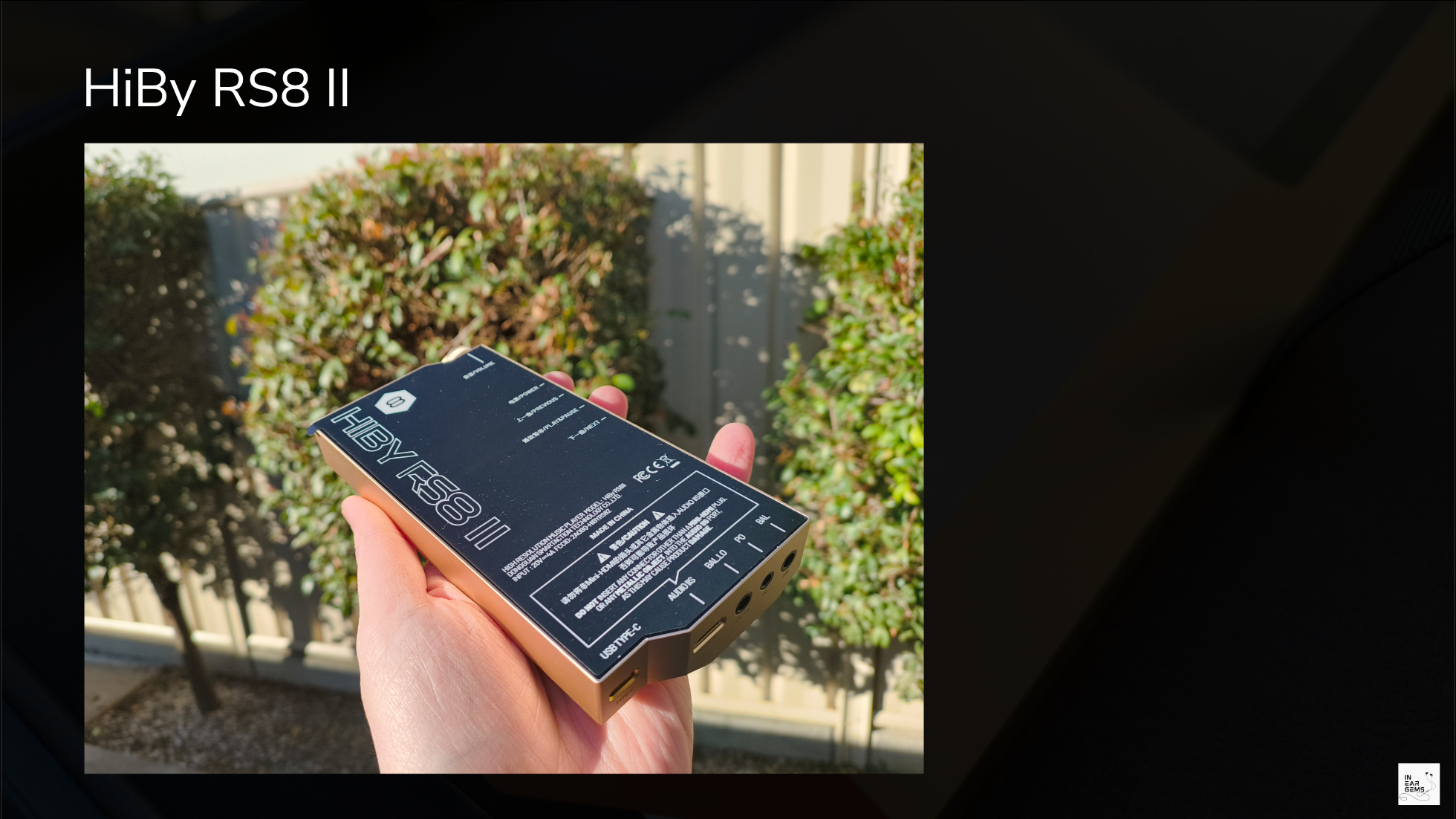
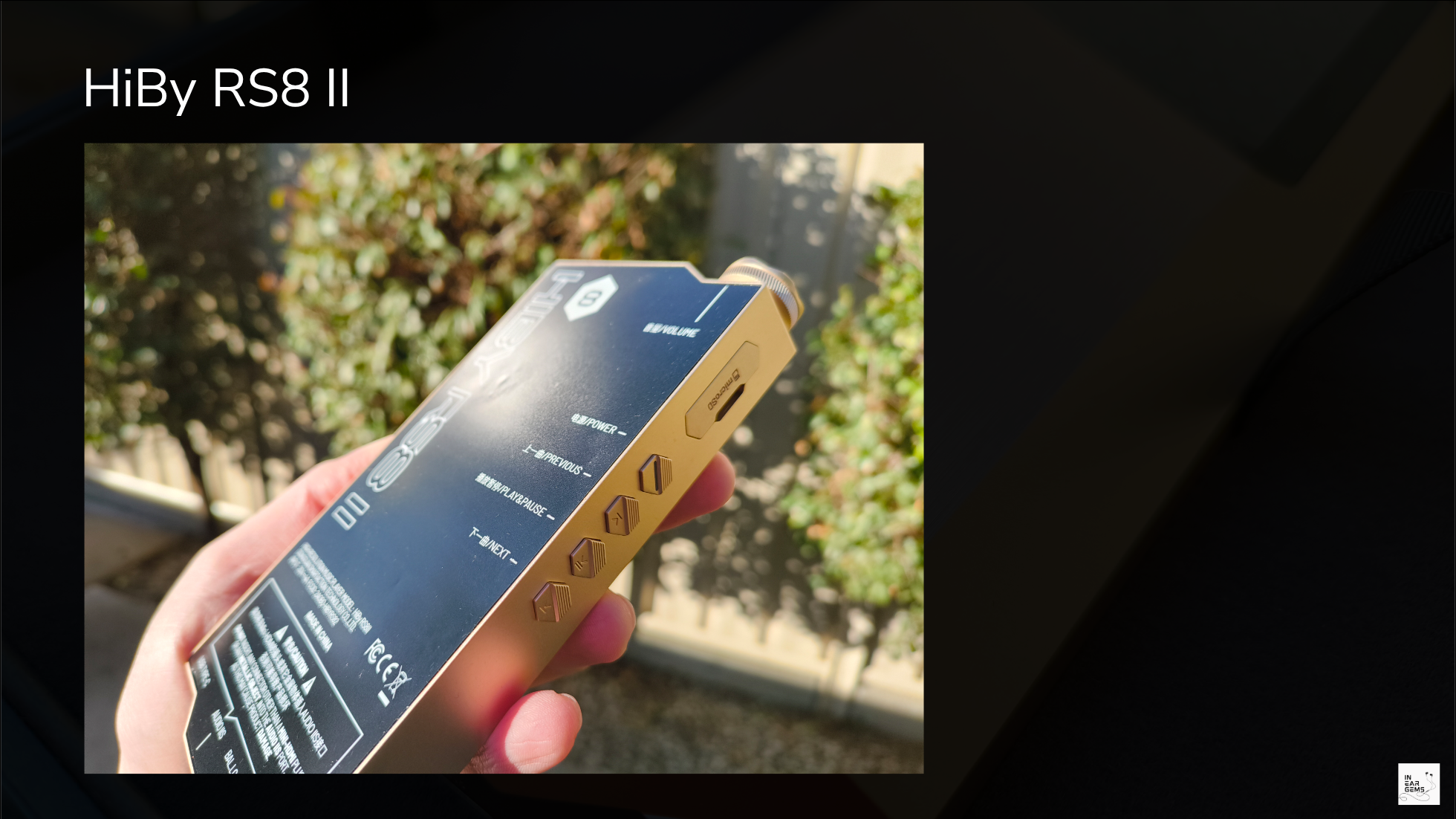
RS8 II (Mark II) is the flagship of the R2R DAP line of HiBy.
HiBy makes two separate DAP product lines. The R series uses delta-sigma DACs; the RS series uses R2R DACs. The number is the tier, and the suffix is the generation. The RS8 II is the second generation of the R2R flagship. Its sibling is the R8 II, which uses delta-sigma architecture, same tier, different character.
The audio side starts with HiBy’s DARWIN III architecture. The R2R network runs through a 1,024-tap FIR filter, with an FPGA handling the low-pass filtering. The amplifier stage switches between class A, class AB, and an adaptive mode that predicts incoming transients 20 milliseconds ahead and swaps to class A for peaks, relaxing back to class AB for sustained output. Sankofa AI, HiBy’s neural network tone emulation, runs on the Snapdragon 882’s onboard neural processing unit. Each audio stage has independent power regulation, and the whole thing runs off a 46.8 Wh high-voltage battery.
The Android side is the Qualcomm Snapdragon 882 platform, essentially a Snapdragon 8 Gen 2 without the cellular radio. With 16 GB of RAM and 512 GB of storage, the RS8 II is one of the beefiest DAPs on paper. Screen is a 5.5-inch 1080p panel, OS is Android 13 with full Google Play access, and there is a microSD slot supporting up to 2 TB. Wireless: Wi-Fi 7 and Bluetooth 5.4 with LDAC, aptX Adaptive, AAC, and SBC on output.
Functionality
The RS8 II runs Android 13 with full Google Play access, so it does everything a phone does, minus the phone. The Snapdragon 882 keeps navigation, streaming, and app-switching silky smooth. I used it to stream Tidal, play local FLAC files, and watch YouTube. No complaints.
Wired output covers 3.5 mm single-ended, 4.4 mm balanced, 4.4 mm balanced line-out, and I2S via a dedicated mini HDMI port for digital audio output. Volume goes plenty loud on low gain with sensitive IEMs like the Campfire Audio Andromeda 2020, and the noise floor stays clean at 20% volume. No hiss on the Andromeda.
Bluetooth output supports LDAC, aptX Adaptive, AAC, and SBC. LDAC is the obvious pick for best quality, but video latency is a problem. Streaming YouTube over LDAC to the HiBy FD5 as a receiver, interview audio desynced from lips immediately. Piano recordings made it worse, and drum covers were completely off. If video is part of your use case, stick to wired.
Software
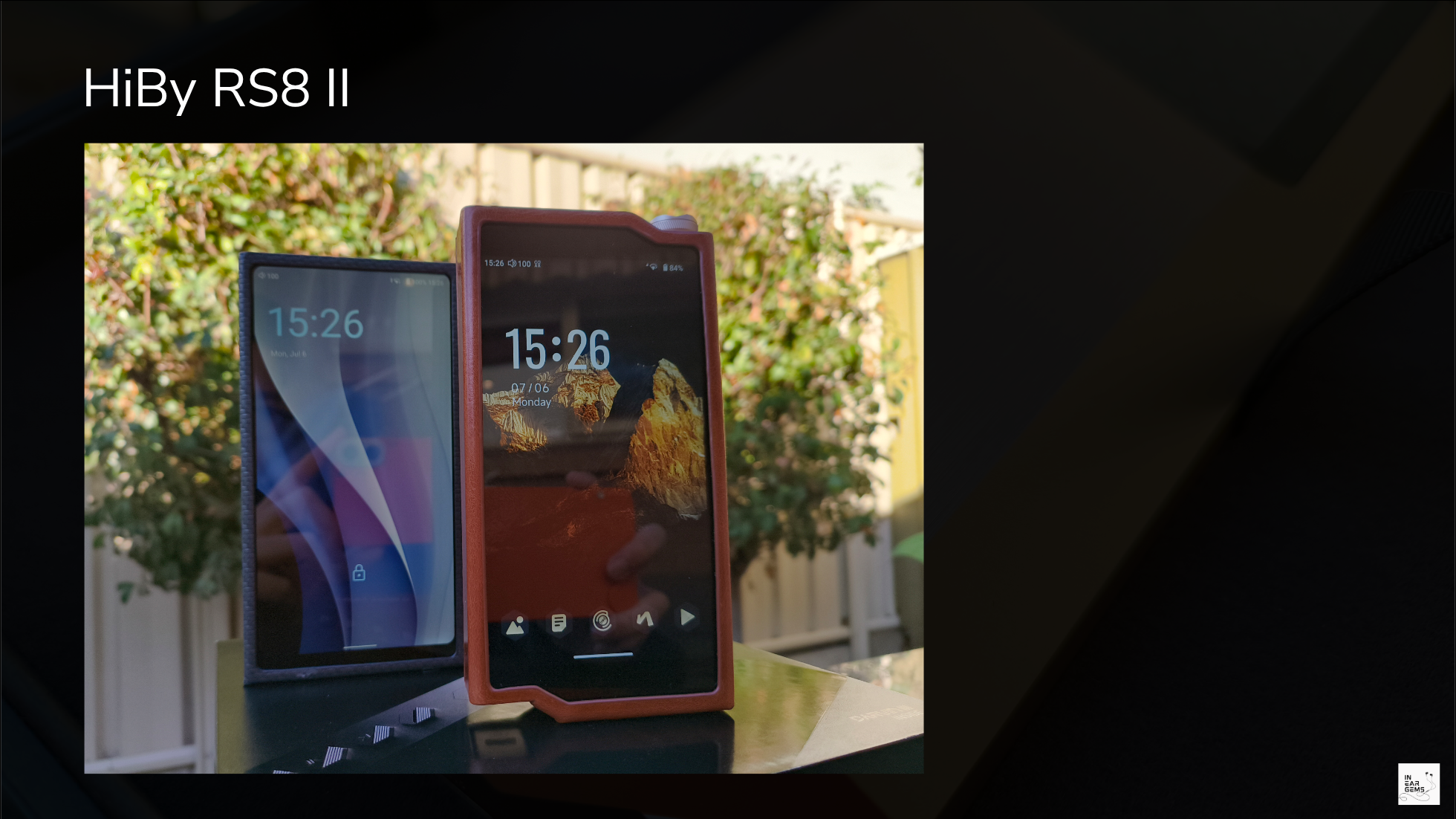
The RS8 II runs a clean build of Android 13. No bloat, no unnecessary customisations at the UI level. HiBy’s main work is buried in the OS layer where it counts. System-wide bit-perfect audio, exclusive audio mode that prevents Android from resampling your music, and a full suite of audio settings underneath.
The audio settings are where HiBy delivers the most. On the hardware side, the RS8 II offers gain (low, medium, high), Turbo Mode, and amplifier mode (class A, class AB, adaptive). I cover the listening impressions of these settings in the Sonic Performance section, but the short version is: low gain, Turbo Mode on, adaptive amp, Darwin default filter, Sankofa AI off. Turbo Mode does not change volume but expands the soundstage outward and adds a touch more sub-bass weight. Class A is preferred over class AB; adaptive is indistinguishable from manual class A. Hiss appears at medium gain and above on sensitive IEMs, so low gain is recommended. The Darwin low-pass filters are present but inaudibly different on test tracks, so the default is fine. The harmonic controller, turned up, adds a fuzzy, comfy quality to upper frequencies. It is a small difference, but noticeable.
On the software side, HiBy’s MSEB is essentially a parametric EQ with pre-defined bands mapped to subjective descriptions: note thickness, sibilance, bass texture. You adjust how you want the sound to feel rather than fiddling with frequency numbers. If MSEB feels too abstract, a full 10-band parametric EQ is available. Both apply system-wide across any app, so your EQ profile follows you whether you are streaming Tidal or playing local FLAC files.
DSP plugins cover crossfeed, soundstage widening, and transient enhancement. These run in software and do not require hardware changes. They are optional layers on top of the raw output, useful for listeners who want to shape the presentation further without touching the underlying source character.
The standout feature is Sankofa AI. It runs a neural network on the Snapdragon 882’s onboard NPU to emulate the tonal character of eight vintage minidisc players. Each profile changes the sound immediately and they are all distinctive. My childhood was more cassette tape and radio on Chinese knock-offs of Sony players than fancy minidisc, so this does not resonate personally. The sound quality takes a hit with the emulation layer on. The old-is-better argument is hard to justify here. A more interesting use of the NPU would be stereo imaging enhancement, but there is a market for this feature even if it is not me.
The RS8 II is also a gaming device. The Snapdragon 882, 16 GB of RAM, and 512 GB of storage are the same specs powering some of the latest Android retro handheld emulators like the Retroid Pocket Nova. You can easily play most of the Switch library and older PC titles from the 2010s at respectable frame rates. Yes, Android devices can run real PC games natively now, in 2026. You can attach a telescopic controller to the device, but the best way is to video-out to a screen and use a Bluetooth gamepad. It is a perfectly good way to get more use out of your expensive DAP.
Battery Life
I did not run formal battery benchmarks on this unit. Subjectively, battery life is long. In testing, I rarely needed to charge the RS8 II, and I made a habit of turning it off when not in use, which kept drain minimal. The device also includes an optional charge limit setting in the battery menu, useful for protecting long-term battery health if you plan to keep it as a long-term fixture in your setup.
Sonic Performance
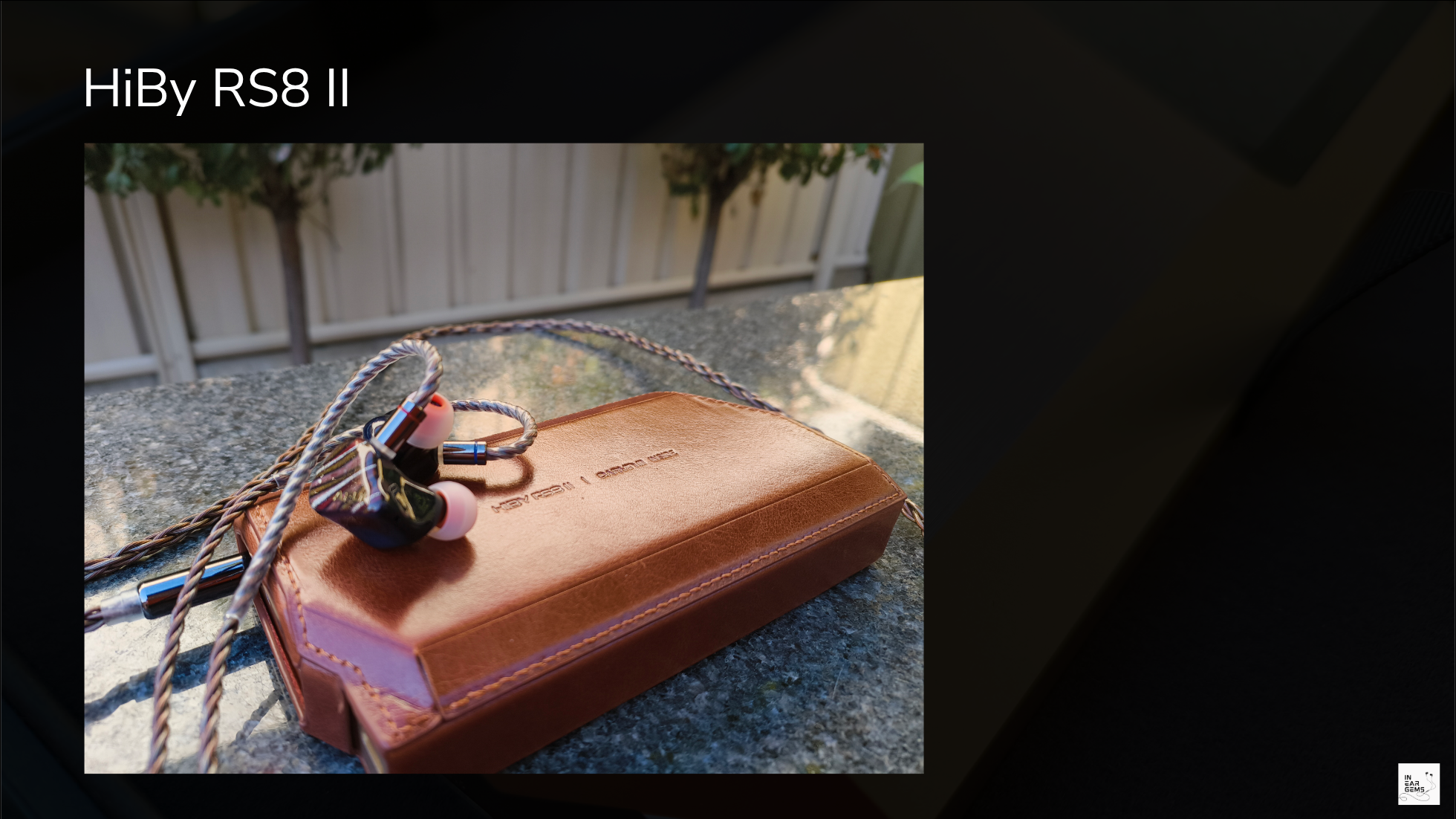
Test setup: AFUL Cantor (reference IEM throughout), AFUL Dawn-X, Campfire Audio Andromeda 2020, Sennheiser HD560S. Comparisons against the HiBy FD5 (desktop DAC, class-A mode) and HiBy R6 Pro Max (daily driver DAP). Volume matched to comfortable listening levels per track.
Tonality and Technical Performance
The RS8 II is expensive, and it sounds expensive. The tonality is neutral-warm, and the word I keep coming back to is “mature.” Not overdone, but just enough deviation from flat to make the presentation engaging without ever becoming coloured or artificial. Against the colder, more clinical R6 Pro Max, the RS8 II is warmer. Against a warm delta-sigma device like the FD5, the RS8 II is actually slightly more neutral and transparent. The void-black background is the thread running through every track. Instruments and voices breathe in their own space, decays decay cleanly, and micro details surface naturally rather than being spotlighted.
On Shivers by Ed Sheeran, a harshly mixed track, the RS8 II does not fight the recording. With the Cantor, every treble flaw would normally surface at full force, and the RS8 II does not add any pain of its own. The midrange is good, Ed’s voice is detailed, and the stage is well constructed. In A/B against the FD5, the RS8 II had a slight edge in clarity and detail, but also more treble glare. The FD5 traded some of that for easier listening. The surprising finding is that the R2R DAC, contrary to audiophile expectations, was the sharper, more resolving source. Kiwi wa Boku ni Niteiru by See-Saw confirmed the pattern. The lead vocalist is noticeably clearer, more vibrant, and more detailed, without any thinness or harshness or any weirdness in the tone. It is outstandingly detailed. In comparison, the FD5 feels a bit cloudy. That said, the FD5 edges out on spatial effect in the first 30 seconds. With the FD5, I had a wow moment with distant instruments at the forward left of the soundstage popping out of the head convincingly. The RS8 II had good soundstage size, but it did not give me that.
On Now We Are Free by 2CELLOS, the RS8 II does a spectacular job. The cellos render just right, and the bass and beat from the orchestra hit top notch, with authority. The combo of the RS8 II and Cantor was mesmerising. When the track finished, I rewound it for another listen. What impresses most is the clarity and control across the spectrum. It is not forced clarity with a treble boost. Even when the complex arrangement has multiple string instruments occupying similar spectrum, the RS8 II helps the Cantor pull them apart clearly, so it is just easy and clear to hear everything. In comparison, the FD5 has a larger soundstage illusion but is cloudier, so the RS8 II deserves credit here, not just the Cantor’s own capability.
On Playing God by Polyphia, the RS8 II does an incredible job again. The star of the show is the clarity and control across the spectrum. It makes this complex track so much easier to dissect, and thus more mesmerising. Everything is crisp and clear and easy to track, even the small details in the cymbals and hi-hats. The bass guitar texture and detail is another win. A/B against the FD5 highlights how far ahead the RS8 II is in clarity and control. On Bach’s Goldberg Variations by Lang Lang, no surprise. The piano renders excellent with no tonality issue to mention. Again, remarkable control, refinement, and fine details across the spectrum. The piano voices are crystal clear, well separated, and sound real.
On Ciaccona from Bach’s Violin Partita No. 2 in D Minor by Kavakos, the RS8 II renders the violin tone how it is supposed to be. It excels on fine details. The background feels void black, so that only the pure violin tone and the reverberation of the background and breath of Kavakos pop up with purity and clarity. It is mesmerising for the clarity and detail, and in this particular track, the sense of space from the excellent reproduction of reverberation. On Synchro BOM-BA-YE by Tokyo Kosei Wind Orchestra, the details that the RS8 II squeezes out of the Cantor while remaining natural, not harsh, not forced, is impressive. No tonality issues. The pitch-black background plays nicely with orchestral tracks. Against the FD5, the FD5 has a larger soundstage but more blurry stereo image. One could argue the FD5 sounds more like real life and the RS8 II sounds more like a studio recording. Pick your poison. Personally, I lean toward the crispness and detail of the RS8 II. It makes the track catch my attention more.
Resolution is outstanding, and it is the most consistent strength across every comparison. Even after daily-driving the R6 Pro Max for years and never feeling like I was missing anything, the RS8 II revealed more nuance on the same tracks with the same IEM. On A Reckoning in Blood from the Ghost of Tsushima OST, everything is crisp and precise across the soundstage, clear and detailed from distant background elements to nuances in the drum sound. The sense of locality of background elements is reproduced quite phenomenally, convincingly placed in the surrounding environment. The centre of the soundstage is quite closed in, a strong clear foreground like an IEM, but the holographic background brings back the sense of space. The precision of the snare attack carries the sense of rhythm and power and dynamic. The FD5 spreads the foreground out a step or two but is blurrier and less incisive. On Strength of a Thousand Men by Two Steps from Hell, A/B against the R6 Pro Max reveals a wider but more diffused and flatter stage on the R6 Pro Max. The R6 Pro Max keeps up with clarity and incisiveness, but its bassline lacks the depth and power of the RS8 II. The RS8 II has meat on the bone of the bass note, with a clear sense of sub-bass and a tactile kick at the nape. On Kavakos again for micro detail, the RS8 II pulls ahead noticeably compared to the R6 Pro Max. The R6 Pro Max has been my daily driver for years and I never felt like I missed anything, but the RS8 II revealed more nuance. The warmer tonality makes the violin richer and the stage reverb more fully represented. On ABC feat. Sophia Black by Polyphia, the RS8 II again has a slightly warmer tone and noticeably more crystal clear separation between layers in the mix, and more detail in each layer, especially background distant ambience sounds. The R6 Pro Max sounds flatter, both in tone and soundstage shape.
The soundstage is centred and holographic. Strong foreground focus with a convincing 3D depth that projects outward. It is not the widest stage in absolute terms, but it is spatially coherent and immersive. Turbo Mode expands the stage further outward, which is the single most impactful output setting change available. On Memory from the Gundam Seed Destiny OST, with the Andromeda 2020, the soundstage is not very spread out but has realistic ambience and very 3D positioning, making this track very engaging. With the Dawn-X, the side channel imaging is particularly impressive, sounding like small speakers outside the head on the side. Everything is crystal clear and easy to dissect down to the minute details.
Driveability
On sensitive IEMs like the Campfire Audio Andromeda 2020, the RS8 II runs clean at 20% volume on low gain. No hiss. The Andromeda’s thin, BA bass is a known weakness, and the RS8 II does not fix it, but it adds enough clarity and holographic imaging to make the pairing worthwhile. On harder-to-drive IEMs like the AFUL Dawn-X, the RS8 II drove them easily, requiring less volume than the Cantor despite the Dawn-X being the more demanding IEM. Compared to the FD5 desktop reference, there is no audible difference in drive quality. The RS8 II matches a desktop chain for IEM drive performance.
On the HD560S, the RS8 II could not improve the fundamental character of the headphone. It is too tight, too shrill, and too flat-sounding to begin with, and the RS8 II cannot override that. Extra detail is present and the bass attacks are slightly more incisive, but it is not a worthwhile trade-off.
Selected Comparisons
HiBy FD5 (desktop DAC): The FD5 is a desktop all-in-one DAC and amp that shares some of the R8 II’s amp stage. Against the RS8 II on the same IEM and the same tracks, the RS8 II is clearer and more detailed, and the FD5 sounds cloudy in direct comparison. The FD5 has a slightly larger soundstage in some tracks, but it is blurrier and less incisive. The FD5 trades detail for ease. For IEM drive quality, there is no audible difference between the RS8 II and the FD5. The RS8 II effectively puts desktop-class performance in your pocket.
HiBy R6 Pro Max (DAP):
The R6 Pro Max has been my daily driver for years, and I never felt like I was missing anything until the RS8 II showed me what I was missing. The R6 Pro Max keeps up with clarity and incisiveness, but its bassline lacks the depth and power of the RS8 II, and the stage is wider but flatter. The RS8 II reveals more nuance on tracks I thought I knew. Against the RS8 II, the R6 Pro Max sounds colder and flatter. It is a good DAP, but the RS8 II is in a different class.
RS8 Mark 1 (DAP):
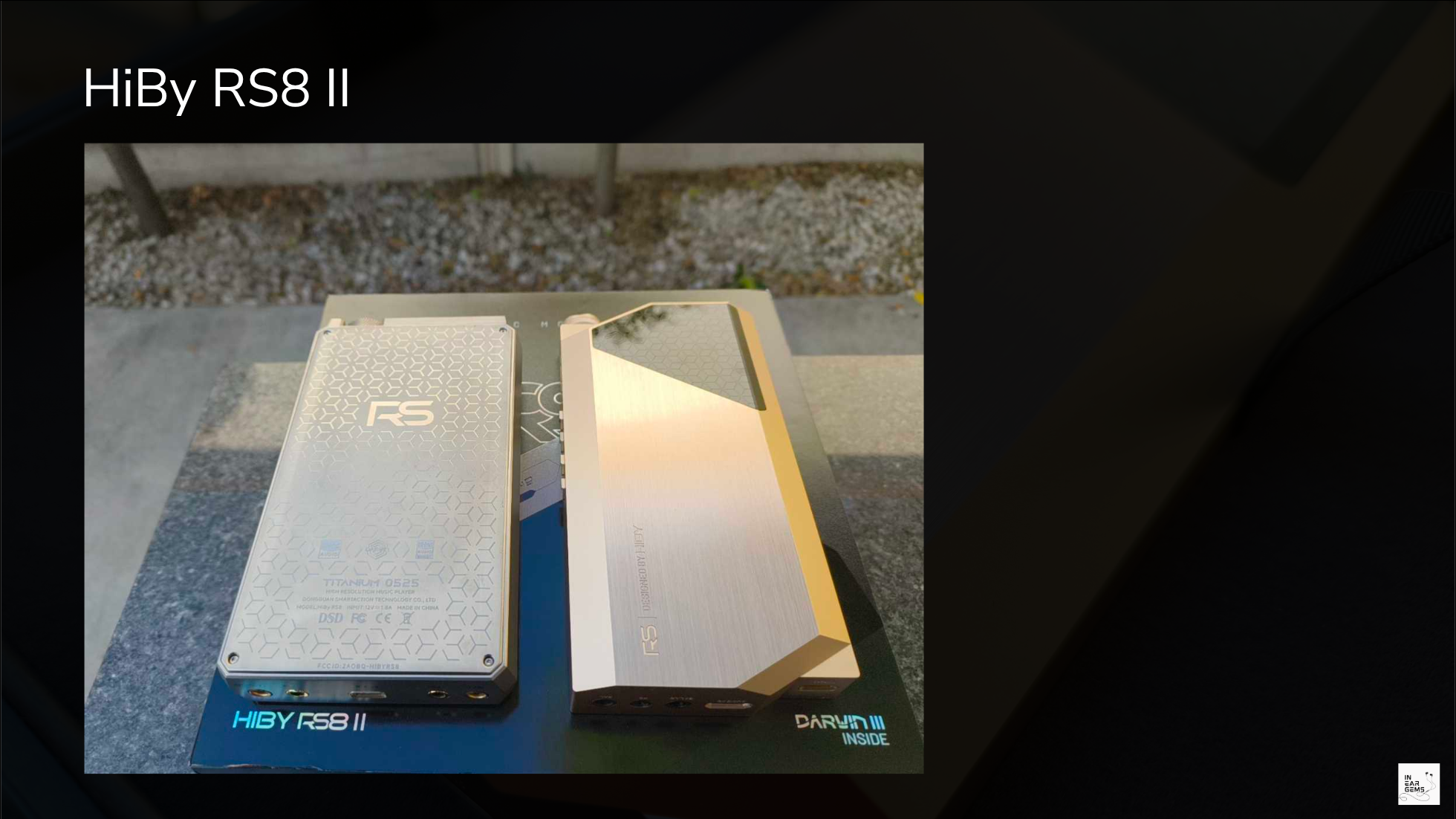
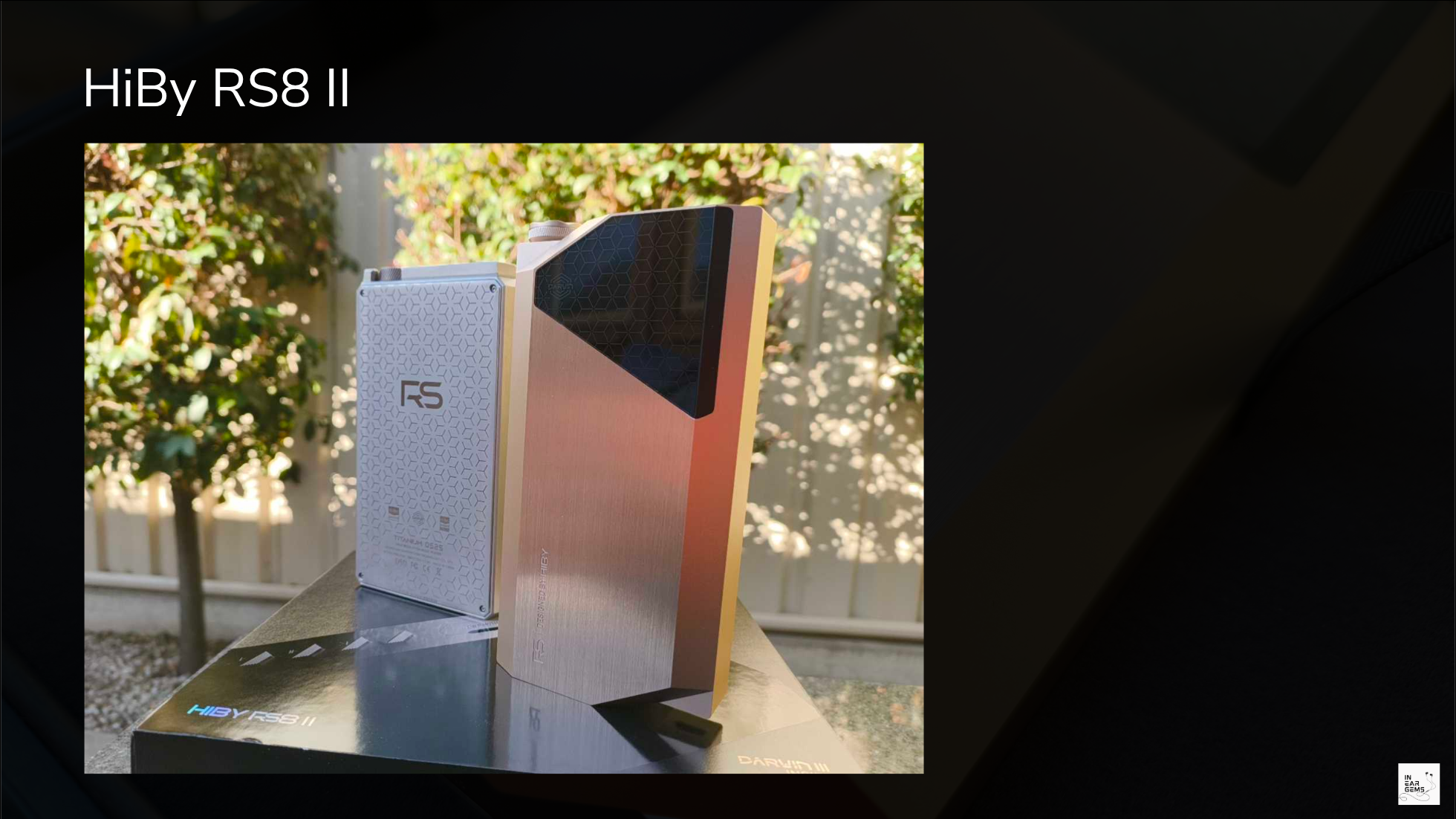
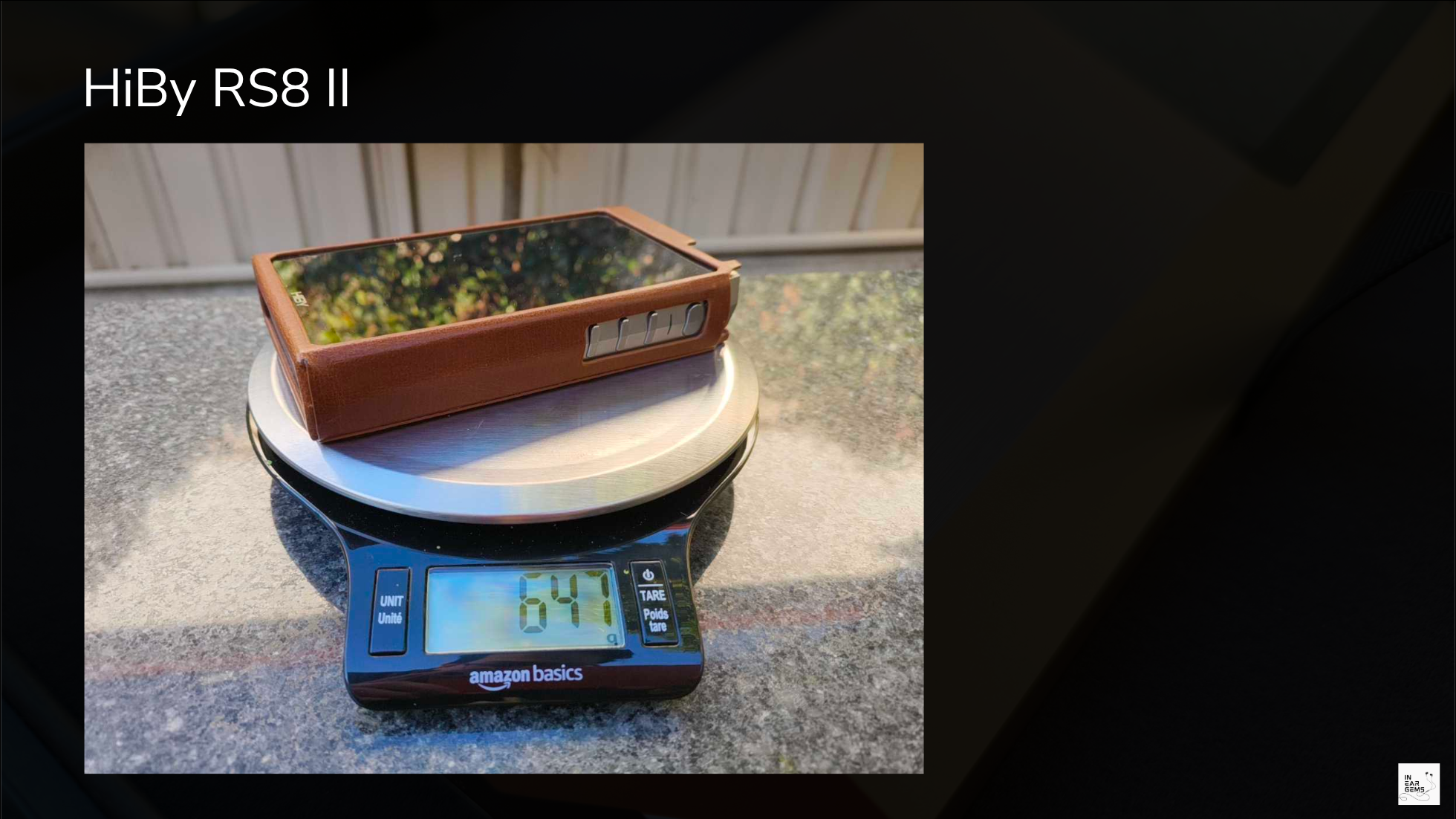
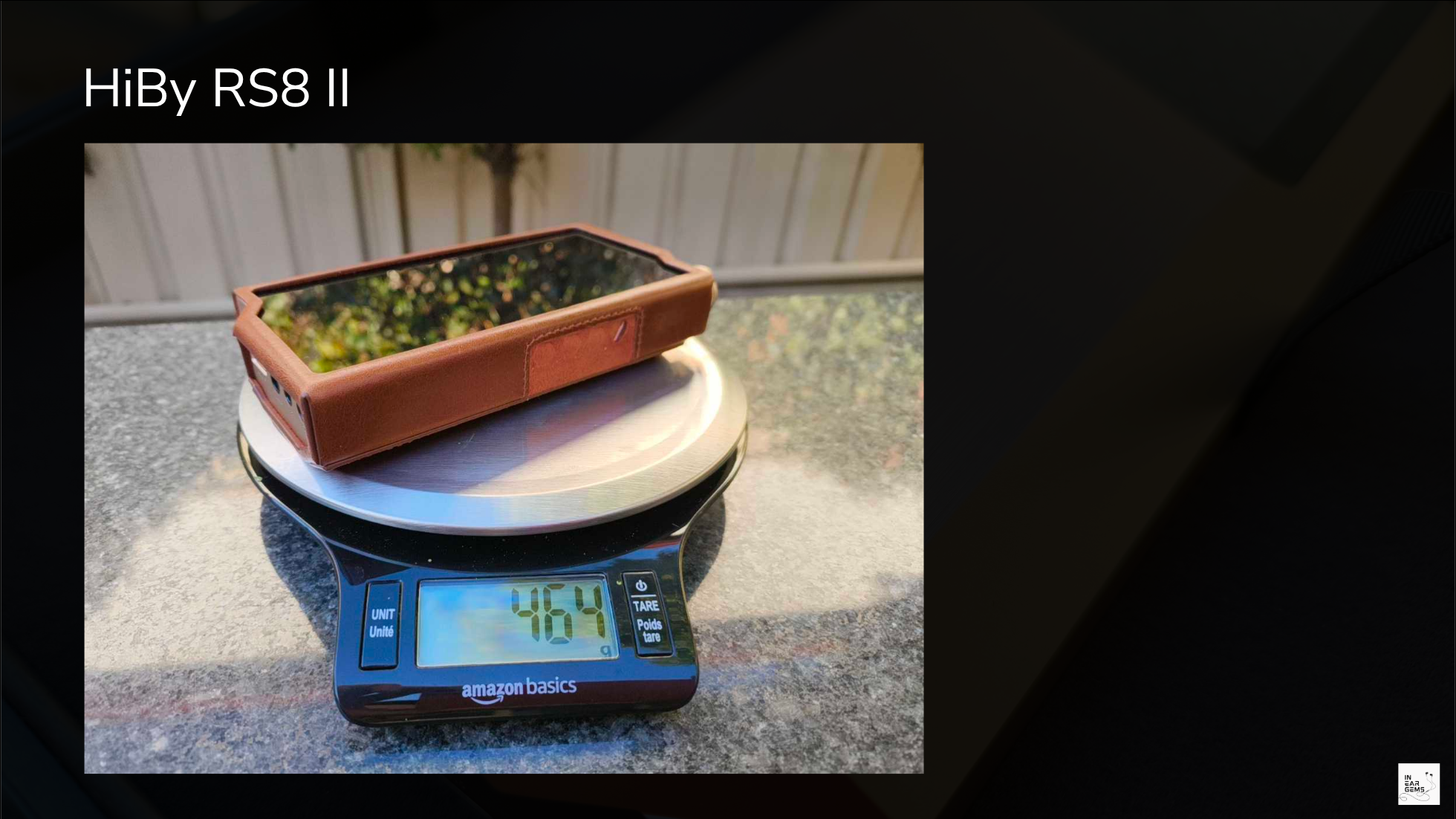
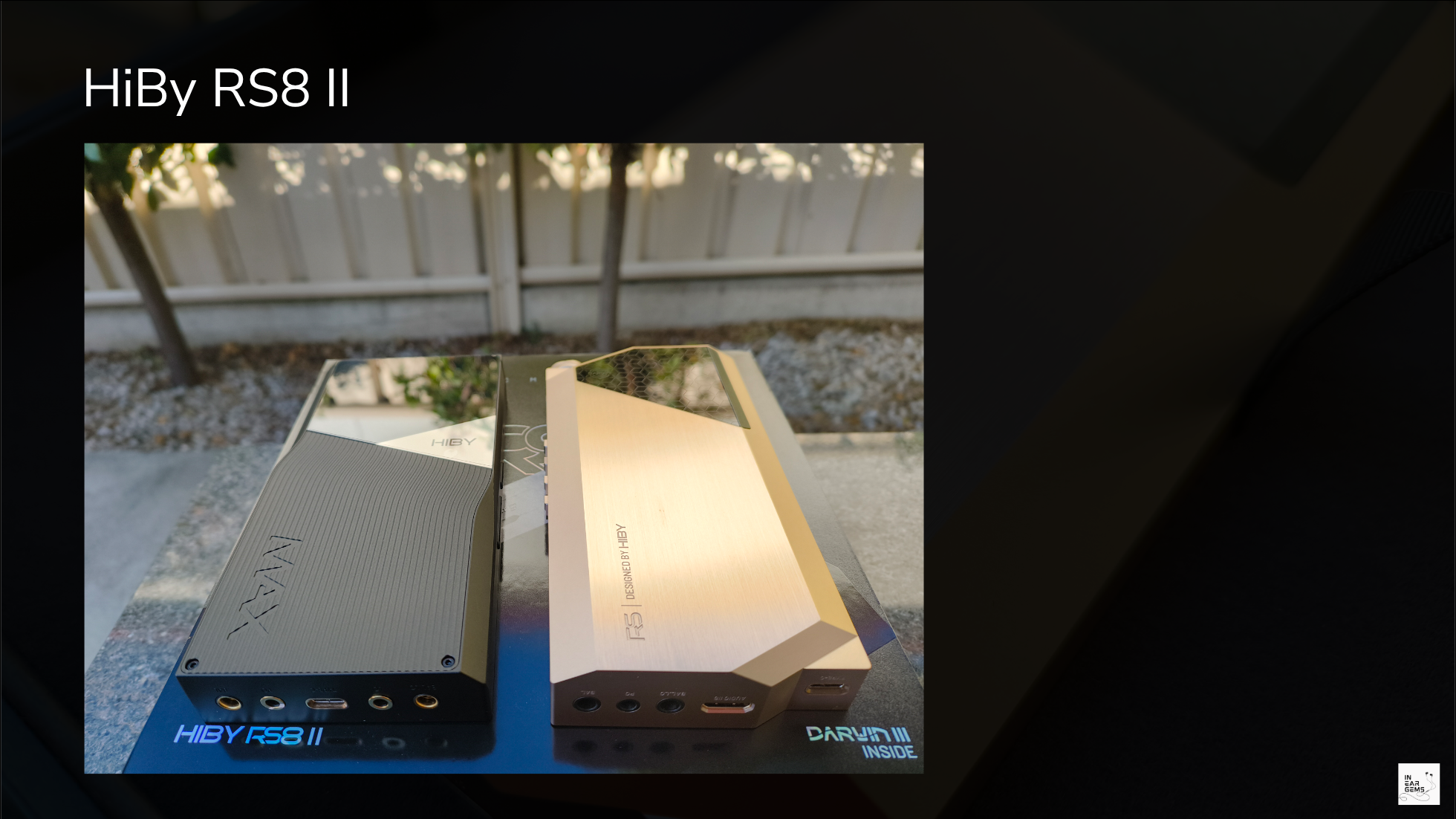
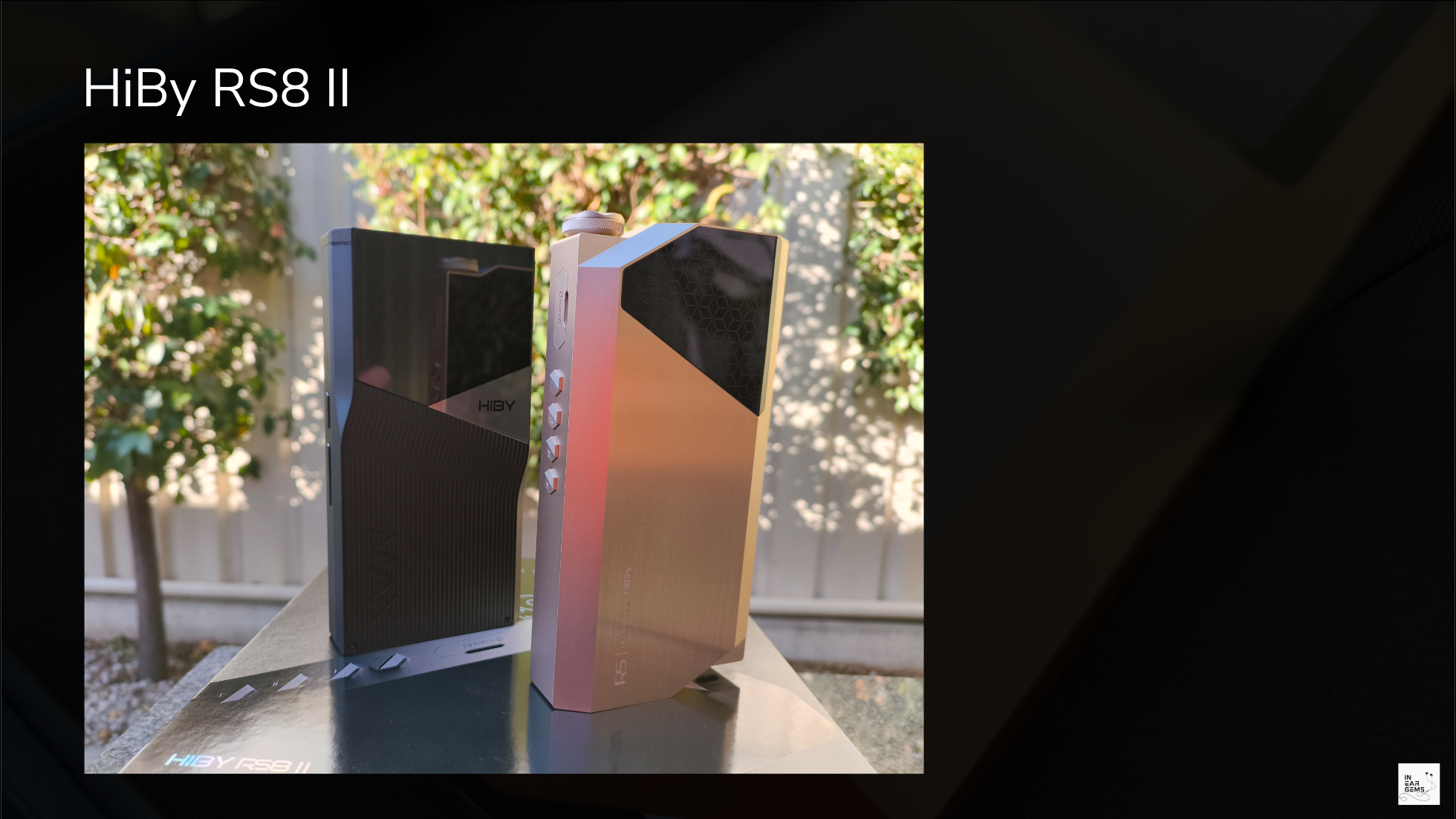
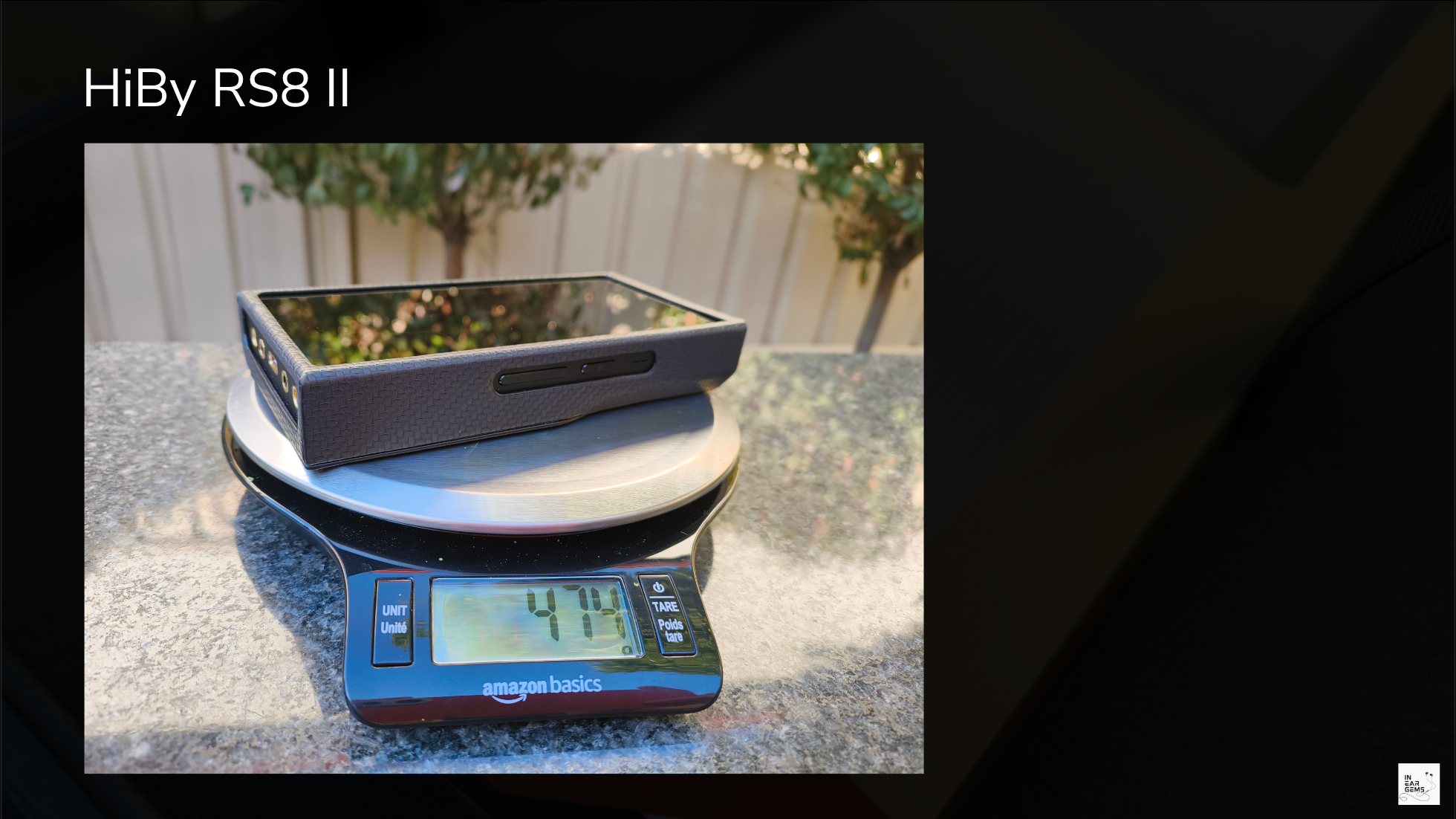
The RS8 II is an all-around improvement over its predecessor. The most significant upgrade is the tonality. The original RS8 sounds off in a way that is hard to pinpoint but hard to ignore. It is not just some arbitrary R2R tone or anything like that, since the original RS8 was not a warm-tuned DAP either. It just does not work well with these ears. The Mark 2 fixes this entirely. Worth noting: the RS8 II is significantly lighter than the Mark 1.
Concluding Remarks
The RS8 II is very expensive. But at the same time, it is one of the best listening experiences I have ever tested, across both official reviews and casual tests. Simply put, it pulls more details and depth from familiar IEMs than I expected to be even possible. And it does so with a great sense of maturity and refinement. The RS8 II does not give the immediate wow, what a huge soundstage like its sibling the R8 II, but it is more about sitting down, giving it time, and then before I knew it, a huge chunk of time has gone by and I still do not want to stop. The tonality, timbre, and outstanding clarity and details form a potent combination. And when Turbo Mode is on, any reservations about the soundstage are also gone.
Again, this device is very, very expensive. I do not recommend it for listeners who are just starting their IEM journey, even with money to burn. One needs to experience quite a few different DAP and IEM combinations to fully appreciate the refinement this DAP brings. I also do not recommend it for headphone listeners. It could work, but my hunch is that the amplifier may not have spare power to pull everything out of current power-hungry planars. So who is this device for? Listeners like me: 99% IEM listening, with a love for good tone, details, and an immersive soundstage. I know I would miss this device, and I would keep an eye on the used market.
What I like about this device:
- The neutral-warm, mature tonality that is engaging without being coloured
- The void-black background and outstanding resolution
- The centred, holographic soundstage, expanded further with Turbo Mode
- The desktop-class IEM drive quality in a portable form factor
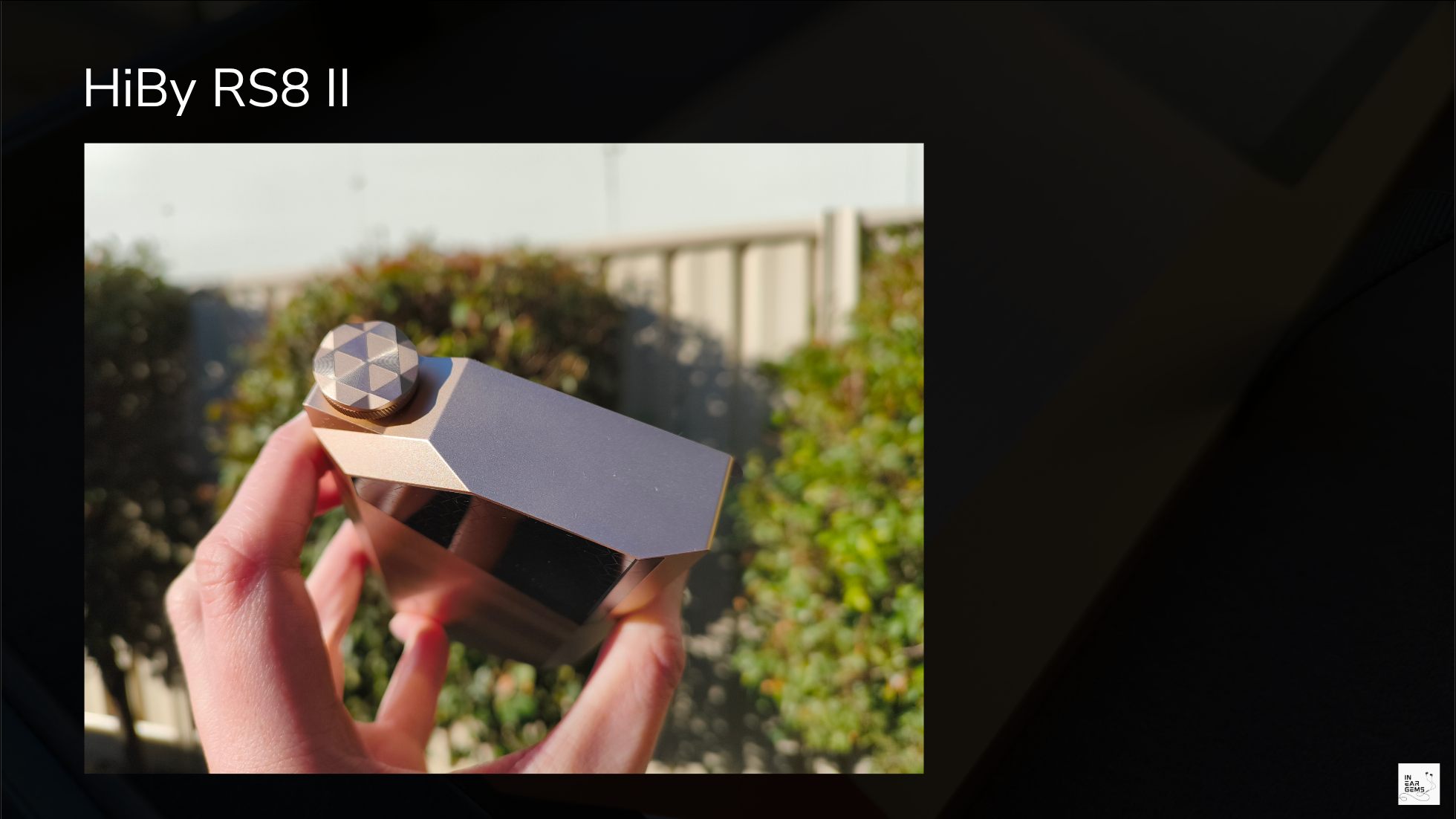
- The hardware design and machining
What could be improved:
- Very expensive
- Bluetooth latency makes video streaming impractical
Absolute Sonic Quality Rating: 5/5