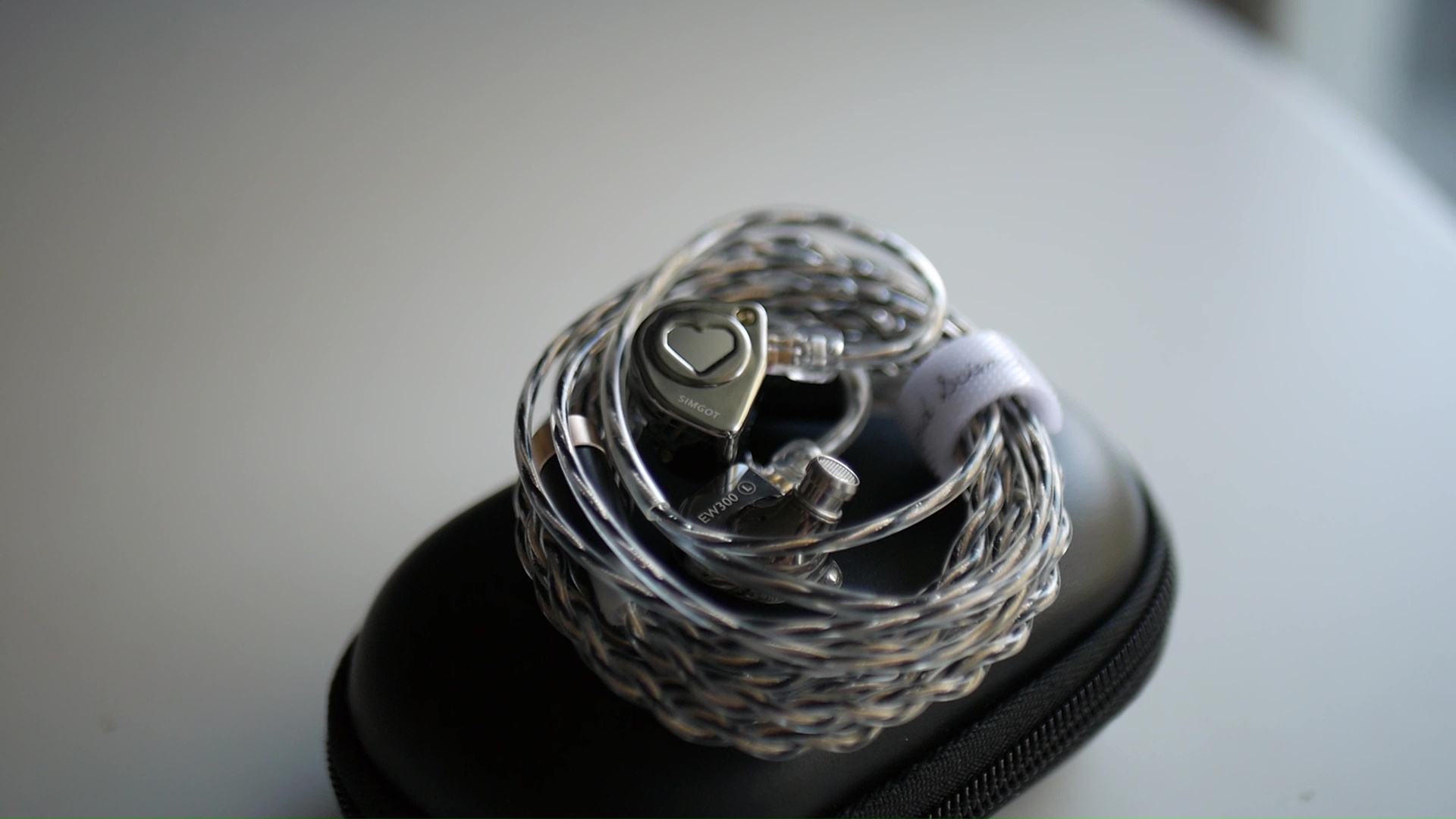
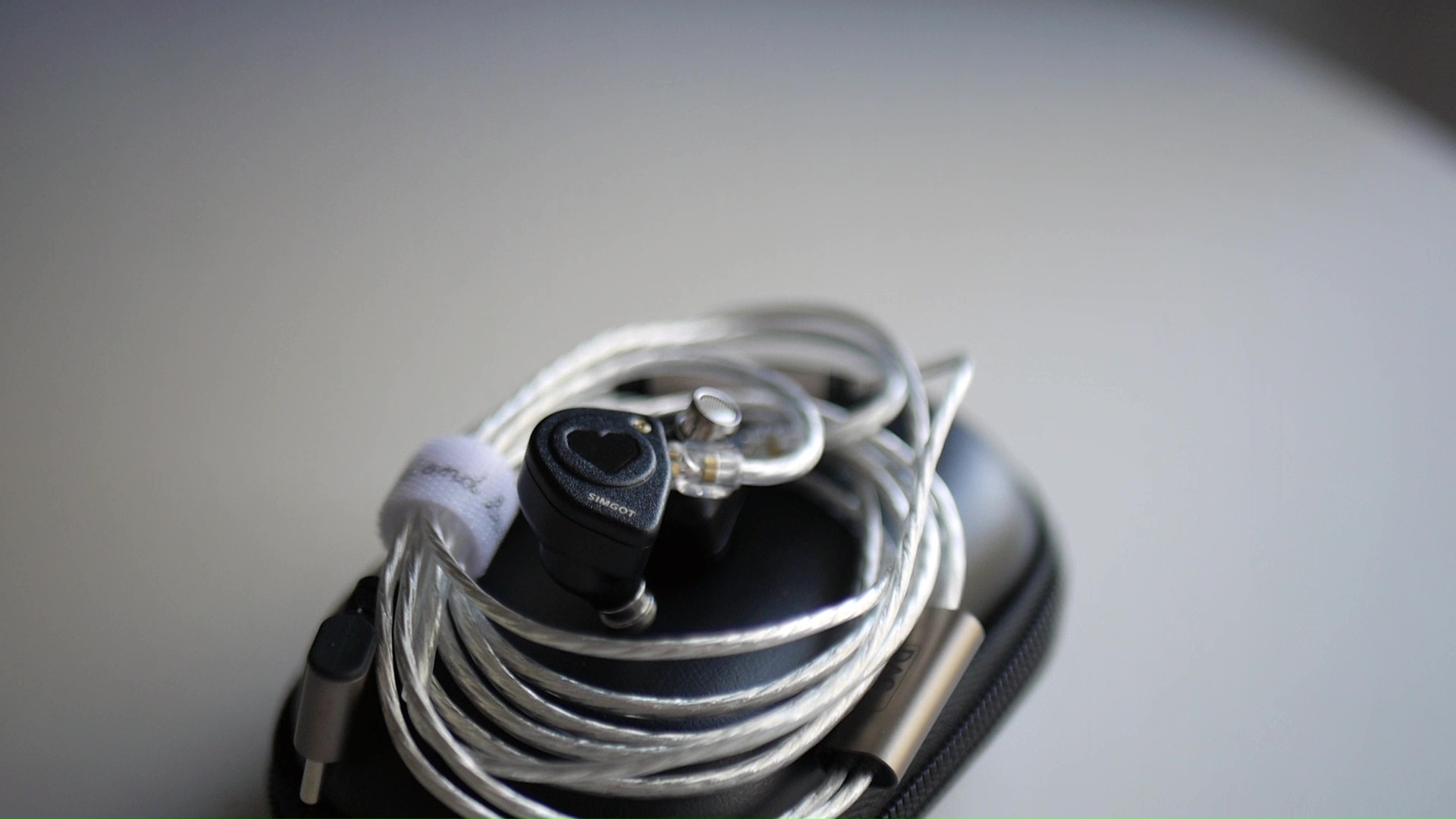
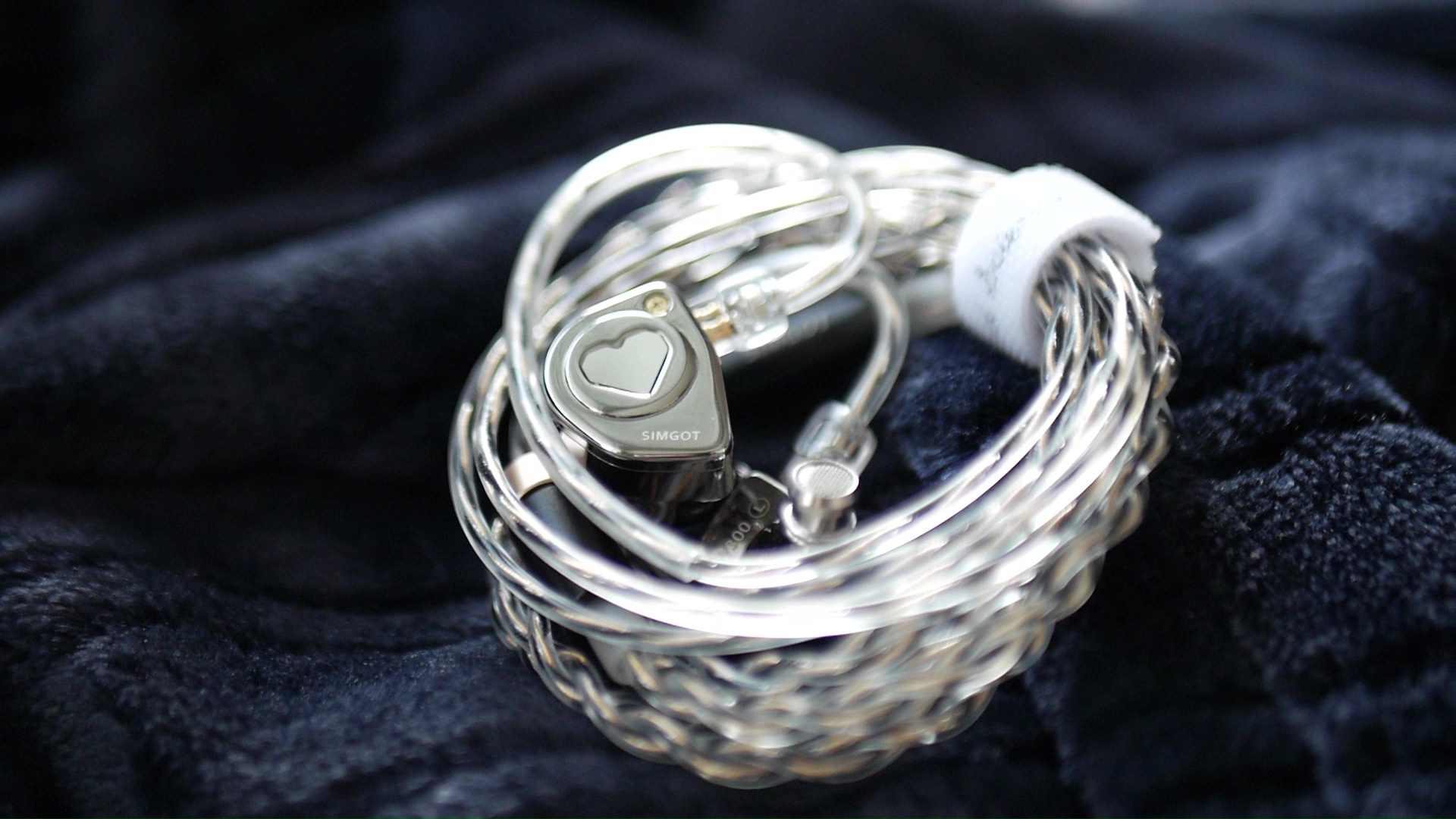
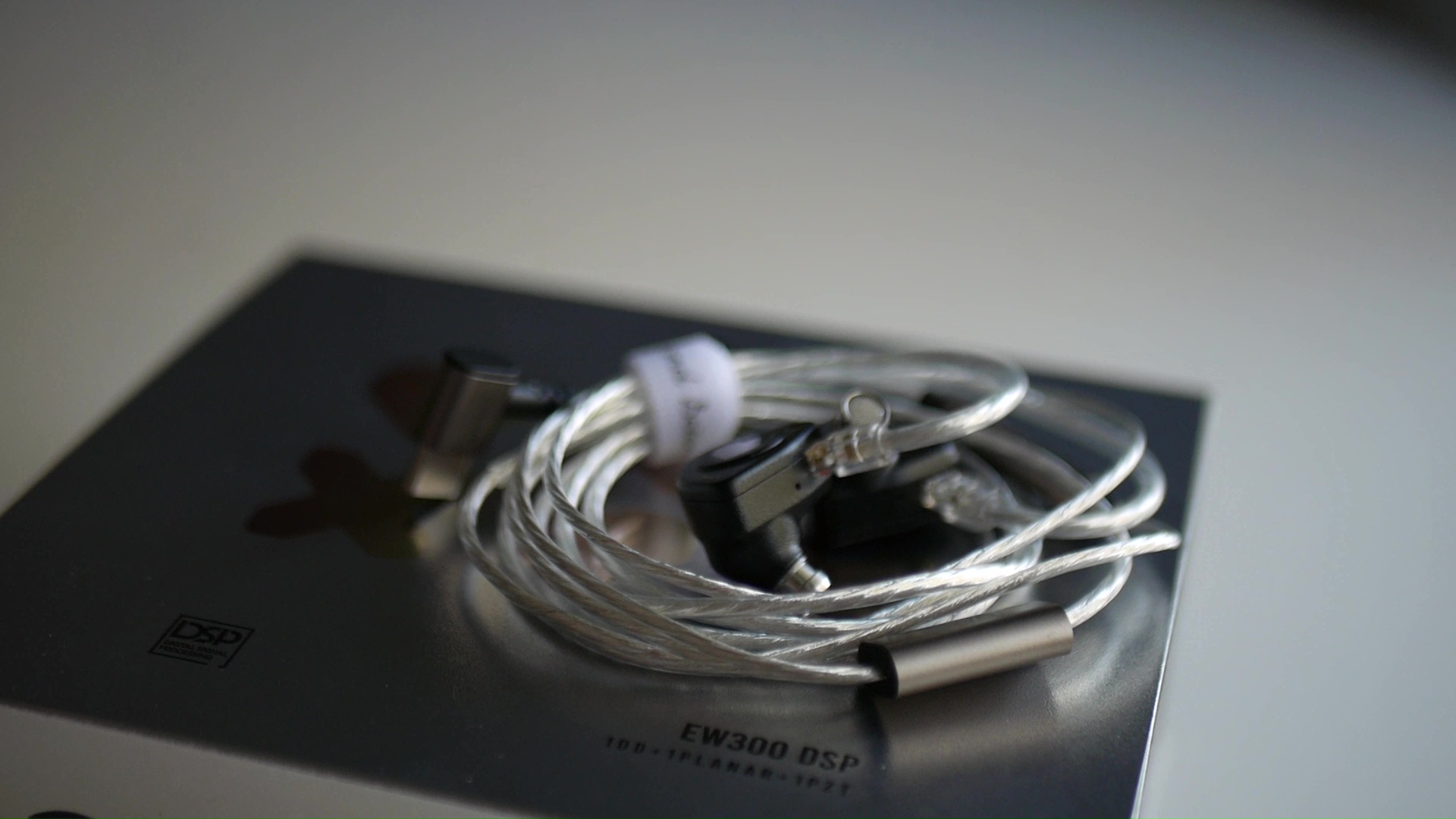
<?xml version="1.0" encoding="utf-8"?><feed xmlns="http://www.w3.org/2005/Atom" ><generator uri="https://jekyllrb.com/" version="3.10.0">Jekyll</generator><link href="https://iegems.nk-tran.com//feed.xml" rel="self" type="application/atom+xml" /><link href="https://iegems.nk-tran.com//" rel="alternate" type="text/html" /><updated>2026-07-09T08:18:39+00:00</updated><id>https://iegems.nk-tran.com//feed.xml</id><title type="html">In-ear Gems</title><subtitle>In-ear Gems</subtitle><author><name>NKT</name></author><entry><title type="html">AFUL Performer 8S - Convoy from Jupiter</title><link href="https://iegems.nk-tran.com//2026/07/05/review-AFUL-Performer8S.html" rel="alternate" type="text/html" title="AFUL Performer 8S - Convoy from Jupiter" /><published>2026-07-05T00:00:00+00:00</published><updated>2026-07-05T00:00:00+00:00</updated><id>https://iegems.nk-tran.com//2026/07/05/review-AFUL-Performer8S</id><content type="html" xml:base="https://iegems.nk-tran.com//2026/07/05/review-AFUL-Performer8S.html"><![CDATA[<p>The AFUL Performer 8S is the rare IEM I have reviewed twice. The first assessment began at release but was cut short by burnout and a months-long hiatus from anything audio. Now, with a freshly revised methodology and a different head for listening, I come back to this IEM, probably way too late in the fast moving world of personal audio. So, how does P8s still fare?</p>
<h1 id="forewords">Forewords</h1>
<ul>
  <li>What I look for in an IEM is <strong>immersion.</strong> I want to feel the orchestra around my head, track individual instruments, and hear all of their textures and details. I’m not picky about tonality, as long as it does not make the orchestra, violin, cellos, and pianos sound wrong.</li>
  <li>I rate IEMs within with a consistent scale from <strong>1 (Poor) to 3 (Good) to 5 (Outstanding)</strong>. An overall ranking of 3/5 or above is considered positive.</li>
  <li>Ranking list and measurement database are on <a href="https://iegems.nk-tran.com/">my IEM review blog</a>.</li>
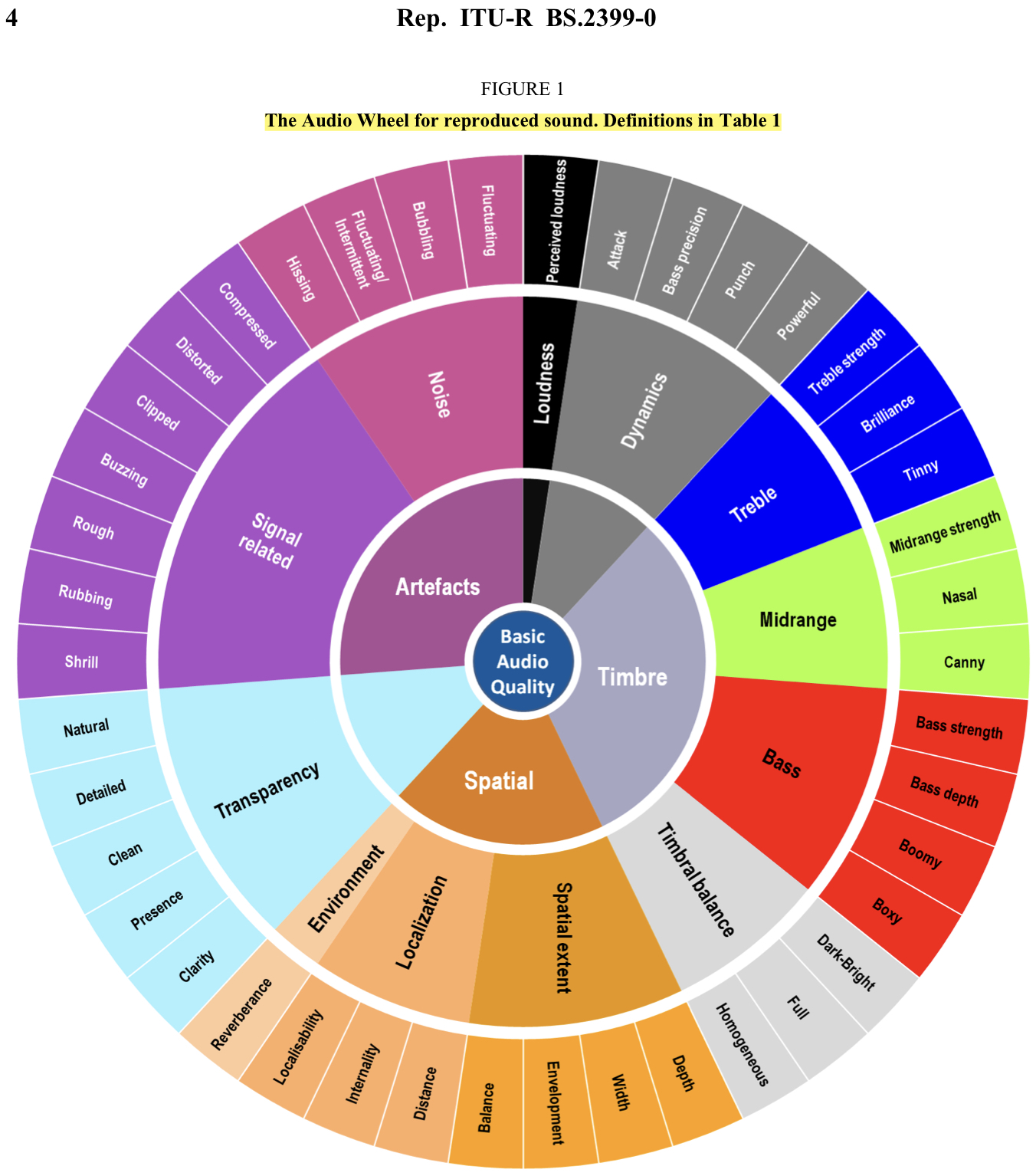
  <li>The terminology for subjective impressions in this review is based on the Audio Wheel for reproduced sound defined in the technical report <a href="https://www.itu.int/pub/R-REP-BS.2399">ITU-R BS.2399-0</a></li>
  <li><strong>This review is based on a pre-production sample from Hifigo (Thank you!).</strong> I have no affiliation with or financial interest in AFUL.</li>
  <li>The unit retails for <strong>$370.49 at Hifigo</strong> at the time this review was published. Unaffiliated link: <a href="https://hifigo.com/products/aful-performer-8s">Hifigo</a></li>
</ul>

<h1 id="in-the-box">In the Box</h1>

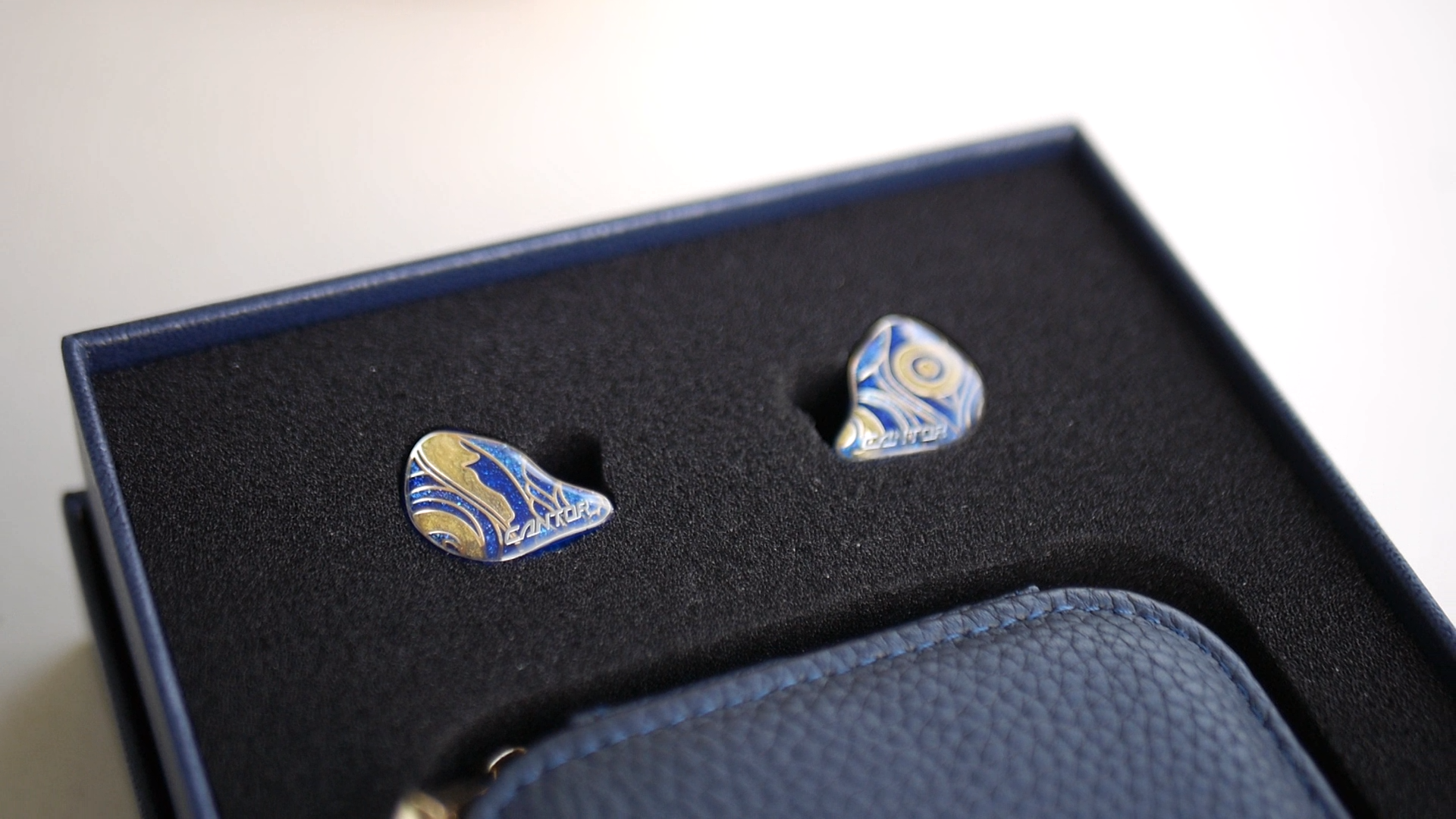
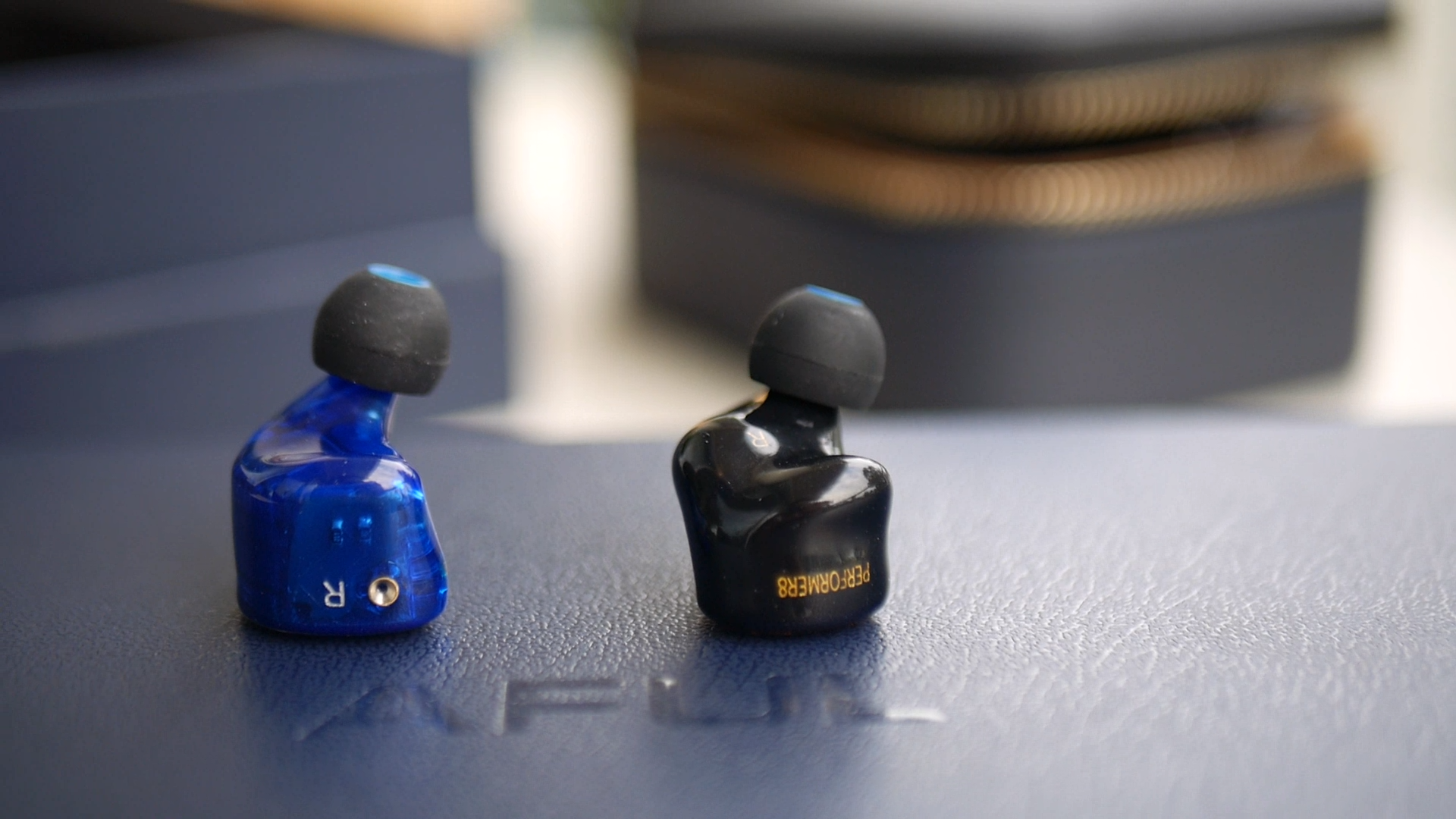
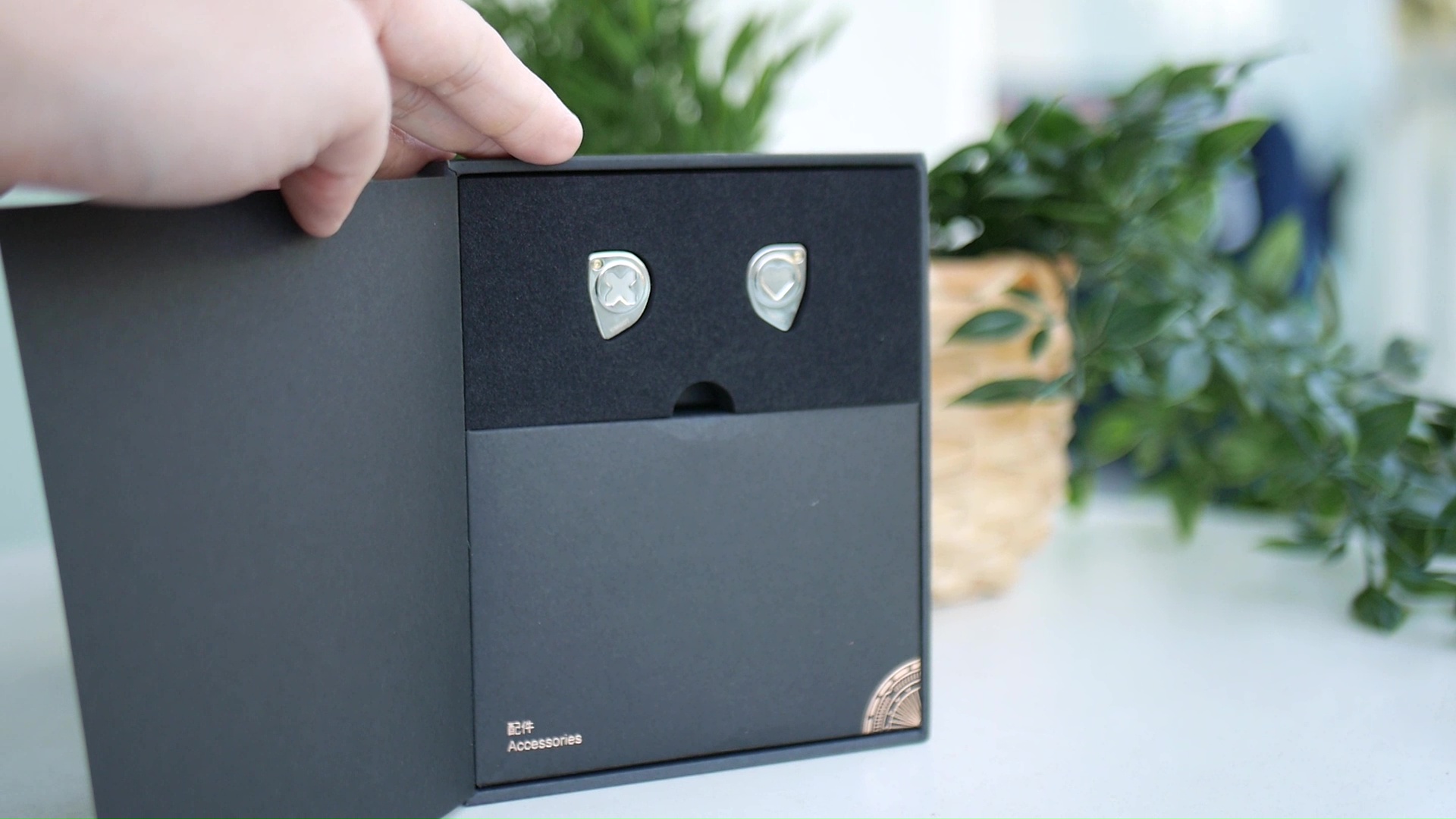
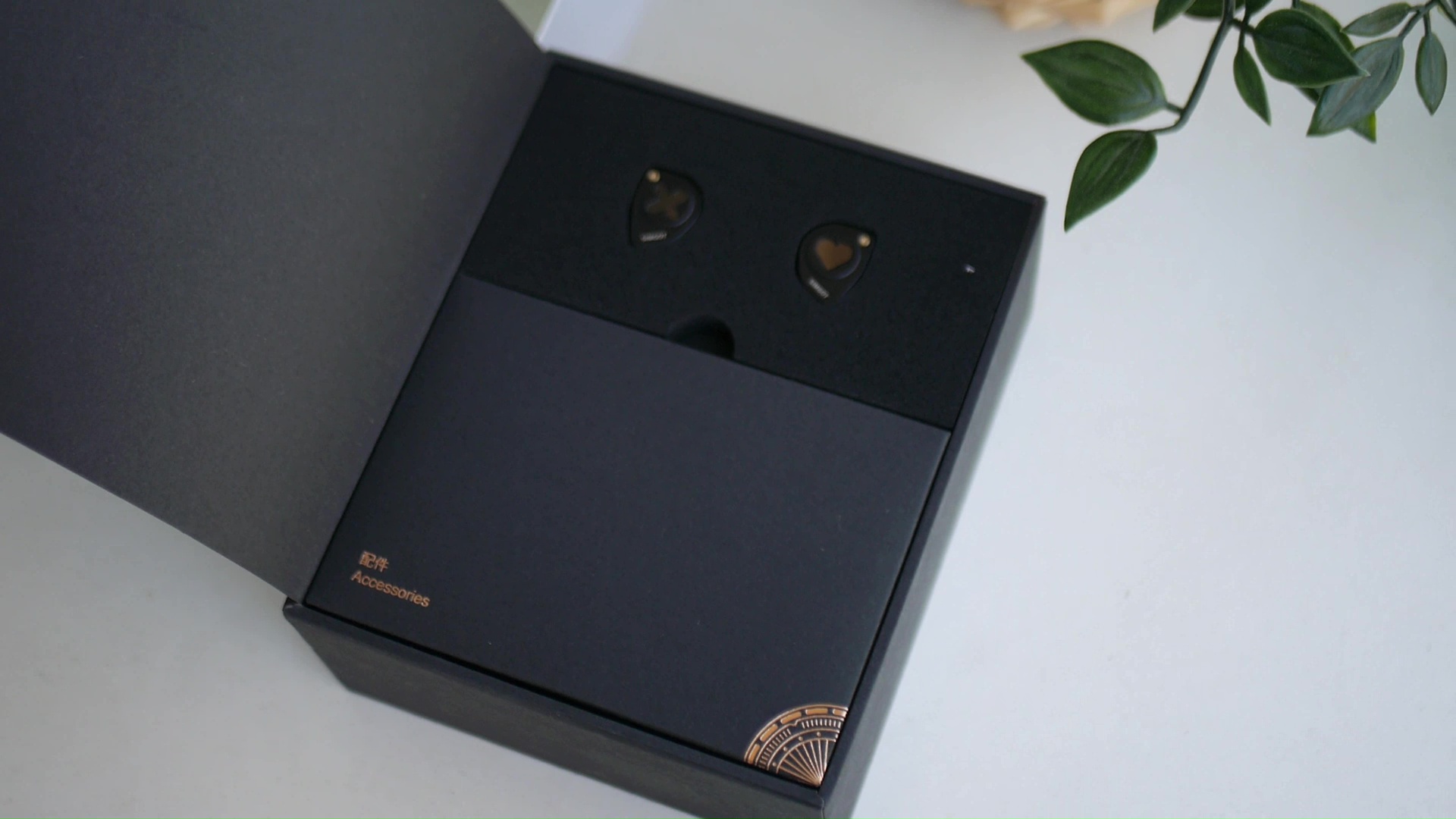
<p>The Performer 8S arrives in a box that feels noticeably more upmarket than what AFUL shipped with their previous generation. The presentation is at the level I expect for a $400 IEM, which is fair given how the hobby has shifted in 2026. Previously, AFUL’s packaging sat below my expectation. This one finally catches up to where it should be for a high-end consumer product.</p>

<p><img src="/assets/images/Performer8s/slide_6.png" alt="" /></p>

<p><img src="/assets/images/Performer8s/slide_2.png" alt="" /></p>

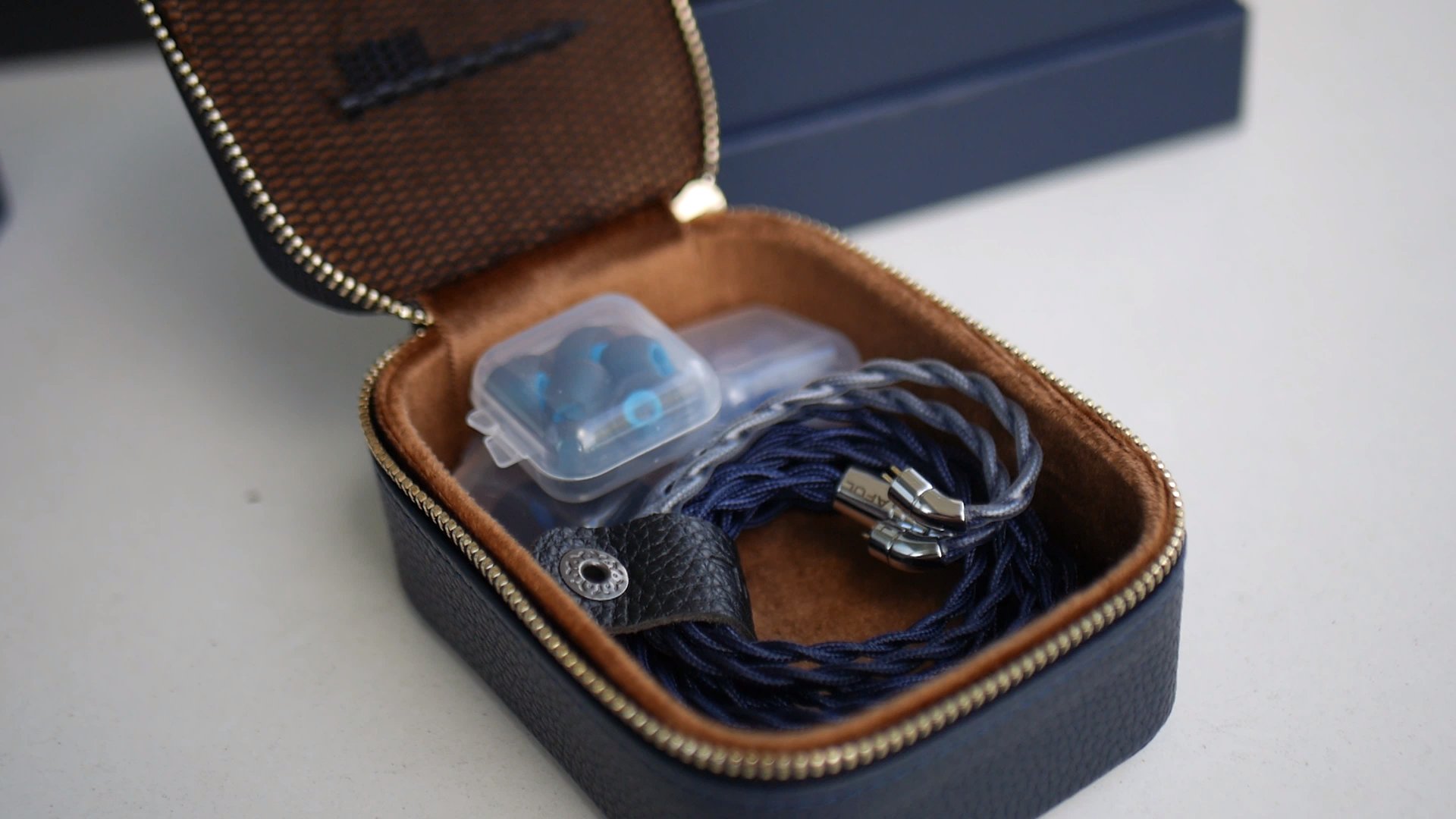
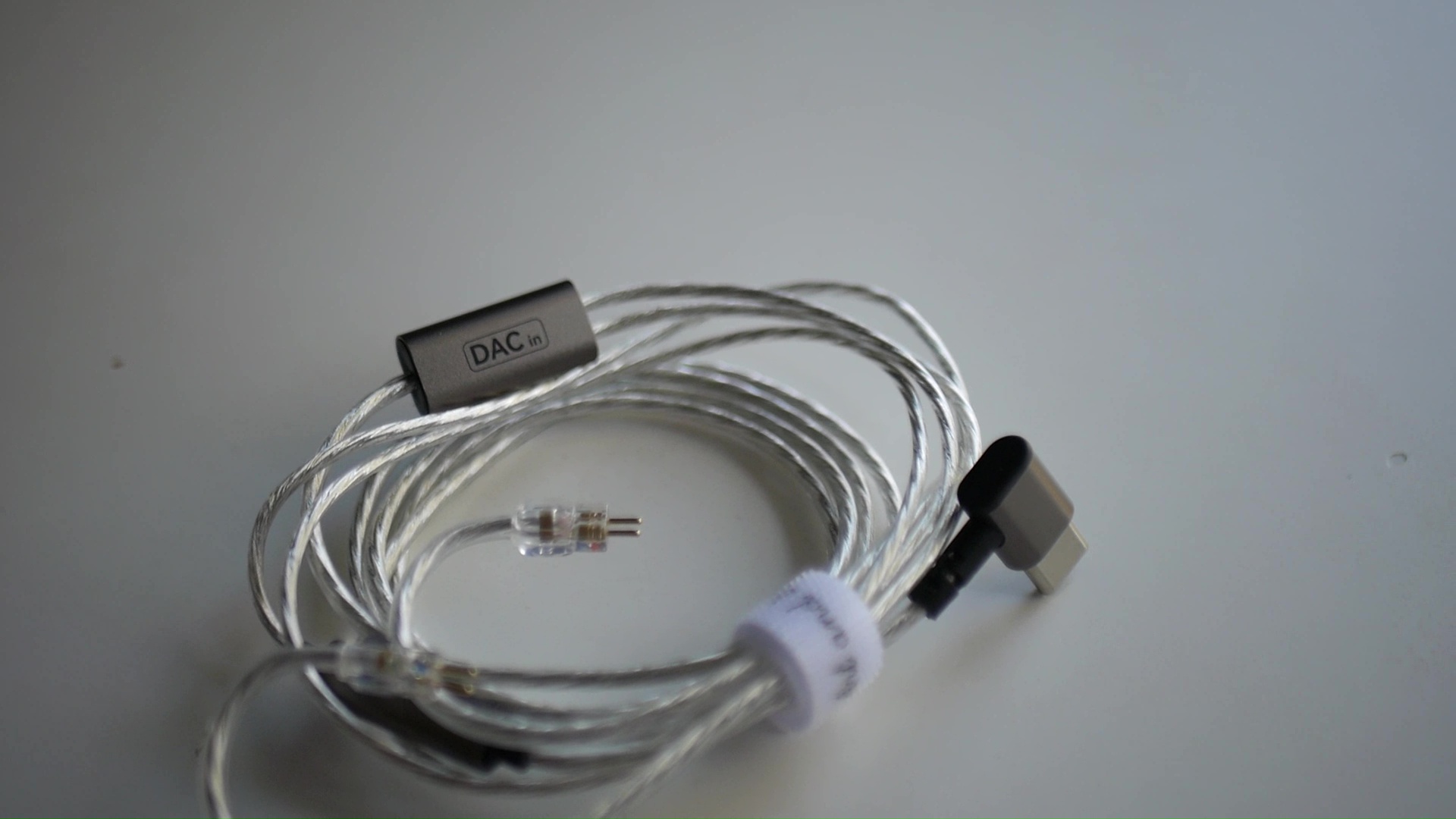
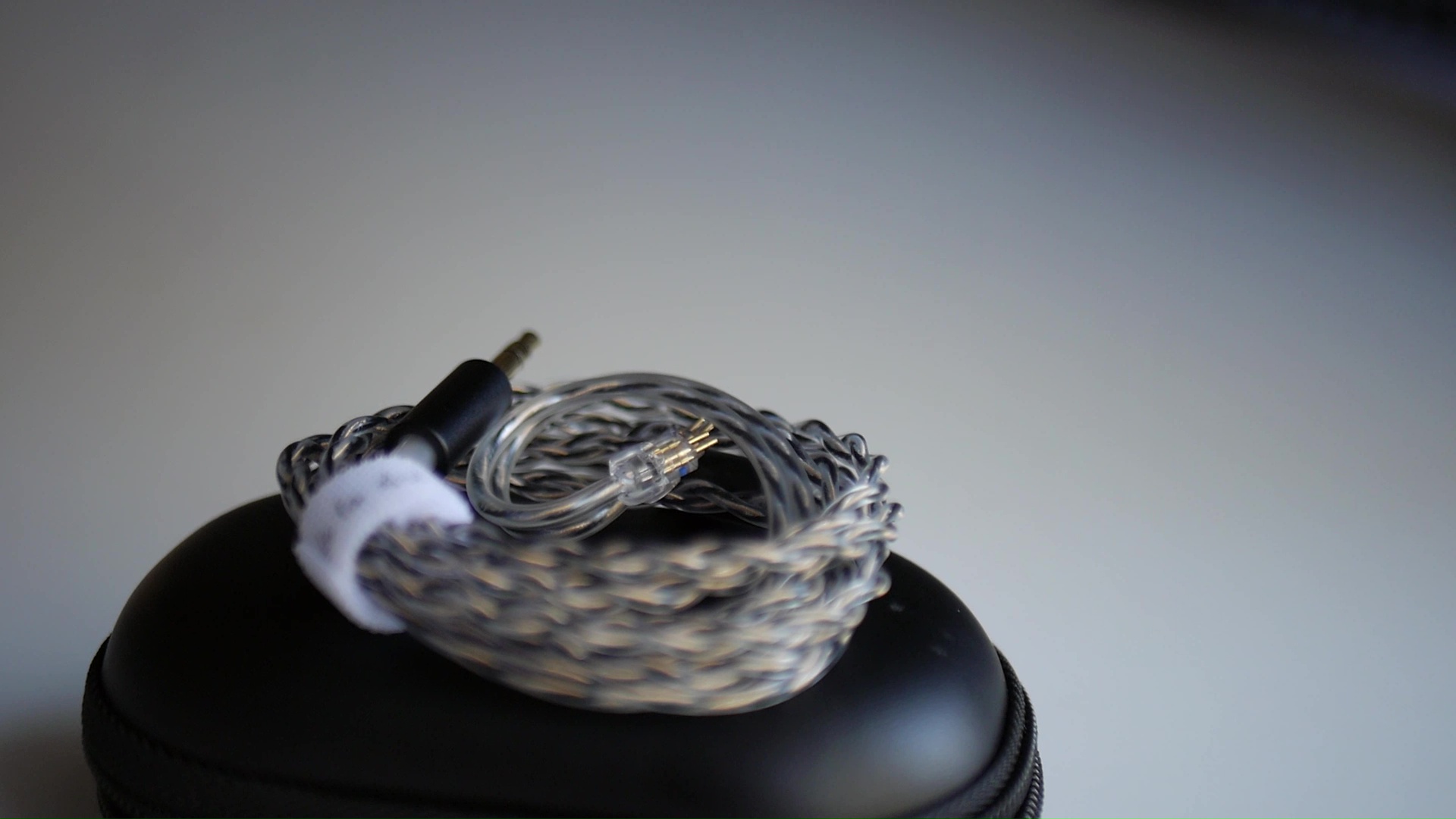
<p>Inside, I find:</p>

<ul>
  <li>The IEM earpieces themselves</li>
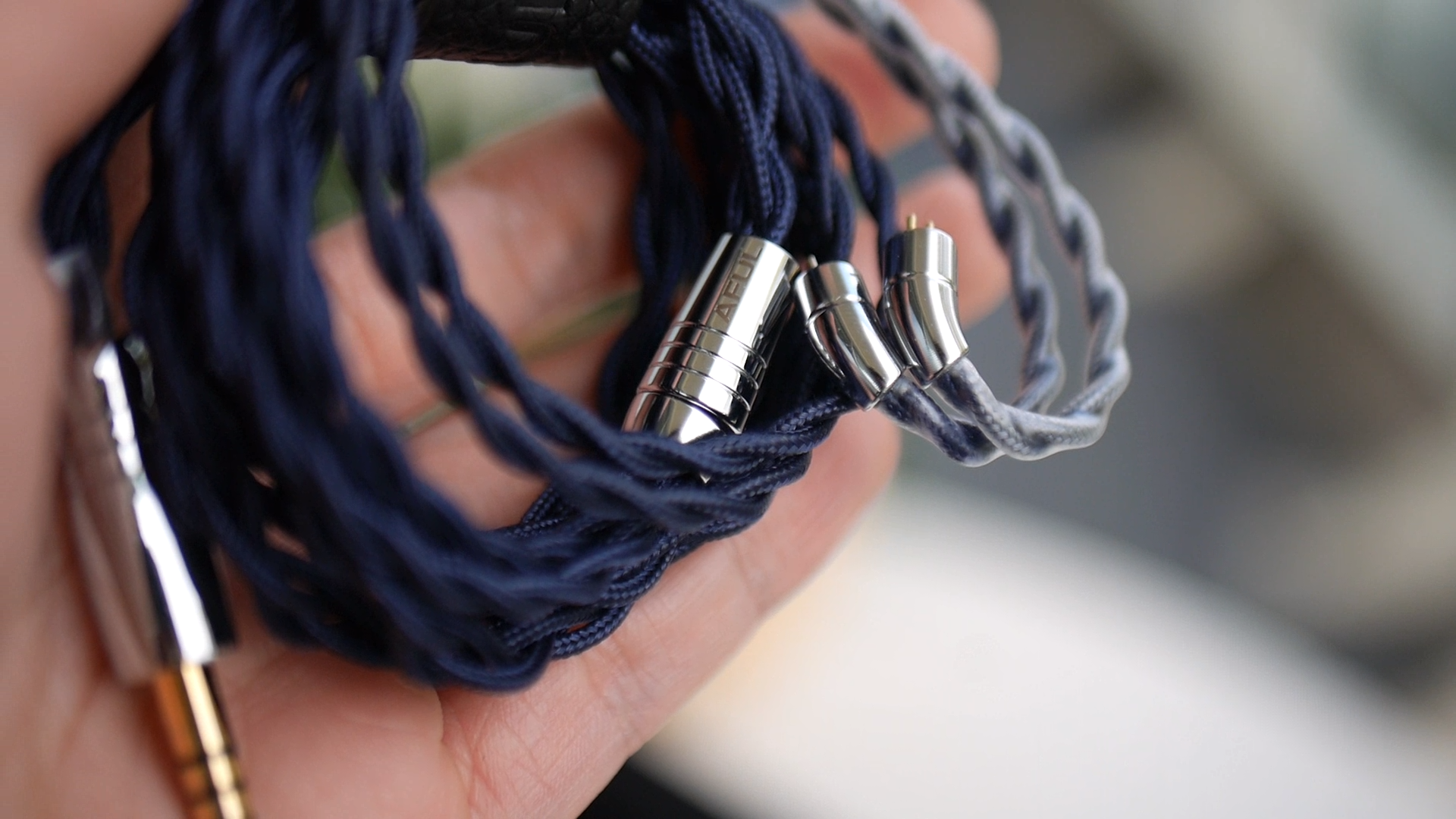
  <li>A six-strand stock cable in either 3.5 mm or 4.4 mm termination, terminated in 0.78 mm 2-pin</li>
  <li>A faux leather carry case</li>
  <li>Three sets of silicone ear tips</li>
  <li>A cleaning tool</li>
  <li>Replacement no-mark stickers and silicone plugs that pair with the new tunable bass port system</li>
</ul>

<p><img src="/assets/images/Performer8s/slide_3.png" alt="" /></p>

<p><img src="/assets/images/Performer8s/slide_5.png" alt="" /></p>

<p>The case is where AFUL’s price-tier concessions become obvious. It is the same case shipped with the Performer 7, not the more luxurious leather case that comes with the Cantor or Dawn-X. Practical and protective, but not standout. The cables, tips, and tools cover what I need to get started. The sticker-and-plug pair supports the new passive radiator tuning switch without requiring extra accessories to be on hand.</p>

<p><img src="/assets/images/Performer8s/slide_4.png" alt="" /></p>

<h1 id="general-information">General Information</h1>

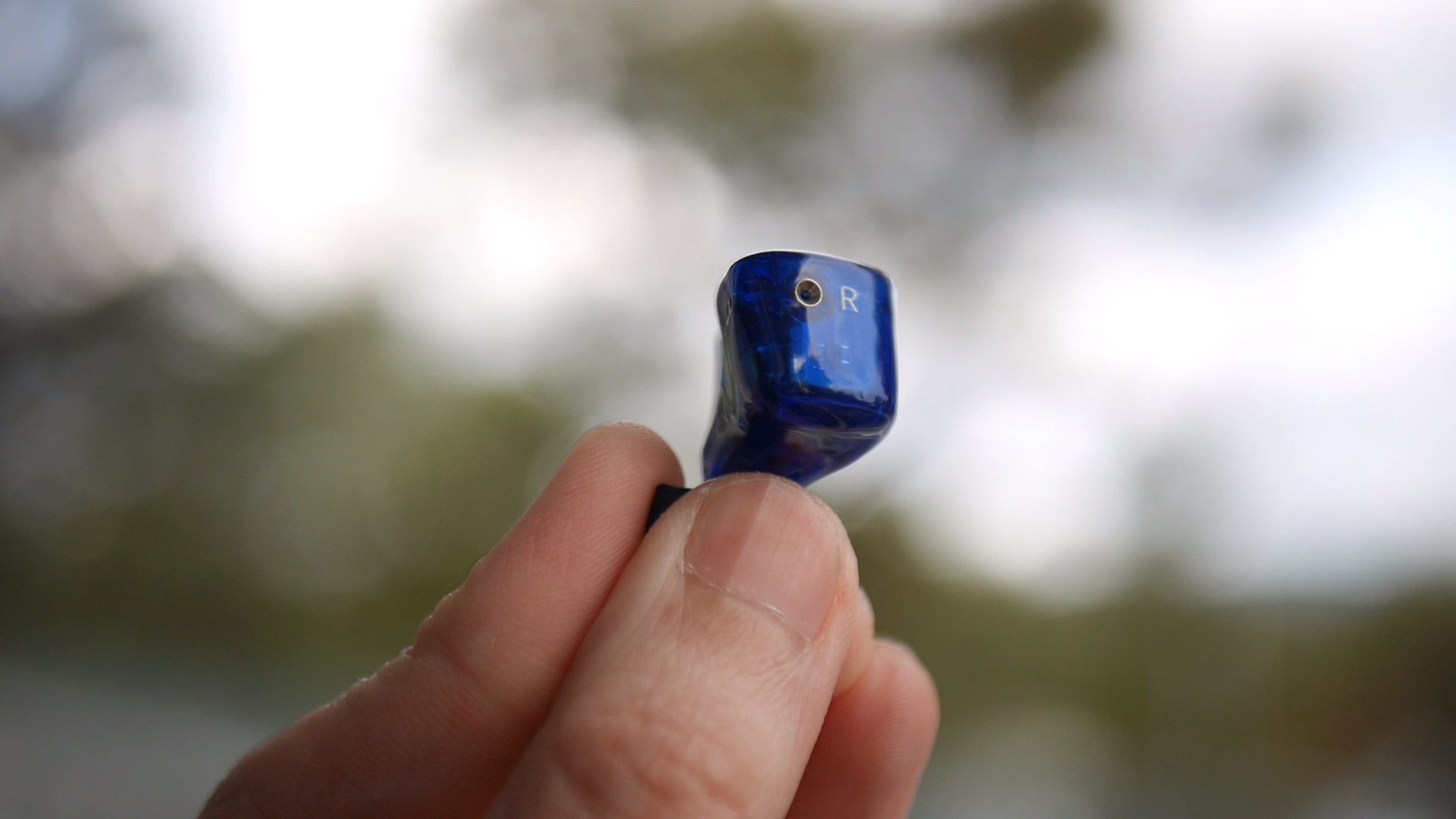
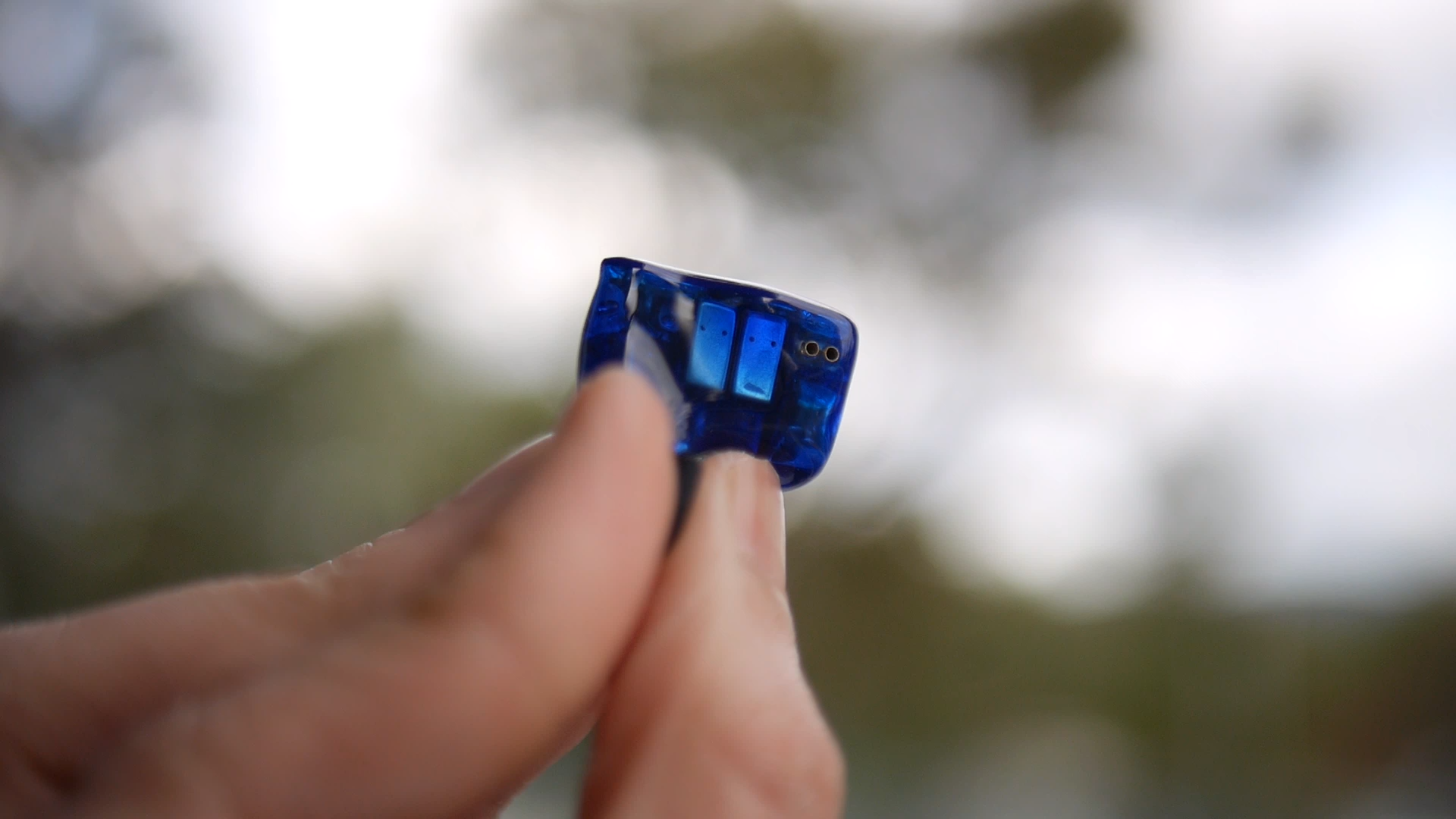
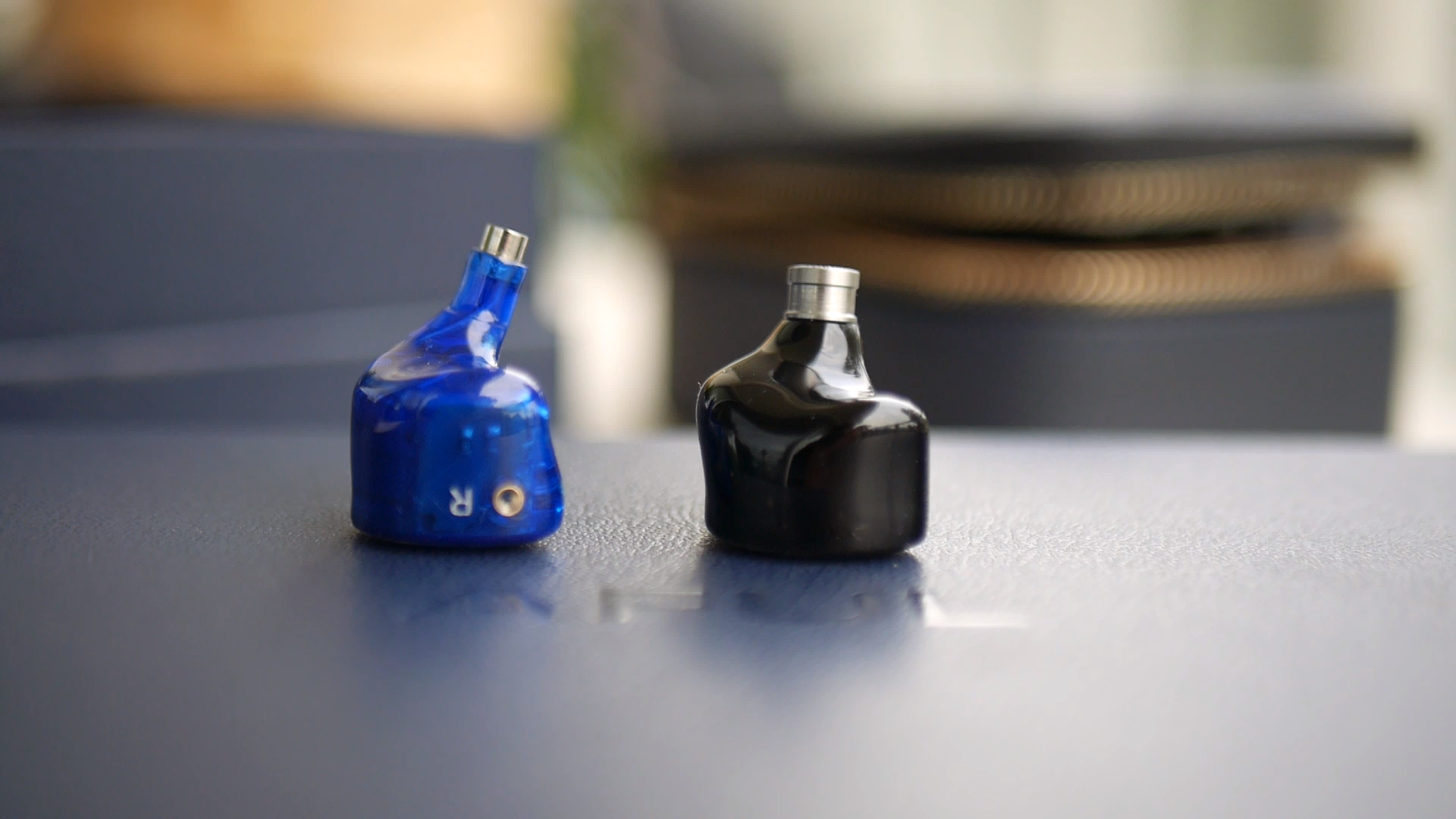
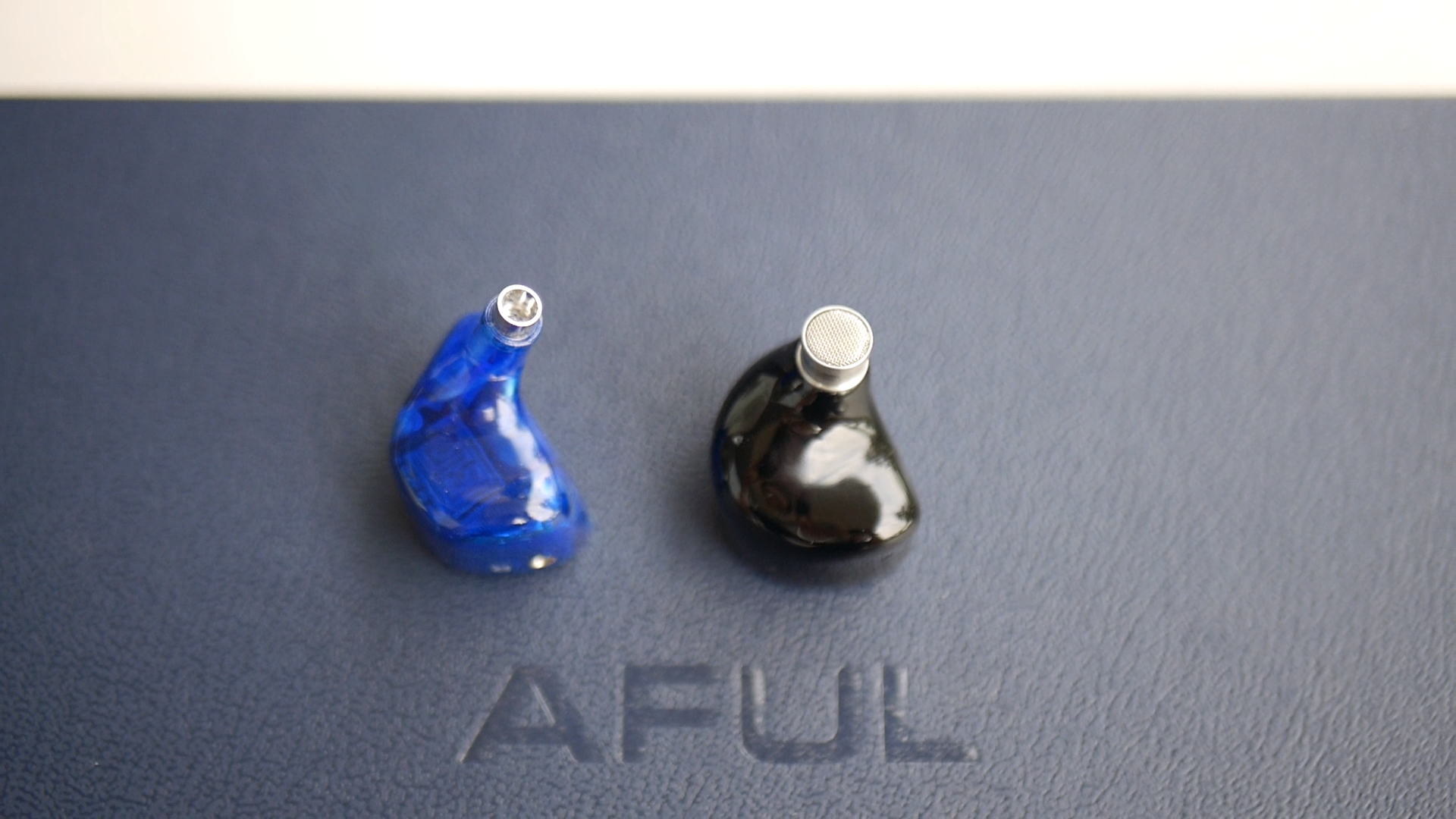
<p>The Performer 8S is a quad-brid IEM, pairing one dynamic driver with six balanced armatures, one passive radiator, and one micro planar magnetic driver. Per AFUL, the standout feature is the adjustable passive radiator, which lets the user switch between two bass tunings: a closed mode for solid, atmospheric, punchy bass, and an open mode for a deeper, more elastic, and softer character. The switch is mechanical, not electronic and not a swappable nozzle.</p>

<p><img src="/assets/images/Performer8s/slide_1.png" alt="" /></p>

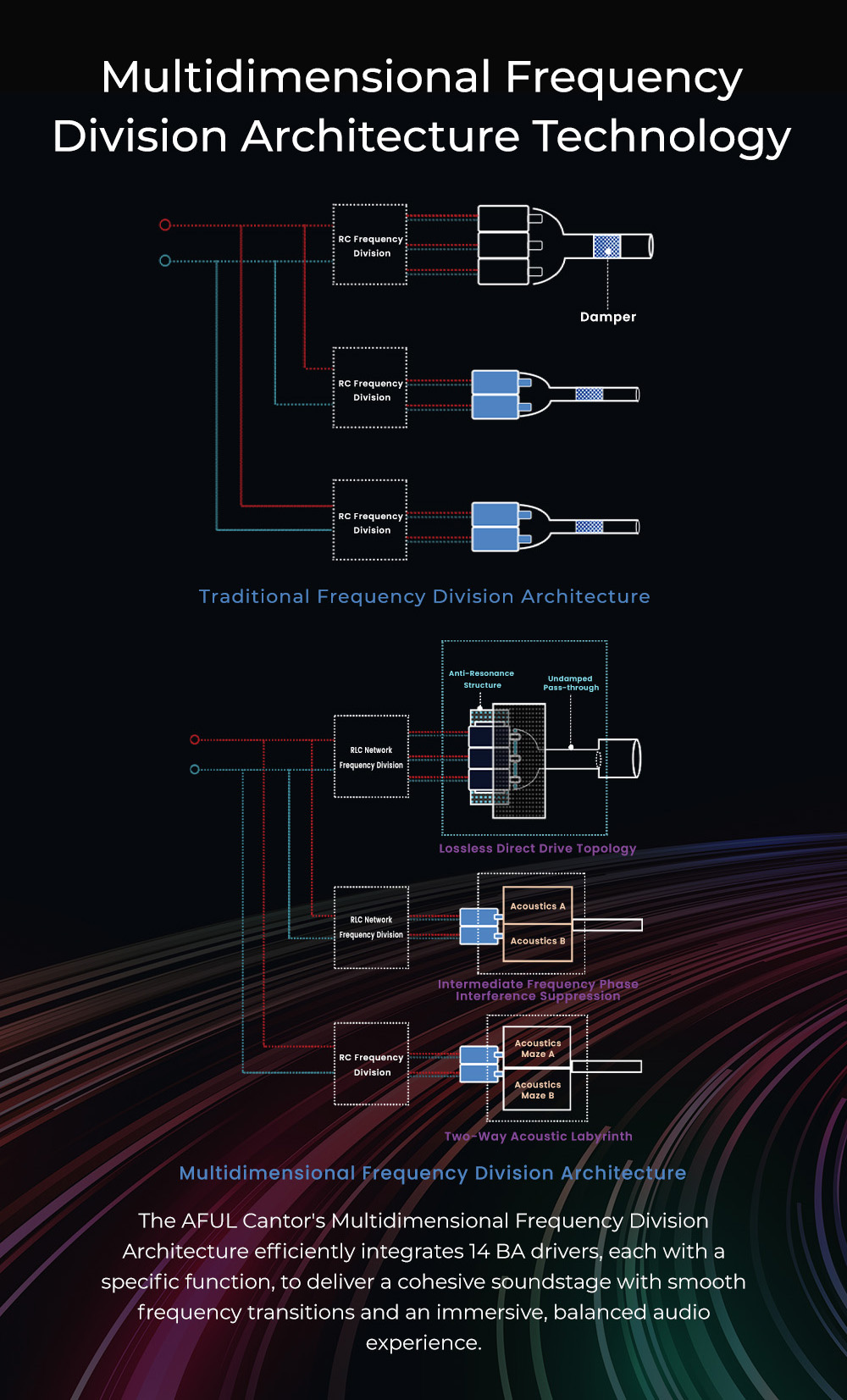
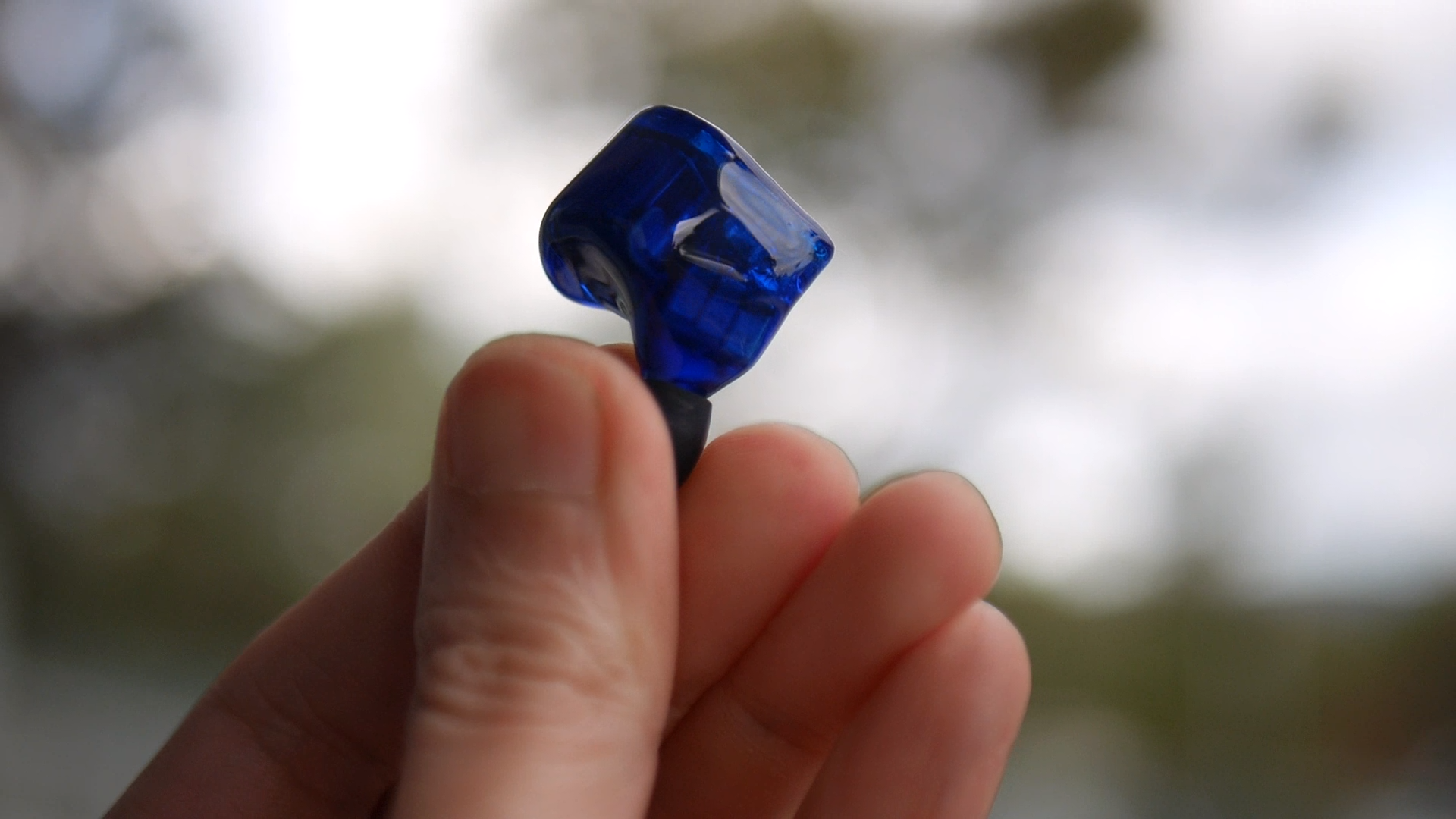
<p>Beyond the driver layout, AFUL relies on their usual in-house tech for electronics and physical tuning. There is the patented RLC (resistor-capacitor-inductor) network crossover, which they describe as refining the nine-driver array and eliminating resonance peaks. There is the RESInator micro-resonance technology, which uses 3D-printed acoustic pathways inside the shell to correct non-ideal driver behaviour. And there is the high-damping pressure-balanced venting, which splits the tuning and pressure-relief functions into independent acoustic paths so that sealing the tuning vent does not build ear pressure. The faceplates are designed after the echoes of Jupiter, which is aesthetic, not technical.</p>

<p>Build-wise, the earpieces are 3D-printed in medical-grade resin, with a 0.78 mm 2-pin connector for cable swappability. The stock cable is a six-strand, 392-core hybrid of silver-plated 4N single-crystal copper and plain single-crystal copper, terminating in either 3.5 mm single-ended or 4.4 mm balanced depending on the SKU.</p>

<table>
  <thead>
    <tr>
      <th>Spec</th>
      <th>Value</th>
    </tr>
  </thead>
  <tbody>
    <tr>
      <td>Driver configuration</td>
      <td>1 DD + 6 BA + 1 passive radiator + 1 micro planar (per side)</td>
    </tr>
    <tr>
      <td>Impedance</td>
      <td>26Ω ± 20%</td>
    </tr>
    <tr>
      <td>Sensitivity</td>
      <td>108 dB @ 1 kHz (units not stated by vendor)</td>
    </tr>
    <tr>
      <td>Frequency response</td>
      <td>10 Hz to 35 kHz</td>
    </tr>
    <tr>
      <td>Connector</td>
      <td>0.78 mm 2-pin</td>
    </tr>
    <tr>
      <td>Cable termination</td>
      <td>3.5 mm or 4.4 mm (SKU-dependent)</td>
    </tr>
    <tr>
      <td>Shell material</td>
      <td>3D-printed medical-grade resin</td>
    </tr>
  </tbody>
</table>

<p>AFUL pitches the Performer 8S as easy to drive, and the 108 dB sensitivity figure at 1 kHz is consistent with that claim. The catch is that AFUL does not state whether the figure is in dB/mW or dB/Vrms, which matters at this impedance. I find that the claim holds up. The IEM does not hiss from overly sensitive behaviour, and there is enough range of volume adjustment to find a comfortable level. That said, it has enough resistance that a good DAP or amplifier helps bring out a bit of extra performance.</p>

<p><img src="/assets/images/Performer8s/slide_7.png" alt="" /></p>

<h1 id="physical-handling">Physical Handling</h1>

<p>I have been daily-driving the Performer 8S for long stretches without any urge to take a break. The fit works for multi-hour sessions with no hot spots, no pressure buildup, and no pain points. Noise isolation is average for a vented IEM. Nothing leaks in either direction, but it does not stand out from the competition.</p>

<p><img src="/assets/images/Performer8s/slide_9.png" alt="" /></p>

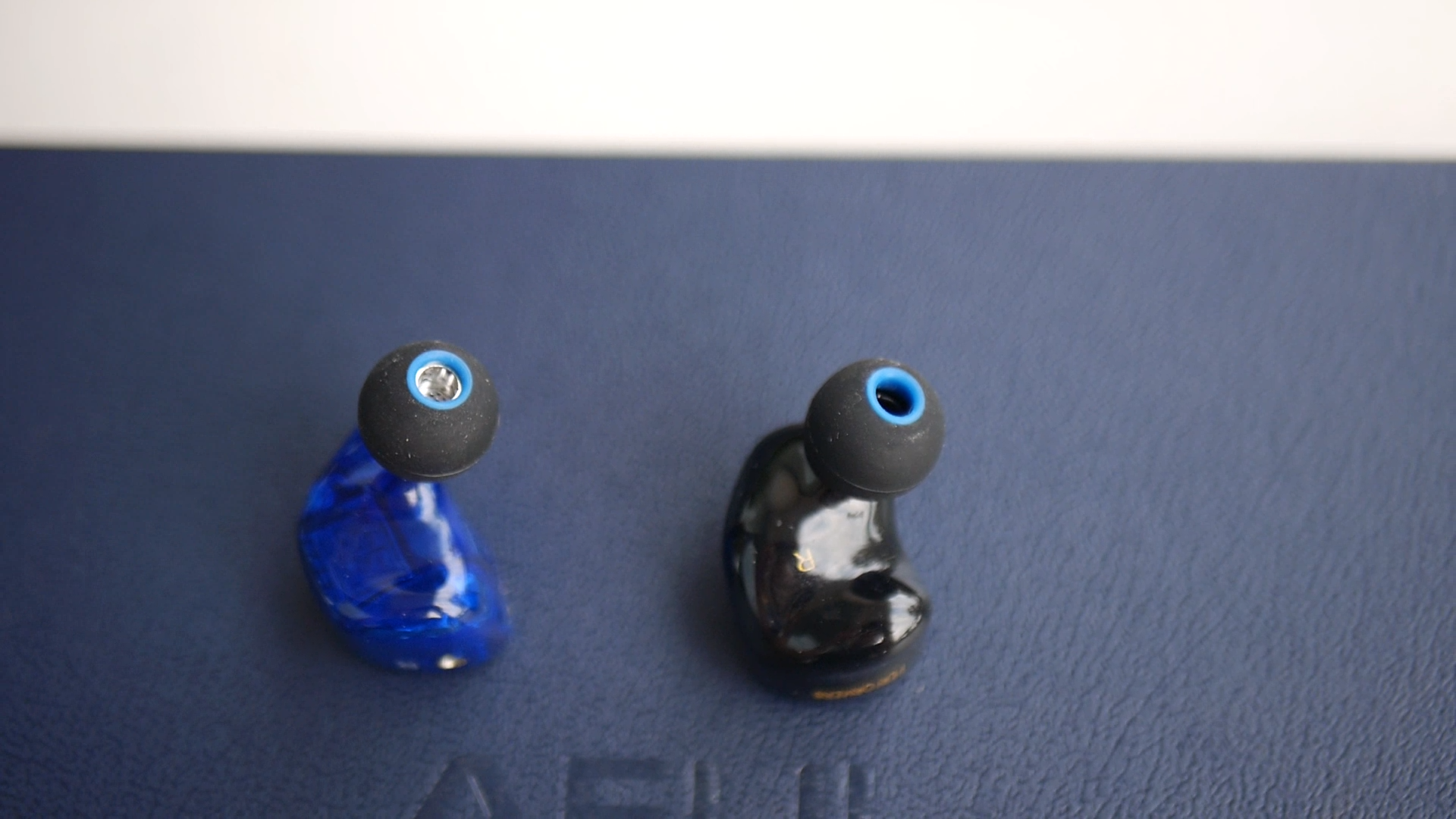
<p>The one nitpick I have is the nozzle. AFUL used to design narrower nozzles on their IEMs, including the Performer 7. The Performer 8S uses the wider nozzles that have become industry standard for this tier, which is fine, though I would have preferred AFUL hold the older profile. The stock silicone tips work well out of the box and are a good fit. If I had to recommend a roll, it would be the Eletech Baroque. The trade-off is meaningful. The Baroque gives a small gain in transparency, clarity, and the precision of instrument positioning within the stage, but it shortens the nozzle-plus-tip assembly so the IEM body sits flush against the ear, which in turn makes the soundstage slightly less spread out. Sancai Wide bore does much the same thing and is a good alternative. I tried the Divinus Velvet Wide Bore as well, and it did not seal on this shell, killing most of the bass body and impact. Spinfit W1 had the strongest isolation and crisped the tone slightly, but reduced bass impact, so it is a niche choice for listeners who want crisper treble and tighter seal at the cost of bass weight.</p>

<p><img src="/assets/images/Performer8s/slide_10.png" alt="" /></p>

<h1 id="sound-signature--tonal-balance">Sound Signature &amp; Tonal Balance</h1>

<p>The Performer 8S lands as a slightly warm, neutral-leaning IEM with a tilt that reads as artistic rule-bending rather than strict neutrality. The energy across the upper midrange and treble is present but sits a touch recessed compared to a strictly neutral reference, and the bass has body without bleeding into the lower mid. There is more musical richness here than flat accuracy, and the trade-off is real. On already-bright material, the upper-mid bite is slightly softened. On already-warm material, the lower-mid energy can make elements clump together at the loudest peaks.</p>

<p><img src="/assets/images/Performer8s/slide_13.png" alt="" /></p>

<p>AFUL’s particular midrange tuning shows up early in a listening session. They push the region around 800 to 1250 Hz earlier than most IEMs, which means listeners coming from a typical ear-gain compensated signature will find the first moments a touch strange. The shift is not wrong, but it asks the ear to recalibrate. Once it does, the rewards come through.</p>

<p>On <a href="https://www.youtube.com/watch?v=z2_Lrg6rRks">Shivers by Ed Sheeran</a>, the test track I use for sibilance and harshness, the Performer 8S comes through with zero harshness or sibilance. At the same time, the side-channel backing vocals, the small breaths in Ed’s voice, and the higher-frequency nuances are clearly audible. Ed’s voice lands with emotive warmth and richness, sitting at the upper edge of what I would call neutral-warm. If there were a touch more energy in the lower mid, I would start complaining, but in this state it is just right.</p>

<p>Female vocals are equally well-served. On <a href="https://www.youtube.com/watch?v=U6BkF23UPbM">Kiwi wa Boku ni Niteiru by See-Saw</a>, Chiaki Ishikawa’s voice is bright, vibrant, and clear without edging into harshness. The neutral-warm midrange gives her voice a musical richness that pairs nicely with the recording. The overdub on this track, the layered backing vocal, comes through with all the nuance and detail intact.</p>

<p>Strings and orchestra are rendered with body and authority, though the warmth is a double-edged sword here. On <a href="https://www.youtube.com/watch?v=74CYIdYoQ5w">Now We Are Free by 2CELLOS</a>, the cellos carry the rumble and resonance of the body, and the lower-midrange does not go thin. The same warmth, however, makes the cellos tone feel a touch muffled in some passages.</p>

<p><img src="/assets/images/Performer8s/slide_11.png" alt="" /></p>

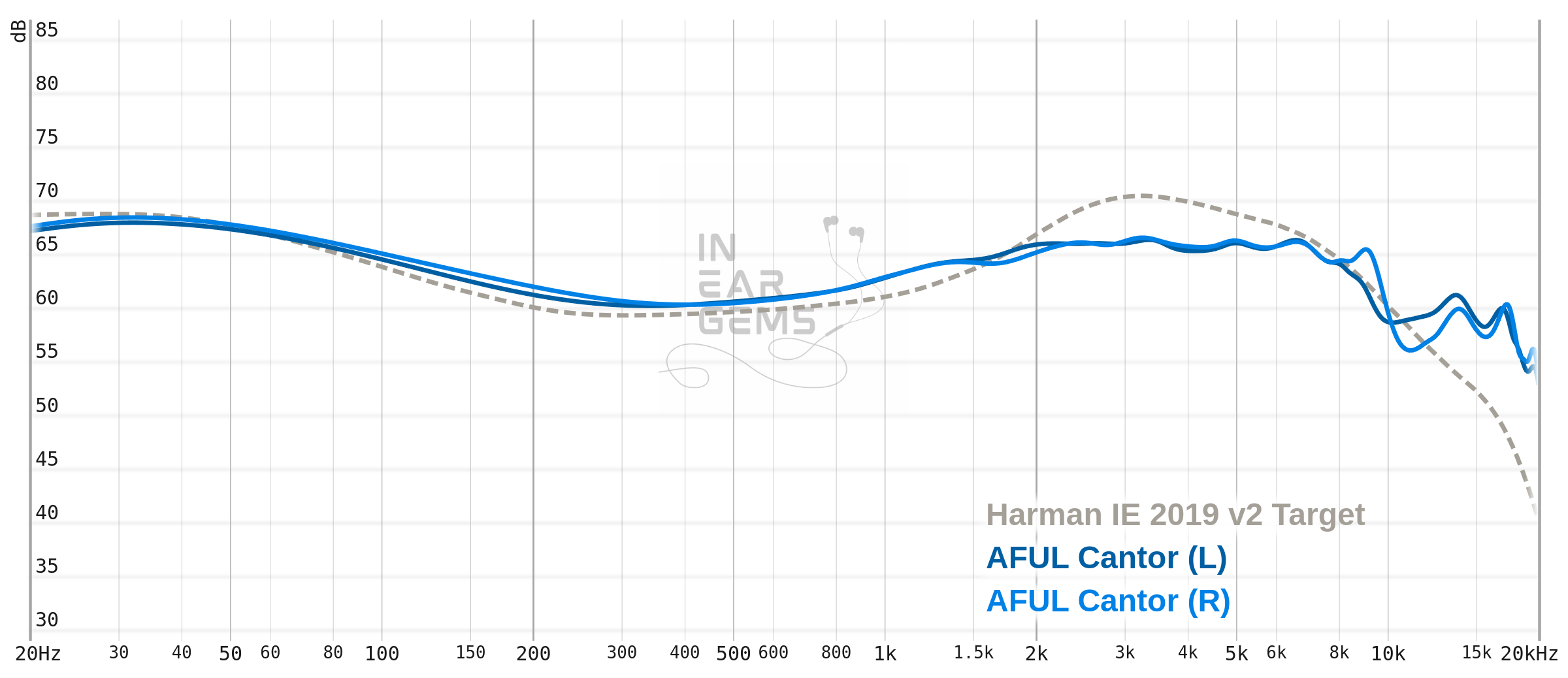
<p>On <a href="https://www.youtube.com/watch?v=AtA5DbswJ90">Ciaccona from Bach’s Violin Partita No. 2 in D Minor, performed by Kavakos</a>, the violin’s hall decay and breath are audible, dynamic variation is well-rendered, and the warmth slightly reduces the exposed scratchiness of the bow on the strings compared to a strictly neutral IEM like the Cantor. Some listeners will prefer this more musical tone. I do not mistake it for a lack of details. All the details that would satisfy careful, deliberate listening are present.</p>

<p>On <a href="https://www.youtube.com/watch?v=4lwPiXnOGZ4">Synchro BOM-BA-YE by Tokyo Kosei Wind Orchestra</a>, the hand claps at the beginning are crisp and detailed with a good sense of resonance. The brass and woodwind have plenty of details when I pay attention, the foreground layering over the bass instruments is clean, and the bass and drums are authoritative. The energy level reads slightly muted compared to a strictly neutral IEM, which I noted as a downside for listeners who want a brighter and more forward sound. The cymbals and hats on <a href="https://www.youtube.com/watch?v=Z5NoQg8LdDk">Playing God by Polyphia</a> are detailed and not harsh, with clear decay on the crashes and distinct hits on the hats. The bass guitar has good but not overbearing presence, with details audible on attention rather than a low-pitched hum.</p>

<p>On <a href="https://youtu.be/linQUK6jmg">Bach’s Goldberg Variations, recorded by Lang Lang</a>, the piano is balanced across registers. High notes cut through without harshness, the left hand is easy to follow and not overpowered by the highs, and the interplay between voices can be tracked with attention. The overall tone across the board is slightly warm, again reading as artistic rule-bending rather than strict correction.</p>

<p>The Performer 8S does not have swappable tuning switches or nozzles beyond the mechanical PR mode I discussed in the General Information section. For this review I tested in the closed (default) PR mode throughout.</p>

<h1 id="resolution">Resolution</h1>

<p>The Performer 8S is a resolving IEM, and the resolution story plays out across my test tracks with consistent evidence. On <a href="https://www.youtube.com/watch?v=Mtd24QIBJ5Y">ABC feat. Sophia Black by Polyphia</a>, the chaotic whole lands cleanly in cursory listening without anything overly mushing. When I slow down and pay attention, I can identify and trace any individual part of the track, including the faint Sophia Black overdub on the side channels from the opening.</p>

<p>Micro details surface without effort across my library. On <a href="https://www.youtube.com/watch?v=AtA5DbswJ90">Ciaccona from Bach’s Violin Partita No. 2 in D Minor, performed by Kavakos</a>, the breath of the violinist, the violin’s hall decay, and the dynamic variation across the piece are all clearly resolved. The same goes for the side-channel backing vocals and the breaths in Ed’s voice on Shivers, the bass-brass details in Synchro BOM-BA-YE, and the way the polyphia guitar layers stay distinct on Playing God.</p>

<p>The one weakness shows up in the loudest, most cluttered moments. On the busier sections of Strength of a Thousand Men (Live) by Two Steps from Hell, elements start to clump together. I cannot fully separate whether this is the warmth getting in the way or a ceiling of the IEM, but the effect is small.</p>

<p><img src="/assets/images/Performer8s/slide_12.png" alt="" /></p>

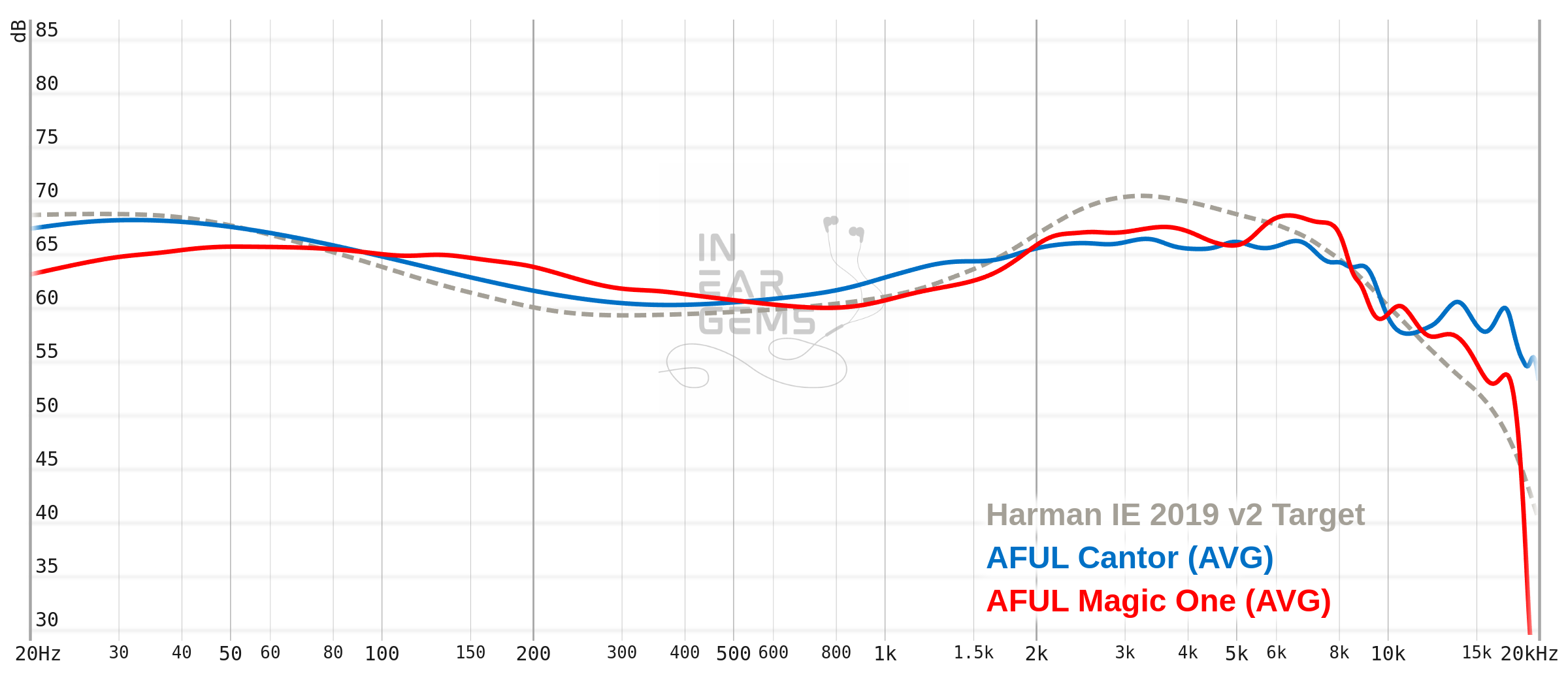
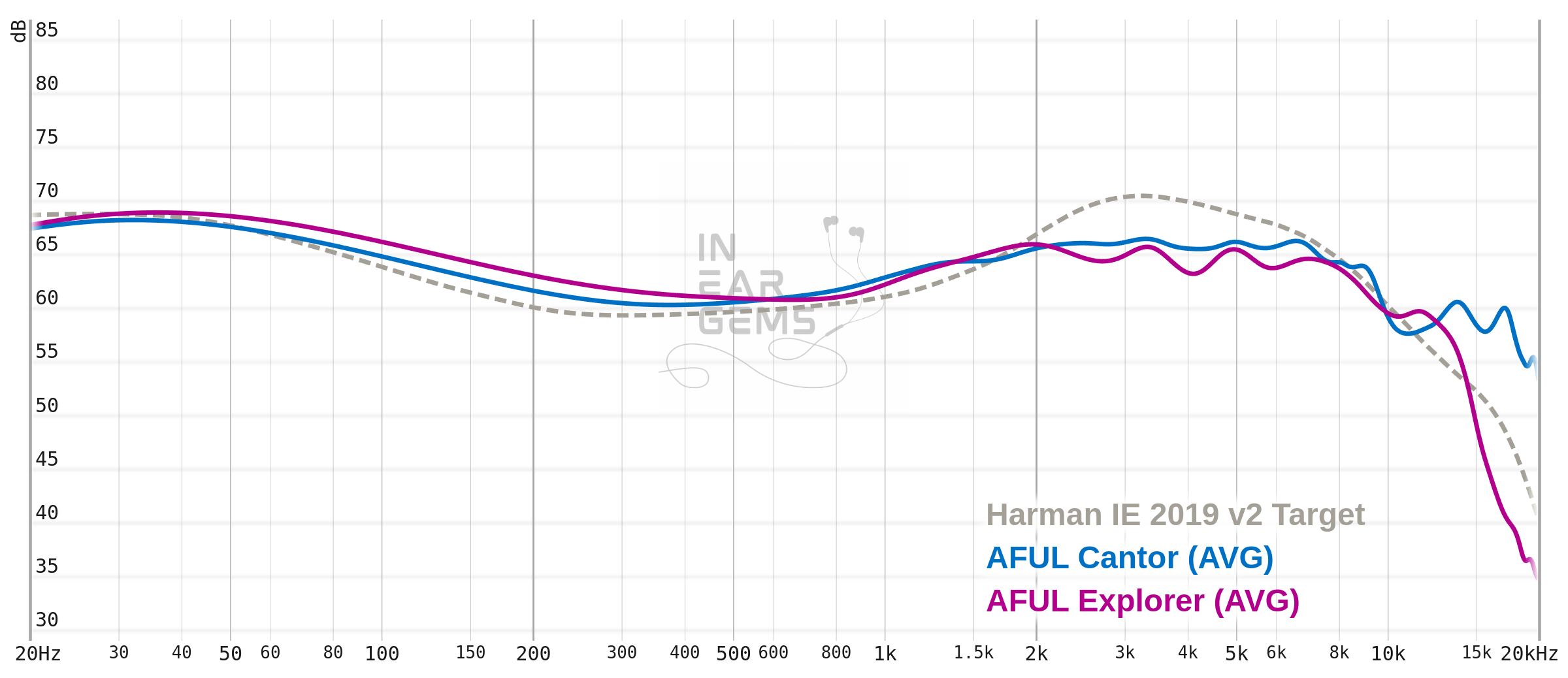
<p>Against the gate IEMs, the Performer 8S lands in the same band as the CFA Andromeda 2020, a small step above it in raw resolution, with a clear edge over the Moondrop Blessing 2. Against the AFUL Cantor, Cantor still surfaces more nuances and details when tonal differences are set aside, and the gap widens with each swap. The Performer 8S is quite close to Cantor, but not yet in its band.</p>

<p>I would place the Performer 8S at 4.5/5 on resolution.</p>

<h1 id="soundstage--imaging">Soundstage &amp; Imaging</h1>

<p>The Performer 8S does three-dimensional positioning well. Instruments sit at distinct left-to-right positions and at distinct depths, with some elements floating clearly above the head in dense mixes. The presentation feels like an immersive bubble around the head rather than a flat plane across the ears. The bubble wraps closely around the head rather than projecting all the way into the room (a rare trick for any IEM or headphone), but the positioning of instruments within that bubble is precise and three-dimensional.</p>

<p>On <a href="https://www.youtube.com/watch?v=PhJWAWqExQs">Original Sound Effect Track - Memory from Gundam Seed Destiny OST album</a>, the instrumental elements sit far back, feeling like they come from outside the head on the front left and front right, while the sound effect stays in the middle, slightly at the front of my head. There is a clear bubble of sound all around my head, not speaker-like, but immersive.</p>

<p>On <a href="https://www.youtube.com/watch?v=RXcLuLQ_5oM">Shadow of Baar Dau</a>, the vocal chants feel realistically distant, more in front of the face than inside my head. A spacious rendition, which is what this background track expects.</p>

<p>The IEM translates well to games. On recordings of CS:GO gameplay, distant gunshots and explosions carry a convincing sense of distance and location, with forward positioning good but not at the level of a two-speaker setup.</p>

<p>The Performer 8S sits in the same band as the AFUL Cantor on this dimension.</p>

<h1 id="bass-performance">Bass Performance</h1>

<p>The Performer 8S handles bass and dynamic with authority. Crescendos are communicated with grin-inducing impact, and every beat carries grippy texture and rumble without smearing. The bass does not skimp on the energy at the top of the note or the decay on the way down. Across busy passages, the IEM holds up well, with the only softness showing up in the very loudest, most cluttered moments.</p>

<p>On <a href="https://www.youtube.com/watch?v=kaBMXXo-vdU">A Reckoning in Blood from The Ghost of Tsushima OST</a>, the crescendo at 01:10 lands with the kind of impact that makes me grin and feel my blood pumping when it drops. Every beat has excellent control on the attack side without skimping on the energy or decay.</p>

<p>On <a href="https://www.youtube.com/watch?v=POmTXTBtRZA">Strength of a Thousand Men (Live) by Two Steps from Hell</a>, the bass line at the beginning has a clear rumble, and the bass notes carry a clear sense of texture, feeling grippy. The IEM shows excellent control here. The kick drums on <a href="https://www.youtube.com/watch?v=Z5NoQg8LdDk">Playing God by Polyphia</a> are impactful, with clean attacks and authoritative physical punch at the top of the note. The bass guitar has good but not overbearing presence, with details audible on attention rather than a low-pitched hum.</p>

<p><img src="/assets/images/Performer8s/slide_15.png" alt="" /></p>

<p>It is worth noting that this is not a bass-head IEM. It takes whatever bass is in the track and reproduces it well. It does not make bass the dominant part of the track.</p>

<p>The Performer 8S makes the music want to move. Tracks with strong rhythms land with a clear sense of drive and momentum. Toe-tapping, in other words.</p>

<p>I would place the Performer 8S at 5/5 on bass and dynamic.</p>

<h1 id="selected-comparisons">Selected Comparisons</h1>

<h1 id="vs-aful-cantor">Vs AFUL Cantor</h1>

<p><img src="/assets/images/Performer8s/slide_17.png" alt="" /></p>

<p>The Cantor is the same house but a meaningfully different tuning. Where the Performer 8S is warm, with a slightly recessed upper midrange and a bass-forward lean, the Cantor is leaner and more neutral, which makes its details easier to surface by default. In raw resolution, Cantor still pulls more nuances and details when tonal differences are set aside, and the gap widens with each swap. The Performer 8S is close to Cantor in resolution but not yet in its band.</p>

<p><img src="/assets/images/Performer8s/slide_14.png" alt="" /></p>

<p>On soundstage and imaging, however, the two sit in the same band. Both do three-dimensional positioning inside a tight, immersive bubble around the head. The Cantor’s leaner tone might give the impression of more space because cymbals and air are more forward, but the underlying imaging capability is similar.</p>

<p>The Cantor is the IEM for listeners who want a neutral AFUL house sound with technical performance at the top of the brand’s range. The Performer 8S is the IEM for listeners who want a slightly warmer, more musical ride that still climbs high enough to challenge the Cantor on imaging and come close on resolution. They are siblings, not rivals.</p>

<h1 id="vs-aful-performer-8-the-original">Vs AFUL Performer 8 (the original)</h1>

<p>The Performer 8S is the follow-up to the original Performer 8, and they sound meaningfully different. The original Performer 8 is crisp, clean, flat, and precise. The Performer 8S is tuned for warmth, with body, bass, and a cozier overall presentation.</p>

<p><img src="/assets/images/Performer8s/slide_16.png" alt="" /></p>

<p>The technical performance of the Performer 8S is also a clear step forward. The original Performer 8 was detailed but flat, not punchy or dynamic enough, and its soundstage was rather flat, though precise. The Performer 8S pushes bass quality, dynamic, and stereo imaging forward without losing the resolution that made the original Performer 8 a breakthrough IEM when it launched.</p>

<p>If you are coming from the original Performer 8 expecting the same IEM but better, you will likely be disappointed by the change. The Performer 8S is a different IEM, not a refined version of the same one. For an upgrade in the same house style (crisp, clean, flat, precise), the AFUL Cantor remains the true upgrade path.</p>

<h1 id="conclusions">Conclusions</h1>

<p>The original Performer 8 was the IEM that put AFUL on my radar because it was the first mid-fi IEM to convincingly land in my 4/5 band on resolution. That was a big deal, since most mid-fi IEMs back then, even the $600 to $700 ones, barely cleared my 3/5 on resolution. However, the original Performer 8 was also flawed on the dynamic and bass front. Its soundstage was rather flat too, though precise enough.</p>

<p>The industry, filled with skillful and enthusiastic engineers, of course did not stand still. By 2025, the IEM market had jumped significantly to the point that the level of detail of the original Performer 8 is no longer a wow factor but somewhat an <em>expectation</em>. So I was curious, and a bit concerned, about how AFUL would follow up. The Performer 8S answers that question.</p>

<p>It is both great and <em>not great</em> for some listeners. The great thing is that AFUL pushed the technical performance forward without losing the resolution, which was the original Performer 8’s defining trait. The not-great thing is that the Performer 8S is a different IEM from the original. The original is crisp, clean, flat, and precise. The Performer 8S is tuned for warmth, with body, bass, and a cozier overall presentation. If a listener is expecting the same IEM but better, they could be severely disappointed.</p>

<p>There are also some other concerns worth noting. The midrange is warmer than usual, which could lead to a muffled sensation on a few tracks. AFUL has a particular way of tuning the midrange that pushes the region around 800 to 1250 Hz earlier than other IEMs, so the first moment with an AFUL IEM could be somewhat strange if you are coming fresh from a usual IEM with later ear-gain compensation tuning. Despite my praise for the bass, this is not a bass-head IEM. It just takes whatever bass there is in the track, pushes it a little, and reproduces it well. It does not make bass the dominant part of the track.</p>

<p>Still, I would recommend this IEM as a jack-of-all-trades, everyday-carry, “nice” IEM in your collection. If we put aside the competition right now for a moment, I would say, on its own, the Performer 8S is as good as if not better than quite a few kilobuck-class IEMs that I previously tried, or even wanted to buy. However, it is no longer 2023.  The Performer 8S, whilst excellent, is more in line with what I expect from a competent mid-fi IEM in 2026. AFUL crossed the line to bring a top notch performance to the mid-fi, but so did quite a few others.  As a consumer, I guess it is a win for your since you finally have something to carry everyday, and still stand up to critical listening like a properly kilobuck-class IEM.</p>

<p><strong>What I like about this IEM:</strong></p>

<ul>
  <li>Outstanding bass and dynamic performance with grippy texture and authoritative impact</li>
  <li>Three-dimensional soundstage and imaging with precise instrument positioning inside an immersive bubble around the head</li>
  <li>High resolution with all the details that would satisfy careful, deliberate listening</li>
  <li>Slightly warm tuning that gives vocals and strings musical richness without going harsh</li>
  <li>Comfortable for multi-hour sessions with no pressure buildup or pain points</li>
</ul>

<p><strong>What could be improved:</strong></p>

<ul>
  <li>The slight warmth softens the cellos tone and reduces the exposed scratchiness of violin in some passages</li>
  <li>Energy level reads slightly muted compared to a strictly neutral IEM on busy orchestral material</li>
  <li>Softness in the loudest, most cluttered moments where elements clump together</li>
  <li>Larger nozzles than AFUL’s older IEMs (Performer 7 and before), with a fit that can be tricky for shallow ear canals with stock tips</li>
</ul>

<p><strong>Absolute Sonic Quality Rating: 4.5/5 - Great</strong></p>

<ul>
  <li>Timbre and tonality: 3.5/5 - Good</li>
  <li>Bass and dynamic: 5/5 - Outstanding</li>
  <li>Resolution: 4.5/5 - Great</li>
  <li>Soundstage and imaging: 5/5 - Outstanding</li>
</ul>

<p><strong>Bias Score: 4.5/5 - I like this IEM</strong></p>

<p><img src="/assets/images/Performer8s/slide_18.png" alt="" /></p>]]></content><author><name>NKT</name></author><summary type="html"><![CDATA[The AFUL Performer 8S is the rare IEM I have reviewed twice. The first assessment began at release but was cut short by burnout and a months-long hiatus from anything audio. Now, with a freshly revised methodology and a different head for listening, I come back to this IEM, probably way too late in the fast moving world of personal audio. So, how does P8s still fare?]]></summary></entry><entry><title type="html">Juzear Harrier - The Caged Bird</title><link href="https://iegems.nk-tran.com//2025/12/29/review-Juzear-Harrier.html" rel="alternate" type="text/html" title="Juzear Harrier - The Caged Bird" /><published>2025-12-29T00:00:00+00:00</published><updated>2025-12-29T00:00:00+00:00</updated><id>https://iegems.nk-tran.com//2025/12/29/review-Juzear-Harrier</id><content type="html" xml:base="https://iegems.nk-tran.com//2025/12/29/review-Juzear-Harrier.html"><![CDATA[<p>Can data really guide the creation of an IEM for most listeners? That’s the premise behind the Juzear Harrier, developed with Super* Review using Squiglink’s database of measurements from multiple reviewers. The concept is compelling. But does the execution deliver? Let’s explore.</p>

<h2 id="forewords">Forewords</h2>

<ul>
  <li>What I look for in an IEM is <strong>immersion.</strong> I want to feel the orchestra around my head, track individual instruments, and hear all of their textures and details. I’m not picky about tonality, as long as it does not make the orchestra, violin, cellos, and pianos sound wrong.</li>
  <li>I rate IEMs within with a consistent scale from <strong>1 (Poor) to 3 (Good) to 5 (Outstanding)</strong>. An overall ranking of 3/5 or above is considered positive.</li>
  <li>Ranking list and measurement database are on <a href="https://iegems.nk-tran.com/">my IEM review blog</a>.</li>
  <li>The terminology for subjective impressions in this review is based on the Audio Wheel for reproduced sound defined in the technical report <a href="https://www.itu.int/pub/R-REP-BS.2399">ITU-R BS.2399-0</a></li>
  <li><strong>This review is based on a review sample from Hifigo (Thank you!).</strong> I have no affiliation with or financial interest in Hifigo or Juzear.</li>
  <li>The unit is available on <a href="https://hifigo.com/products/juzear-harrier">Hifigo Web Store</a> at $299.</li>
</ul>

<h2 id="general-information">General Information</h2>

<p><img src="/assets/images/Harrier/1.jpg" alt="" /></p>

<p>The Harrier is a collaboration between Juzear and the famous audio reviewer Super* Review (Mark Ryan), who runs the Squiglink database. Harrier is the first in the so-called “Tuned with Squiglink” program: “a program developed by Mark Ryan Sallee to help IEM manufacturers create products that sound their best while avoiding common tuning pitfalls. Drawing on over eight years of experience reviewing and measuring more than 500 IEMs, Mark combines careful listening, prototype measurements, expert feedback, and parametric EQ (PEQ) guidance to refine each IEM’s sound. This program isn’t about hitting a specific FR target curve — it’s about tuning IEMs to sound their best for the target customer.”</p>

<p>According to the designers of Harrier, this IEM has one goal: “Deliver a balanced tuning that will appeal to a wide audience with a budget of around $330. An analysis of Squiglink usage patterns reveals two strong trends in tuning preference at this price bracket: DF neutral + bass boost, and IEF neutral + bass boost. And looking specifically at purchase intent analytics, an advantage emerges for IEF neutral + bass boost. With that direction in mind, we iterated on the tuning of Harrier, making adjustments based on Squiglink measurements and listening feedback, to ensure a smooth treble response on top of a proven popular tuning preference.”</p>

<p><img src="/assets/images/Harrier/2.jpg" alt="" /></p>

<p>The Harrier features a driver configuration of 1DD + 6BA + 2 Micro Planar Drivers, housed in resin shells. With an impedance of 32Ω and sensitivity of 112dB ± 1dB SPL/mW, I found it easy to drive in the sense that it is not too demanding on the amp, nor it is too sensitive to the point of hissing with any source device. The frequency response range covers 20Hz - 20kHz, and THD+N is rated at ≤0.8%. The net weight is 7.1g per side, which feels reasonably lightweight during extended listening sessions. The IEM comes with swappable plugs for both 3.5mm and 4.4mm connections. It utilizes a four-way crossover design to manage the complex driver array.</p>

<h2 id="in-the-box">In the Box</h2>

<p><img src="/assets/images/Harrier/3.jpg" alt="" />
<img src="/assets/images/Harrier/4.jpg" alt="" />
<img src="/assets/images/Harrier/5.jpg" alt="" />
<img src="/assets/images/Harrier/6.jpg" alt="" />
<img src="/assets/images/Harrier/7.jpg" alt="" /></p>

<p>The Juzear Harrier comes with the following accessories:</p>

<ul>
  <li>Leather case with a red lanyard</li>
  <li>One IEM cable with interchangeable plug (3.5mm and 4.4mm)</li>
  <li>3 types of silicone ear tips, plus a pair of foam tips, stored in a proper tips carrying case</li>
  <li>One cleaning cloth</li>
  <li>The IEM earpieces themselves</li>
</ul>

<p>The included leather case is unique, feels good to hold, offers good protection to the IEM, and looks pleasant. It’s the highlight of the accessories pack for me. The variety of included ear tips shows that they considered different user preferences. The tips are stored in a dedicated carrying case, which is practical.</p>

<p>The packaging itself could be better. At first glance, I did not expect the Harrier to be $300. Though, to be fair to Juzear, some even more expensive IEMs from other brands have even more plain packaging. Despite the more basic packaging, the included accessories are of good quality.</p>

<h2 id="experience">Experience</h2>

<h3 id="physical-handling">Physical Handling</h3>

<p><img src="/assets/images/Harrier/8.jpg" alt="" /></p>

<p><strong>The Harrier is average in terms of comfort</strong>. During long sessions with the stock silicone ear tips, I experienced no immediate ear fatigue that would require taking a break, though I did feel some pressure on the inner ears after removing the IEMs after extended use.</p>

<p><strong>The isolation is surprisingly very good</strong>. When sitting in a less noisy place, the isolation is so high that with music on, it’s like I don’t hear the world anymore.</p>

<p>The stubby nozzles of the earpieces might benefit from longer ear tips like Spinfit, which could offer a more secure fit. The included cable is a 2-core design, which I don’t mind, but I think a 4-core cable would have been better. The issue with the 2-core cable is that after the chin splitter, each part of the cable going to the ear piece has only 1 core, leading to more kinks and tangles.</p>

<p><strong>My number one recommendation for ear tips would be pentaconn COREIR brass ear tips</strong>. These ear tips have a metal tube inside to lengthen the nozzles and (usually) further emphasize the treble energy. The lengthening of nozzles makes the fit of Harrier more stable in the ears. The added treble also gives the much-needed relief to the subdued signature of Harrier.</p>

<h3 id="sound-signature--tonal-balance">Sound Signature &amp; Tonal Balance</h3>

<p><img src="/assets/images/Harrier/9.jpg" alt="" />
<img src="/assets/images/Harrier/10.jpg" alt="" />
<img src="/assets/images/Harrier/11.jpg" alt="" /></p>

<p><strong>The Harrier presents a neutral with bass boost signature that significantly subdues the treble</strong>, making it quite different from other modern IEMs. I found that it has zero harshness or sibilance across recordings, which is excellent for those sensitive to these issues. This is one of the IEM’s strengths, as it can tame potentially harsh recordings without making them sound muted or muffled. For example, with “Shivers” by Ed Sheeran, the IEM shows zero harshness or sibilance across the track, which is impressive given how sibilant this recording can be with other IEMs.</p>

<p><strong>The midrange tuning follows the older Harman IE 2019 and Moondrop VSDF targets with clear emphasis on the upper midrange (around 2.5-3kHz) and a concave slope from around 800Hz</strong>, which creates a crystalline, laser-focused character but makes vocals sound slightly hollow. These traits are highlighted with Ed Sheeran’s voice on “Shivers,”. To be sure, I also test with other tracks in the same album and the conclusion remained the same: overemphasized head voice, lacking chest voice, leading to a slightly hollow tone, lacking certain emotive warmth I expected.</p>

<p>With Chiaki Ishikawa’s voice on “Kiwi wa Boku ni Niteiru” by See-Saw, I again find zero harshness or sibilance. The voice sounds bright and clear, but, again, the chest voice is a bit lacking, leading to a slight hollow sensation in the voice.</p>

<p><strong>The bass is well-controlled with good texture</strong>, with an emphasis in the subbass region. With “A Reckoning in Blood” from The Ghost of Tsushima OST, I find the subbass (the rumble during and at the end of the note) quite strong and well controlled with good texture. However, the beats from 02:50 are not quite up to my standard. The attack of the drum notes is a bit dull, not emphasized enough. This applies to both the snappy “crack” at the beginning of the note (product of treble) and the initial energy of the note attack (product of 150Hz bass).</p>

<p><strong>The treble is significantly subdued, which eliminates harshness and sibilance but also reduces the sense of air, space, and harmonics that contribute to a more natural presentation</strong>. With “Playing God” by Polyphia, cymbals and hats are quite dull and quiet. I have to pay very careful attention to detect these instruments. Because they are too subdued, their nuances and details do not come through clearly either. That said, when I boost the volume to hear these instruments, I find they are quite detailed. The sense of reverberation, resonance, and space of this track is quite lacking compared to my usual experience. With “Bach’s Goldberg Variations” recorded by Lang Lang, the sense of ambience and reverberation built in this track is not fully reproduced by the Harrier IEM. The track feels more “muted” and dampened than my usual experience.</p>

<h2 id="technical-performance">Technical Performance</h2>

<h3 id="resolution">Resolution</h3>

<p><img src="/assets/images/Harrier/12.jpg" alt="" />
<img src="/assets/images/Harrier/13.jpg" alt="" /></p>

<p><strong>I don’t think the Harrier does a particularly outstanding job when maintaining the separation between instruments in the mix when the music gets complex</strong>. With “ABC feat. Sophia Black” by Polyphia, the whole thing becomes more of a chaotic, high-energy blob of sound that would require some effort to separate what from what. In less busy parts of the track, and if I pay enough attention, I can detect and hone into the faint overdub on the side channels. I think all the elements are just a bit too close together, lacking the space or gap between them.</p>

<p><strong>The Harrier performs well with micro-details, particularly highlighting breaths and subtle elements thanks to its upper midrange emphasis</strong>. With “Ciaccona from Bach’s Violin Partita No. 2 in D Minor” performed by Kavakos, the micro details, particularly the breath of Kavakos are quite highlighted, almost forced, thanks to the upper midrange emphasis of this Harrier IEM. The reverberation and decays are also quite well controlled and nuanced.</p>

<p>In my A/B tests against benchmark IEMs, I found that the Harrier is very close, if not slightly better than the Moondrop Blessing 2, especially in terms of micro resolution. It’s a bit more nuanced and textured than the Blessing 2. However, it’s quite outclassed by the CFA Andromeda, especially in busy tracks like “ABC feat. Sophia Black” where the track sounds noticeably clearer, with everything more incisive, separated, and easy to follow with the Andromeda vs Harrier.</p>

<p><strong>So, I would rate the Harrier at 3/5 (good) on the resolution front</strong>.</p>

<p><img src="/assets/images/Harrier/17.jpg" alt="" /></p>

<h3 id="soundstage--imaging">Soundstage &amp; Imaging</h3>

<p><strong>The Harrier offers a decent soundstage with a reasonable sense of depth</strong>, meaning the music sounds like there is more depth (contrast between near and far elements in the mix) and layering vs the very flat, 2D presentation of IEMs like Moondrop Blessing 2. However, Harrier lacks the precision in both positioning and near-to-far layering.</p>

<p>With “Original Sound Effect Track - Memory” from Gundam Seed Destiny OST, most of the “actions” in the track feel very close to the head or inside the head, with the exception of the brass sound at 1:10 on the right channel, which always sounds like it comes from out of the head with most IEMs. In general, there is still a great sense of openness and space, even though most of the sound seem to be distributed around the center of the stage, inside or just slightly in front of the head. There is a sense of layering between near and far sound, but it’s rare and not very prominent.</p>

<p>With “Shadow of Baar Dau,” the sense of ambience and openness is quite okay, surprisingly. However, closer inspections still reveal sub-optimal performance. For example, the sense of distance of background elements such as the string section at 0:20 on front left and vocal chants on the front right at 00:40 are still not fully conveyed. The presentation feels open and with good sense of space and ambience, but at the same time, it’s not very precise and does not invoke a strong sense of “3D” layering.</p>

<p>In my A/B tests using “The Fate of Tsushima” against the Blessing 2 and Andromeda 2020, I found that the Harrier conveys the sense of depth noticeably better than the Blessing 2. However, it lacks the precision in both positioning and near-to-far layering of the Andromeda.</p>

<p><strong>The Harrier does a surprisingly decent job with FPS games</strong>. It can convey both left-to-right and front-to-back positioning. The key weakness here is that it is not very precise, so it’s hard to gauge the distance.</p>

<p><strong>I would rate the Harrier at 3.5/5 for soundstage and imaging</strong>.</p>

<p><img src="/assets/images/Harrier/18.jpg" alt="" /></p>

<h3 id="bass-performance">Bass Performance</h3>

<p><img src="/assets/images/Harrier/14.jpg" alt="" /></p>

<p><strong>The quality of bass information is quite high, and the Harrier presents and controls the bass region very well</strong>, evidenced by the texture and nuance and “grip” in the rumble of bass notes. The subbass (the rumble during and at the end of the note) is quite strong and well controlled with good texture.</p>

<p><img src="/assets/images/Harrier/15.jpg" alt="" /></p>

<p>With “A Reckoning in Blood” from The Ghost of Tsushima OST, the IEM does the crescendo at 01:10 quite well. It scales from very quiet to loud “beat drop” with full power and quite incisive. I can feel the thrill and blood rush when the beat drops, which indicates good dynamic reproduction in my book. However, the beats from 02:50 are not quite up to my standard. Simply put, the attack of the drum notes are a bit dull, not emphasized enough. This applies to both the snappy “crack” at the beginning of the note (product of treble) and the initial energy of the note attack (product of 150Hz bass). This is a shame because the subbass is quite strong and well controlled with good texture.</p>

<p><img src="/assets/images/Harrier/16.jpg" alt="" /></p>

<p>With “Strength of a Thousand Men (Live) by Two Steps from Hell,” the quality of bass (I’m talking sheer bass information, not “beat” or “drum”) is quite high. The Harrier presents and controls the bass region very well, evidenced by the texture and nuance and “grip” in the rumble of bass notes. However, the beats are not cleanly separated and snappy / incisive enough for my taste. I blame the weaker treble, which in turn dulls the note attacks.</p>

<p><strong>I think this IEM is not always toe-tapping</strong>. While it does have good bass quality and texture, the lack of snappy, incisive note attacks due to the subdued treble affects the rhythmic impact that makes music feel “toe-tapping.” The beats don’t have enough crispness and precision to consistently drive the rhythm forward in a way that makes you want to tap along.</p>

<h2 id="conclusions">Conclusions</h2>

<p>The Harrier represents an interesting experiment in data-driven IEM design that, in theory, is something I would wholeheartedly support.</p>

<p><strong>However, the final product surprisingly missed the mark for me</strong>. The midrange tonality has a consistent “hollowness” that I found throughout my listening sessions. The upper midrange emphasis makes voices sound crystalline and laser-focused, but at the expense of chest voice, creating this slightly hollow character. While this tuning isn’t entirely disagreeable, and would even be great for many listeners, it’s not something that makes the Harrier uniquely great, since many skilled IEM engineers in 2025 can nail good midrange tonality already.</p>

<p><strong>The biggest weakness of this IEM is the design decision to significantly subdue the treble</strong>. Treble does more than just make cymbals and hi-hats loud in the mix - it controls clarity, gives precision to note attacks of drums, conveys the sense of air and ambience embedded in recordings, and improves the separation between elements in the mix. The Harrier suppressed the treble too far, to the point of robbing most of the “niceties” in the recording, leaving a bare-bones midrange and bass presentation. This decision robs Harrier of the crispness and snappiness necessary to accompany the great quality of bass that it provides.</p>

<p>Yes, the treble of Harrier is safe, but it is too safe to the point of suffocating. When I boost the treble to hear the micro planar drivers that Juzear used, I found the drivers to be highly capable of nuances and details. I think the whole technology platform that Juzear built underneath Harrier was sound. The reason it doesn’t sound as nuanced, detailed, and dynamic as it could be is due to the subdued treble, first and foremost.</p>

<p><strong>I think the team “overfitted” the IEM to the ideal of making something that fits as many listeners as possible</strong>. Of course, when you don’t want to offend anyone, you would just kill the treble, so no one would complain that the IEM is too harsh. But making it dull to the point of wasting capable drivers and electronic design is not a good alternative. The answer should be somewhere in the middle.</p>

<p>On the positive side, I have to praise Super* Review’s decision to boost the bass as much as he did in the Harrier. Given his preference for less bass, his decision to give Harrier enough bass was somewhat of a “saving grace” for this IEM.</p>

<p><strong>The Harrier would be ideal for listeners who are sensitive to sibilance and harshness</strong>, and who prefer a warm, mid-focused presentation with zero harshness. However, those who value a more balanced treble response, better instrument separation in complex arrangements, or more precise imaging might find the Harrier limiting.</p>

<p><img src="/assets/images/Harrier/19.jpg" alt="" /></p>]]></content><author><name>NKT</name></author><summary type="html"><![CDATA[Can data really guide the creation of an IEM for most listeners? That’s the premise behind the Juzear Harrier, developed with Super* Review using Squiglink’s database of measurements from multiple reviewers. The concept is compelling. But does the execution deliver? Let’s explore.]]></summary></entry><entry><title type="html">Dunu ITO - Unpretentious Fun</title><link href="https://iegems.nk-tran.com//2025/12/28/review-Dunu-ITO.html" rel="alternate" type="text/html" title="Dunu ITO - Unpretentious Fun" /><published>2025-12-28T00:00:00+00:00</published><updated>2025-12-28T00:00:00+00:00</updated><id>https://iegems.nk-tran.com//2025/12/28/review-Dunu-ITO</id><content type="html" xml:base="https://iegems.nk-tran.com//2025/12/28/review-Dunu-ITO.html"><![CDATA[<p>What’s the point of an IEM? To reproduce music as neutrally as possible, letting the recording shine through without coloration? Recent research and community efforts toward target curves like Harman, Diffuse Field, and others have brought us closer to that ideal of scientific correctness. But shouldn’t an IEM also be fun? Adding character to music without outright distorting it? Perhaps it’s time for something unpretentious—neither trying to be the pinnacle of scientific accuracy nor throwing all refinement out the window. In this spirit, let’s examine how the Dunu ITO fares.</p>

<h1 id="forewords">Forewords</h1>

<ul>
  <li>What I look for in an IEM is <strong>immersion.</strong> I want to feel the orchestra around my head, track individual instruments, and hear all of their textures and details. I’m not picky about tonality, as long as it does not make the orchestra, violin, cellos, and pianos sound wrong.</li>
  <li>I rate IEMs within with a consistent scale from <strong>1 (Poor) to 3 (Good) to 5 (Outstanding)</strong>. An overall ranking of 3/5 or above is considered positive.</li>
  <li>Ranking list and measurement database are on <a href="https://iegems.nk-tran.com/">my IEM review blog</a>.</li>
  <li>The terminology for subjective impressions in this review is based on the Audio Wheel for reproduced sound defined in the technical report <a href="https://www.itu.int/pub/R-REP-BS.2399">ITU-R BS.2399-0</a></li>
  <li><strong>This review is based on a review sample from Hifigo (Thank you!).</strong> I have no affiliation with or financial interest in Dunu or Hifigo.</li>
  <li>The unit has already been launched on <a href="https://hifigo.com/products/dunu-x-ito">Hifigo web store</a> at a price of $199.99.</li>
</ul>

<h2 id="general-information">General Information</h2>

<p>The Dunu ITO was designed in collaboration with Kaji Kaji, a famous Japanese headphone reviewer. The IEM underwent five tuning revisions across six months with feedback from audiophiles at Canjam Singapore, resulting in its final tuning that aims for a bold, full-bodied sound signature optimized for rhythm-driven genres like Rock, Hip-Hop, and Electronic.</p>

<p><img src="/assets/images/ITO/1.jpg" alt="" /></p>

<p>Internally, the ITO features a quad-driver hybrid configuration with 2DD+2BA setup: a 10mm composite bio-diaphragm dynamic driver, an 8mm composite LCP diaphragm dynamic driver, and two customized balanced armature drivers. This configuration allows for the dual dynamic drivers to handle deep bass and accurate mids while the independent balanced armature drivers handle high-resolution treble and ultra-high frequencies. The IEM has a frequency response range of 5Hz~40kHz with THD+N of &lt;0.5%@1kHz. The IEM has an impedance of 37Ω@1kHz and sensitivity of 105dB/mW, making it quite easy to drive with most DAC amps while not being overly sensitive to reveal unwanted noise and hiss.</p>

<h2 id="in-the-box">In the Box</h2>

<p><img src="/assets/images/ITO/2.jpg" alt="" /></p>

<p><img src="/assets/images/ITO/3.jpg" alt="" /></p>

<p>The Dunu ITO comes with a comprehensive set of accessories:</p>

<ul>
  <li>High-purity 4-core single-crystal copper cable (22AWG Litz braided structure)</li>
  <li>Three types of silicone ear tips</li>
  <li>3.5mm single-ended plug</li>
  <li>4.4mm balanced plug</li>
  <li>Patented Q-Lock Quick Switch interchangeable termination system</li>
  <li>Carrying case</li>
</ul>

<p><img src="/assets/images/ITO/4.jpg" alt="" /></p>

<p><img src="/assets/images/ITO/6.jpg" alt="" /></p>

<p>The accessories included are top-notch as is typical for Dunu products. There are plenty of items included, and they are of high quality. The included cable is quite good - it’s a little bit stiff, but not bad and does not hold memory. The included carrying case is not fancy, but it’s usable and the construction feels good.</p>

<h2 id="experience">Experience</h2>

<h3 id="51-physical-handling">5.1 Physical Handling</h3>

<p><strong>The Dunu ITO is quite comfortable to wear for extended periods.</strong> The earpieces are not large, so they don’t stretch the ear’s concha significantly, and the nozzles are not too large either. I would say it’s average in terms of fit and comfort - not terrible, but also not outstanding. <strong>The IEM provides surprisingly good noise isolation, especially when using the included S&amp;S ear tips,</strong> which made it hard to hear sounds from the surrounding environment.</p>

<p><img src="/assets/images/ITO/7.jpg" alt="" /></p>

<p>The included S&amp;S ear tips are a good choice - they’re soft, which makes them more comfortable, and they seal surprisingly well with this IEM. The cable quality is good, as noted in the “In the Box” section, with the high-purity 4-core single-crystal copper cable having a 22AWG Litz braided structure. The cable is a little bit stiff but does not hold memory, making it manageable during use.</p>

<h3 id="52-sound-signature--tonal-balance">5.2 Sound Signature &amp; Tonal Balance</h3>

<p><strong>The Dunu ITO presents a bass-focused V-shaped or even L-shaped tonal balance, with emphasis on both the bass and upper midrange regions.</strong> The overall signature is warm and full-bodied, with the bass being more prominently emphasized than the upper midrange. However, the upper midrange is also pushed forward to provide balance against the bass, creating a sound that’s engaging for rhythm-driven music. At moderate-low volume levels, the midrange tends to take a step back relative to the bass and upper midrange, but becomes more balanced at moderate to moderate-high volumes.</p>

<p><img src="/assets/images/ITO/8.jpg" alt="" /></p>

<p>The bass presentation is prominent and well-controlled, providing a solid foundation for the mix. On “Shivers” by Ed Sheeran, the bass is emphasized but doesn’t overwhelm the mix. The midrange, while slightly recessed compared to the bass, maintains natural tonality - Ed Sheeran’s voice sounds natural without any muffle or harshness. The upper midrange emphasis helps vocals and instruments cut through the mix, as evidenced on “Playing God” by Polyphia where the guitars still manage to cut through despite the prominent bass line.</p>

<p>The treble is more subdued compared to the bass and upper midrange. While cymbals and hi-hats might seem less crisp than usual, they’re not completely overwhelmed by the bass. This creates a presentation that’s engaging for rhythm-driven music without being harsh or fatiguing during longer listening sessions.</p>

<p>The IEM handles different genres with varying degrees of success. On “Kiwi wa Boku ni Niteiru” by See-Saw, the IEM renders Chiaki Ishikawa’s voice as vibrant and clear despite the bass-forward signature. On solo acoustic pieces like “Ciaccona from Bach’s Violin Partita No. 2 in D Minor” performed by Kavakos, since there’s no prominent bass line to balance against, the upper midrange emphasis can become more noticeable relative to the mid- and lower-midrange, creating a slightly thin and bright sensation. The violin tone feels biased toward upper midrange, making it feel ever so slightly brighter than natural and slightly lacking body, though this is more of a nitpick.</p>

<p>The IEM shows good control with tonality across different instruments. On “Synchro BOM-BA-YE” by Tokyo Kosei Wind Orchestra, there are no timbre issues across the whole brass orchestra, and the tonal balance of treble maintains clarity without harshness, even with the bass emphasis creating great power for lower brass instruments.</p>

<p><img src="/assets/images/ITO/9.jpg" alt="" /></p>

<h2 id="technical-performance">Technical Performance</h2>

<h3 id="61-resolution">6.1 Resolution</h3>

<p><strong>The Dunu ITO’s resolution performance varies depending on the complexity of the music.</strong> <strong>With complex, overlapping recordings, the IEM’s resolution does suffer.</strong> <strong>The macro resolution (separation of elements in complex mixes) is only okay</strong> - it’s not easy to follow individual parts, but at the same time, the whole track does not feel unbearably mushy or undefined. For example, on “ABC feat. Sophia Black” by Polyphia, it’s not easy to detect the overdubs of voice lines. The track doesn’t collapse, but the ITO struggles to clearly separate all the overlapping elements.</p>

<p><img src="/assets/images/ITO/10.jpg" alt="" /></p>

<p><strong>The micro resolution (details in individual voice lines or instruments) also suffers quite a bit.</strong> It’s just not easy to hear any nuance or microdetails, so the whole presentation feels slightly overly smoothened. The micro details like the texture and subtle details such as the “bite” at the note attack are not well emphasized, particularly noticeable in the violin performance on “Ciaccona from Bach’s Violin Partita No. 2 in D Minor” performed by Kavakos.</p>

<p>ITO’s resolution is okay with less complex music, where the fewer elements allow the presentation to maintain clarity without being overwhelmed by the limitations in macro and micro resolution.</p>

<p><img src="/assets/images/ITO/12.jpg" alt="" /></p>

<h3 id="62-soundstage--imaging">6.2 Soundstage &amp; Imaging</h3>

<p><strong>The Dunu ITO creates a soundstage that can project quite large and out-of-head if the track provides the right cues.</strong> For example, on “Original Sound Effect Track - Memory from Gundam Seed Destiny OST album,” the brass section at the beginning sounds like it comes from outside, to the front right of my head. This illusion persists across the entire track, making it feel like I’m sitting in the middle with most sound within my head, but some elements from speakers from outside.</p>

<p><strong>The spatial positioning (ability to pinpoint where the sound is within the virtual sound field) is only average.</strong> I can tell the overall direction, but it’s not easy to pinpoint exact position or distance. The overall presentation is like a large “cloud” of sound. On “Shadow of Baar Dau,” the presentation makes me think of a “cloud of sound” within and around the head, which creates great sense of ambience but not very precise.</p>

<p><strong>The imaging quality is good (Blessing 2 IEM level) on my scale from good (Blessing 2) to great (CFA Andromeda 2020) to outstanding (AFUL Cantor).</strong> I rate it as good because the sense of depth and ambience is noticeably better than the Blessing 2, but the relatively cloudy presentation held the spatial performance back a little bit. The presentation is a bit cloudy, making it somewhat challenging to pinpoint exact positions of sounds with precision, which affects its performance in FPS games.</p>

<p><img src="/assets/images/ITO/12.jpg" alt="" /></p>

<h3 id="63-bass-performance">6.3 Bass Performance</h3>

<p><strong>The Dunu ITO excels with its bass-forward presentation, particularly in rhythm-driven genres.</strong> The amount of bass is prominent, though not overwhelmingly so. The bass line carried by bass guitar and drums is very prominent in the mix, yet other instruments are still able to cut through thanks to the emphasis in the upper midrange, as demonstrated on “Playing God by Polyphia.” The ability of this IEM to control that bass quality is also quite decent. On “A Reckoning in Blood from The Ghost of Tsushima OST,” the bass drums from 2:50 are full of power yet remain controlled, leading to a powerful presentation. The actual bass, such as the low pitch rumble right from the beginning of the track, is also well presented.</p>

<p>The IEM conveys “epic” bass lines with impressive power and control. The bass quality is quite nice, and it’s definitely one of the better ones in reproducing the texture and resonance of cellos, as noted on “Now We Are Free by 2CELLOS.” The bass emphasis creates great power for lower brass instruments, as heard on “Synchro BOM-BA-YE by Tokyo Kosei Wind Orchestra.”</p>

<p><strong>However, it does not have the most texture and control either.</strong> There is some mushing over nuances and textures in the low-pitch rumble as well as in the bass portion (the sustain and decay) of drum hits. The control of the bass could be more “grippy” as evidenced on “Strength of a Thousand Men (Live) by Two Steps from Hell,” where the bass is quite prominent but could have better texture and control. Overall, still good bass and dynamic performance.</p>

<p><img src="/assets/images/ITO/11.jpg" alt="" /></p>

<h2 id="conclusions">Conclusions</h2>

<p>The Dunu ITO represents a refreshing departure from the pursuit of clinical neutrality in IEM design. Rather than trying to be a transparent window to the recording, it commits to its fun, engaging signature and executes it well. It’s an IEM that doesn’t apologize for making music enjoyable, even if that means stepping away from sterile targets that many other IEMs chase.</p>

<p>The IEM succeeds as a rhythm-driven music companion with its V-shaped, bass-forward signature. The bass is prominent but controlled, the midrange is natural and engaging, and the treble, while more subdued, still provides enough air to prevent the presentation from becoming claustrophobic. Despite its obvious bass emphasis, the ITO remains well-tuned across various genres.</p>

<p>However, the IEM has limitations. The resolution suffers with complex, congested passages. The soundstage, while large and immersive, is somewhat “cloudy,” making precise imaging challenging. The bass, while powerful and controlled, could offer better texture and grip.</p>

<p>For its price point of $199.99, the Dunu ITO offers good value for those who prefer a fun, bass-forward signature that doesn’t sacrifice overall musicality. It’s particularly suitable for fans of Rock, Hip-Hop, Electronic, and other rhythm-driven genres. It’s for those who want something unpretentious and honest in their audio experience.</p>

<p>Based on my rating scale, I would rate the Dunu ITO as Good (3.5/5), recognizing it as a well-executed product that commits to its intended character and delivers on its promise of unpretentious fun.</p>

<p><img src="/assets/images/ITO/14.jpg" alt="" /></p>]]></content><author><name>NKT</name></author><summary type="html"><![CDATA[What’s the point of an IEM? To reproduce music as neutrally as possible, letting the recording shine through without coloration? Recent research and community efforts toward target curves like Harman, Diffuse Field, and others have brought us closer to that ideal of scientific correctness. But shouldn’t an IEM also be fun? Adding character to music without outright distorting it? Perhaps it’s time for something unpretentious—neither trying to be the pinnacle of scientific accuracy nor throwing all refinement out the window. In this spirit, let’s examine how the Dunu ITO fares.]]></summary></entry><entry><title type="html">KBEAR Tourbillon-Pro - Veiled Midrange, V-Shaped Fun</title><link href="https://iegems.nk-tran.com//2025/12/28/review-KBEAR-TourbillonPro.html" rel="alternate" type="text/html" title="KBEAR Tourbillon-Pro - Veiled Midrange, V-Shaped Fun" /><published>2025-12-28T00:00:00+00:00</published><updated>2025-12-28T00:00:00+00:00</updated><id>https://iegems.nk-tran.com//2025/12/28/review-KBEAR-TourbillonPro</id><content type="html" xml:base="https://iegems.nk-tran.com//2025/12/28/review-KBEAR-TourbillonPro.html"><![CDATA[<p>After my long hibernation from audio reviews, KeepHifi sent me what I thought was an alarm to jolt me back into action. Well, not an actual alarm—just an IEM with ‘tourbillon’ in the title. Named after a high-end watch complication, but does it live up to the name? So is it any good? Let’s find out.</p>

<h1 id="forewords">Forewords</h1>

<ul>
  <li>What I look for in an IEM is <strong>immersion.</strong> I want to feel the orchestra around my head, track individual instruments, and hear all of their textures and details. I’m not picky about tonality, as long as it does not make the orchestra, violin, cellos, and pianos sound wrong.</li>
  <li>I rate IEMs within with a consistent scale from <strong>1 (Poor) to 3 (Good) to 5 (Outstanding)</strong>. An overall ranking of 3/5 or above is considered positive.</li>
  <li>Ranking list and measurement database are on <a href="https://iegems.nk-tran.com/">my IEM review blog</a>.</li>
  <li>The terminology for subjective impressions in this review is based on the Audio Wheel for reproduced sound defined in the technical report <a href="https://www.itu.int/pub/R-REP-BS.2399">ITU-R BS.2399-0</a></li>
  <li><strong>This review is based on a review sample from KeepHifi (Thank you!).</strong> I have no affiliation with or financial interest in KeepHifi.</li>
  <li>The unit is already launched on KeepHifi at a price of $99. Unaffiliated link: <a href="https://keephifi.com/products/kbear-tourbillon-pro-in-ear-earphones-10mm-dd-hifi-in-ear-earphone-pu-peek-dlc-composite-diaphragm-hifi-in-ear-monitor-headphone">KeepHifi Web Store</a></li>
</ul>

<h2 id="general-information">General Information</h2>

<p>The KBEAR Tourbillon-Pro features a single 10mm dynamic driver with a PU+PEEK+DLC composite diaphragm. The IEM incorporates a dual-magnetic circuit and dual-chamber cavity design to shape its sound signature. As with most manufacturers’ claims about enhanced sound texture through special coatings, we’ll have to take KBEAR’s word for the benefits of their DLC (Diamond-Like Carbon) Blue Diamond coating.</p>

<p><img src="/assets/images/Tourbillon-Pro/1.jpg" alt="" /></p>

<p>In terms of drivability, the Tourbillon-Pro has an impedance of 19±2Ω and sensitivity of 101±3dB/mW. This makes the IEM moderately easy to drive - not particularly challenging for most sources, but not as unusually sensitive as the Campfire Audio Andromeda series, which has an almost comically high sensitivity.</p>

<p>The earpieces are constructed with all-metal cavities made of zinc alloy, featuring a unique gear tourbillon faceplate pattern that gives the IEM its distinctive appearance. The design is certainly eye-catching and stands out from typical budget IEM aesthetics. The connector type is the standard 0.78mm 2-pin.</p>

<p>The Tourbillon-Pro is available in four variants to suit different preferences and devices: 3.5mm without microphone, 3.5mm with microphone, Type-C with microphone (CX31993 Chip), and Type-C with microphone (ES9280 Chip).</p>

<h2 id="in-the-box">In the Box</h2>

<p>The KBEAR Tourbillon-Pro comes with packaging that’s surprisingly thoughtful for a $99 IEM. The box features artwork of what I can only assume AI imagined when asked to draw a tourbillon. Luckily, the actual construction of the packaging and accessories feels more premium than the questionable artwork.</p>

<p><img src="/assets/images/Tourbillon-Pro/2.jpg" alt="" /></p>

<p><img src="/assets/images/Tourbillon-Pro/3.jpg" alt="" /></p>

<p>Inside the box, you’ll find:</p>

<ul>
  <li>The IEMs themselves</li>
  <li>A faux round leather case with a metal zipper</li>
  <li>Two types of ear tips, including the Tri Clarion tips (typically sold as aftermarket upgrades)</li>
  <li>An IEM cable</li>
  <li>Documentation and warranty information</li>
</ul>

<p>The included cable, however, feels gummy and holds its shape. Despite being thick, the cable as a whole feels rather cheap compared to the other accessories in the package.</p>

<p><img src="/assets/images/Tourbillon-Pro/4.jpg" alt="" /></p>

<p><img src="/assets/images/Tourbillon-Pro/5.jpg" alt="" /></p>

<h2 id="experience">Experience</h2>

<h3 id="physical-handling">Physical Handling</h3>

<p>The KBEAR Tourbillon-Pro’s physical handling presents a mixed bag. On the positive side, the earpieces are small, which generally contributes to comfort. The all-metal construction with zinc alloy gives them a premium feel in hand, and the unique gear tourbillon faceplate design certainly makes them stand out visually.</p>

<p>However, comfort during extended listening sessions is just average. The issue stems from the long nozzles combined with the included ear tips, which are also long. Together, this creates an uncomfortable sensation that feels like you have a stick poking in your ear canal. This results in ear canal fatigue after longer listening sessions.</p>

<p>The fit in the ear is also somewhat problematic. The IEM sits further outside the ear canal than ideal, which affects both comfort and potentially the seal. Despite this, the Tourbillon-Pro does offer surprisingly decent noise isolation.</p>

<p>The included Tri Clarion ear tips are a nice touch for a $99 IEM, but they’re not necessarily the best option for comfort. Something with a shorter profile would likely make for a better wearing experience.</p>

<p><img src="/assets/images/Tourbillon-Pro/6.jpg" alt="" /></p>

<h3 id="sound-signature--tonal-balance">Sound Signature &amp; Tonal Balance</h3>

<p>The KBEAR Tourbillon-Pro presents a <strong>somewhat non-traditional V-shaped sound signature</strong>, with more emphasis on the lower end and less emphasis in the upper end compared to traditional V-shaped signatures. Most of the time, the upper midrange and treble lack some “bite” to counter balance, but there is still a sense of emphasis in the upper midrange, making it a <strong>non-traditional V-shape</strong>.</p>

<p><img src="/assets/images/Tourbillon-Pro/7.jpg" alt="" /></p>

<p>The <strong>bass response is quite noticeable</strong>, with emphasis in the sub-bass and mid-bass regions. This creates a sense of power and presence, making the IEM quite “toe-tapping” in nature. However, while the bass has texture rather than just being a mushy low-pitched hum, it lacks the snappy, precise sensation needed for full rhythmic impact. The bass quality and control itself is somewhat above average, allowing for some texture in the bass region to be heard. Listening to tracks like “A Reckoning in Blood” from The Ghost of Tsushima OST and “Strength of a Thousand Men (Live)” by Two Steps from Hell, you can hear a decent amount of low pitch rumble and “boom boom,” but they lack the <strong>snappy, crisp, incisive attack</strong> to “book end” each beat.</p>

<p>The <strong>midrange is where things get interesting - or problematic</strong>, depending on your preference. The mid-midrange is notably pulled back, creating a sense that instruments and vocals are <strong>covered by a veil</strong>. This affects the presentation of cellos, pianos, and vocals negatively, making them sound warmer but less detailed and articulate than they might otherwise be. When listening to “Now We Are Free” by 2CELLOS, the pulled back mid-midrange really hurts the cello rendition. The cellos lack the thick, authoritative tone that one would expect, with the extra energy in the lower midrange serving more as a veil casting over the midrange tone rather than bringing extra sense of power to the recording.</p>

<p><img src="/assets/images/Tourbillon-Pro/8.jpg" alt="" /></p>

<p>The <strong>lower midrange emphasis creates this “veiled” sensation</strong>, casting a “veil” over the midrange frequencies. In “Bach’s Goldberg Variations” performed by Lang Lang, this becomes particularly evident. The lower midrange casts a “veil” over the entire presentation, giving the sense that the piano is somewhat muffled, as if the room is “dead,” absorbing too much higher energy and reverberation. The notes in the middle of the piano always feel slightly <strong>veiled by the lower midrange</strong>.</p>

<p>The <strong>upper midrange does have some emphasis</strong>, which provides instruments and vocals with a “bite” to keep the mix lively. This helps prevent the sound from becoming too muddy despite the emphasized lower midrange. The upper midrange emphasis is particularly noticeable with higher notes of vocals, making them brighter and more emphasized. Listening to “Shivers” by Ed Sheeran, you’ll notice that the upper midrange emphasis makes higher notes of Ed Sheeran more pronounced, though there’s still a <strong>thicker, slightly muffling sensation</strong> from the emphasized lower midrange.</p>

<p><img src="/assets/images/Tourbillon-Pro/9.jpg" alt="" /></p>

<p>In terms of <strong>sibilance handling, the Tourbillon-Pro performs well</strong>. Listening to “Shivers” by Ed Sheeran, there are only rare instances of upper midrange harshness (shoutiness) at higher volume levels. Generally, harshness and sibilance are not a problem with this IEM, which is a <strong>positive aspect of its tuning</strong>.</p>

<h3 id="resolution">Resolution</h3>

<p>The <strong>KBEAR Tourbillon-Pro’s resolution performance shows mixed results</strong> across different aspects of detail retrieval and separation.</p>

<p>In terms of <strong>macro-resolution</strong> (my ability to separate elements in a complex mix, keeping everything defined and easy to follow), the Tourbellon-Pro performs quite well. When testing with complex tracks like “ABC feat. Sophia Black” by Polyphia, the IEM doesn’t collapse under the complexity of the mix. Even though the clarity and separation does suffer somewhat, I can still make out the individual parts of the mix and even hear some fainter overdubs, though not as clearly and easily as I would expect from higher-end models.</p>

<p><img src="/assets/images/Tourbillon-Pro/10.jpg" alt="" /></p>

<p>However, the <strong>micro-resolution</strong> (nuances, details, textures within individual parts of the mix) is merely average. When listening to “Ciaccona from Bach’s Violin Partita No. 2 in D Minor” performed by Kavakos, the micro details within the midrange, like the bow catching string or the “dry” texture of the sound of violin string are not quite prominent. The reverberation and decays can be heard, but only with <strong>very careful listening</strong>.</p>

<p>On my resolution scale from fair (Moondrop Aria) to good (Moondrop Blessing 2) to great (CFA Andromeda 2020) to outstanding (AFUL Cantor), the Tourbillon-Pro would be rated as “<strong>fair</strong>” in terms of resolution. The micro resolution is average, nothing exceptional. However, it’s worth noting that due to the tuning, some details such as the breathing of the artist become more prominent on this IEM compared to some of my other peers.</p>

<p><img src="/assets/images/Tourbillon-Pro/12.jpg" alt="" /></p>

<h3 id="soundstage--imaging">Soundstage &amp; Imaging</h3>

<p>The KBEAR Tourbillon-Pro presents an <strong>interesting case when it comes to spatial presentation</strong>. On one hand, the <strong>perceived width of the soundstage is quite good</strong>, thanks to the tuning (more pulled back midrange) and the way the IEM fits in the ear (sitting further outside the ear canal). Some elements can feel like they expand beyond the limit of the ears, creating a sensation that sounds come from outside the ears.</p>

<p>However, the <strong>illusion of depth and layering is not very good</strong>. It feels like most of the sound elements are positioned on a thin but wide plane that runs through the center of the head, between the ears. The positioning of the sound, as a result, is not quite good. Simply put, this IEM does not quite convey a <strong>“3D” impression of the soundstage</strong> that some recordings can convey.</p>

<p>When testing with the “Original Sound Effect Track - Memory” from Gundam Seed Destiny OST album, the <strong>wide soundstage becomes apparent</strong>, but the <strong>lack of depth and layering is also evident</strong>. The soundstage has a nice spacious impression, as if everything is pulled back away from the center of my head and a bit “out of head,” but the positioning of instruments lacks precision.</p>

<p>On my soundstage and imaging scale from good (Blessing 2) to great (CFA Andromeda 2020) to outstanding (AFUL Cantor), the Tourbillon-Pro would be rated as “<strong>good</strong>.” It has a <strong>wide soundstage that extends beyond the head</strong>, but lacks the depth and layering that would make it great or outstanding.</p>

<p><img src="/assets/images/Tourbillon-Pro/13.jpg" alt="" /></p>

<h3 id="bass-performance">Bass Performance</h3>

<p>The <strong>KBEAR Tourbillon-Pro emphasizes the mid-bass region</strong>, creating a noticeable low-end presence. The bass is quite emphasized, making the IEM feel somewhat punchy and powerful, but surprisingly, it’s <strong>not very toe-tapping despite the bass emphasis</strong>. I attribute this to the lack of bite in bass note attacks, which robs the rhythm of its impact.</p>

<p><strong>Listening to “A Reckoning in Blood” from The Ghost of Tsushima OST and “Strength of a Thousand Men (Live)” by Two Steps from Hell</strong>, I can hear a decent amount of low pitch rumble and “boom boom” throughout the track, but the beats lack a snappy, precise sensation. The low-pitched sound lacks the <strong>necessary snappy, crisp stick impact</strong> at the beginning of each beat to fully convey the sense of rhythm.</p>

<p>The <strong>bass quality and control is somewhat above average</strong>, allowing for some texture in the bass region to be heard rather than just a mushy low-pitched hum. This is a <strong>positive aspect of the Tourbillon-Pro’s tuning</strong>, as it prevents the bass from becoming just an amorphous blob of low-end energy.</p>

<p><img src="/assets/images/Tourbillon-Pro/11.jpg" alt="" /></p>

<h2 id="conclusions">Conclusions</h2>

<p>The KBEAR Tourbillon-Pro presents a somewhat V-shaped sound signature with more emphasis on the lower end than the upper end, creating a non-traditional V-shape. It features a decent amount of bass with an emphasized lower midrange that creates a “veiled” sensation over the midrange. The upper midrange has some emphasis that provides instruments and vocals with a “bite” to keep the mix lively, but lacks the “bite” to fully counterbalance the lower emphasis.</p>

<p>In terms of tonality, the mid-midrange is notably pulled back, creating a sense that instruments and vocals are covered by a veil. This affects the presentation of cellos, pianos, and vocals negatively, making them sound warmer but less detailed and articulate than they might otherwise be. The sound signature might appeal to listeners who prefer a more laid-back presentation, but may disappoint those seeking accuracy or strong midrange presence.</p>

<p>The build quality and packaging are surprisingly good for the price point, with premium materials used for the case and included accessories like the Tri Clarion ear tips. However, the included cable feels gummy and cheap. Comfort is just average due to long nozzles and ear tips that can cause ear canal fatigue during extended listening sessions.</p>

<p>I think this IEM presents good, deliberate effort from KBEAR. While I don’t quite get the relationship between tourbillon and audio, nor do I see the “precision” in audio that KBEAR aims for, I do appreciate how they follow through with the design concept, all the way from the idea to the design of the faceplate of the IEM to the way they design packaging and accessories.</p>

<p>I do wish the sound to be more impressive or unique. However, I think the sound matches the expectation set by the price point and the driver topology. Essentially, you would unlikely to have a stinging feeling that the sound is not as good as the IEM looks.</p>

<p>So, I think this IEM would make a nice gift for newcomers to the IEM hobby, especially those who want a bit more bass presence and warmth in the presentation of the music. However, for listeners who are very sensitive to bass pressure, or are very particular in terms of their taste for tonality, or listen to a lot of acoustic and classical recordings, Tourbillon-Pro might not be a good option.</p>

<p>On my rating scale of 1 (Poor) to 3 (Good) to 5 (Outstanding), I would rate the KBEAR Tourbillon-Pro 3/5. It’s not bad, but it doesn’t quite reach the “Good” threshold either. It’s an interesting IEM with a distinctive look and a non-traditional tuning approach that might appeal to a specific audience looking for a warmer, bass-forward presentation at a budget price point.</p>

<p><img src="/assets/images/Tourbillon-Pro/14.jpg" alt="" /></p>]]></content><author><name>NKT</name></author><summary type="html"><![CDATA[After my long hibernation from audio reviews, KeepHifi sent me what I thought was an alarm to jolt me back into action. Well, not an actual alarm—just an IEM with ‘tourbillon’ in the title. Named after a high-end watch complication, but does it live up to the name? So is it any good? Let’s find out.]]></summary></entry><entry><title type="html">DawnX - Baby’s First Multi-Kilobuck IEM</title><link href="https://iegems.nk-tran.com//2025/10/18/review-AFUL-DawnX.html" rel="alternate" type="text/html" title="DawnX - Baby’s First Multi-Kilobuck IEM" /><published>2025-10-18T00:00:00+00:00</published><updated>2025-10-18T00:00:00+00:00</updated><id>https://iegems.nk-tran.com//2025/10/18/review-AFUL-DawnX</id><content type="html" xml:base="https://iegems.nk-tran.com//2025/10/18/review-AFUL-DawnX.html"><![CDATA[<p>It happens. One way or another, if you are in the IEM hobby long enough, you would be tempted to add a multi-kilobuck class IEM to your collection. When that day comes, how would you choose your first one, especially if you don’t have many opportunity to try before buying?</p>

<p>From the other perspective, if you are an IEM manufacturer who wants to break into the multi-kilobuck market, how would you tune your first offering?</p>

<p>Let’s take a look at the brand new flagship from AFUL and find the answer to our questions along the way.</p>

<h1 id="general-information">General Information</h1>

<p>DawnX is the current flagship IEM of the Chinese manufacturer AFUL. It’s a quadbrid IEM with a 1DD+8BA+4EST+1BCD topology, totalling 14 drivers each side.</p>

<p>AFUL’s expertise in 3D printing and crossover design makes a comeback with DawnX, as expected. This time, they push the crossover design of this 14-driver quadbrid monster to a full 6-way electronic, 6-way physical. Last time with Cantor, their previous 14 BA driver flagship, the design was 5-way physical. More ways usually means the engineers can exert finer control over the tuning, and eash driver can be more dedicated to the frequency range they work the best, both of which generally lead to higher technical performance.</p>

<p>The “high-damping air pressure balance system” debut with AFUL Performer 8 IEM is also back. I can hear similar characteristics in the bass quality, particularly the sense of resonance of bass notes, and nuances and texture in the bass response. However, DawnX has more satisfying amount of bass. So, in this sense, I would say this technology has also been evolved. Good to see.</p>

<p>What’s new with AFUL this time is the EST driver. In particular, how they <em>use</em> the EST. DawnX is equipped with 4 Sonion EST drivers, which is a bit of a rare choice since others in this price range tend to use 2EST instead. I guess 4EST driver is necessary as AFUL use these drivers to cover the treble region <em>all the way from 5kHz up</em>, rather than running EST only for ultra high frequency. As a result, you can hear more influence of the EST on the sound of the IEM, rather than reserving IEM for “blink-and-you-miss” special effect of the upper treble.</p>

<p><img src="/assets/images/AFUL-DawnX/DawnX_1.jpg" alt="" /></p>

<p>What puzzles me at the moment is the lack of details regarding the BCD. From the schematic, it seems that AFUL uses something similar to the BA-type BCD from Sonion. However, at this point, we have no confirmation in any documentation from AFUL.</p>

<h2 id="specifications">Specifications</h2>

<ul>
  <li>Impedance: 15Ω±13%.</li>
  <li>Sensitivity: 101dB@1kHz.</li>
  <li>Frequency Response Range: 5Hz~35kHz.</li>
  <li>Connectors: 0.78mm 2-Pin Connectors.</li>
</ul>

<h2 id="packaging-and-accessories">Packaging and Accessories</h2>

<p>The packaging includes the IEM itself, an 8-wire cable, 4 types of ear tips, a faux leather carrying case, a cleaning brush, and paper work.</p>

<p><img src="/assets/images/AFUL-DawnX/DawnX_2.jpg" alt="" /></p>

<p><img src="/assets/images/AFUL-DawnX/DawnX_3.jpg" alt="" /></p>

<p><img src="/assets/images/AFUL-DawnX/DawnX_4.jpg" alt="" /></p>

<h1 id="experience-and-sound-quality">Experience and Sound Quality</h1>

<p>I have been using DawnX daily for over a month now. I keep it in my bag alongside my Cantor, using it whenever and wherever needed. Despite the high price, both IEMs have a homely vibe that makes me feel comfortable using them everywhere. They’re tools, not “my preciousssss.”</p>

<p>First, let’s talk about non-sound aspect.</p>

<p>The fit of the DawnX presents a notable challenge for me, coming daily driving previous AFUL IEMs such as Cantor and Performer 5+2. The nozzle of DawnX is quite a bit larger due to the complex internal design with multiple sound tubes. Achieving the correct fit with the IEM resting firmly against the concha of my ears mean I need to be quite particular with ear tips to push these large nozzles to the right depth. For the first time, none of the stock ear tips from AFUL work for me. In the end, I settled for a pair of Eletech Baroque tips. If you get a DawnX, I highly recommend that you get some short ear tips with wide opening.</p>

<p><img src="/assets/images/AFUL-DawnX/DawnX_9.jpg" alt="" /></p>

<p><img src="/assets/images/AFUL-DawnX/DawnX_10.jpg" alt="" /></p>

<p>Design-wise, I find DawnX lacking in premium feel compared to recent high-end IEMs in its class like the Spectrumica from IceLabs. The accessories and packaging are also somewhat underwhelming for this class of IEM. While they’re functional, they’re boxed in a generic, space-saving way that doesn’t provide the spectacle one might expect from a high-end product. The accessories are decent quality, but the overall presentation feels uninspired.</p>

<p>Now, let’s talk about sonic experience.</p>

<p>The tonality of the DawnX is exactly what you’d expect from an AFUL IEM: forward midrange that keeps voices from being buried in the mix unless it’s the artist’s design. The midrange tuning is balanced and natural, with a slight warmth that comes from around 1.5dB lift in the lower midrange around 250Hz and a more reserved ear-gain boost topping at around 6dB. This creates a cozy, comfortable listening experience without significant coloration.</p>

<p>The bass is particularly impressive. The bass guitar and drums are excellent with plenty of texture and control without losing the sense of power. The bass notes have a sense of resonance that allows energy to spread out and decay naturally, rather than being compressed or suppressed. This creates a satisfying bass presentation that I find addictive, with clean edges and physical impact that I can feel in my throat or the back of my head.</p>

<p><img src="/assets/images/AFUL-DawnX/DawnX_11.jpg" alt="" /></p>

<p>The resolution of the DawnX is effortless and nuanced. It’s quite easy to listen to all parts of recordings, even complex orchestral ones with many elements. Even in busy passages, I can focus on any instrument and still hear nuances and details like the “snap” of violin bow catching the string or the breathy sound of concert flutes.</p>

<p>The soundstage of the DawnX is quite “holographic” with most recordings. The center of the stage is strictly anchored in my head or slightly in front of my eyes, so there has never been the case when the midrange feels distant, a common problem of IEMs tuned to create the illusion of a large soundstage. So, from this angle, you might say DawnX’s soundstage is not that “cavernous”.</p>

<p>However, the “wall” or boundary of the stage feels like it can expand as far as needed into the room, tricking you into thinking that some sounds come from the room itself. This effect is particularly prominent when I listen to music with a distant choral or string section, or music recorded with ambience and reverberation. The EST drivers and good upper treble presence contribute to convincing projection of background elements, making them sound like they come from the surrounding room. The bone conduction driver also creates an uncanny effect where side-channel instruments can appear to float around the ears, as if I can reach out and grab them.</p>

<p><img src="/assets/images/AFUL-DawnX/DawnX_14.jpg" alt="" /></p>

<p>This illusion of soundstage height is very good, with instruments like hi-hats and cymbals positioned slightly above the head in a convincing way.</p>

<p>The combination of tuning, treble, and BCD creates an immersive and impressive listening experience that’s particularly effective with orchestral recordings or any music with complex arrangements.</p>

<h1 id="detailed-analysis">Detailed Analysis</h1>

<h2 id="tonality">Tonality</h2>

<p>The tonal signature of the DawnX can be described as neutral-warm with moderate bass boost. The midrange tuning is even and balanced, falling within the realm of neutrality. However, it is slightly warmer than a usual neutral-flat midrange tuning due to around 1.5dB lift in the lower midrange around 250Hz and more importantly a more reserved ear-gain boost, topping at only around 6dB. For context, Harman IEMs that sound thin and sharp can boost up to 12.5dB in the same ear gain region. More lower mid and less upper mid means the midrange of DawnX feels somewhat warm and “cozy”, but it’s still in the realm of neutral, not a significantly colored and warm IEM.</p>

<p><img src="/assets/images/AFUL-DawnX/DawnX_5.jpg" alt="" /></p>

<p>Bass is around 8.5dB above the level of midrange. Because the bass is higher than upper midrange, you would hear more bass in music, thus DawnX can be classified as having a bass boost. However, the bass is still only 8.5dB above midrange, so DawnX is not a “bass monster” or anything like that. There is bass, bass is emphasized, and bass has quite good quality in terms of impact and details, but it’s not an IEM with overwhelming amount of bass.</p>

<p>Treble is present all the way to ultra high frequencies. Therefore, this IEM can have quite precise stereo imaging, the soundstage has great sense of height, micro details are prominent (i.e., all the good bits you expect from IEM with good treble presence). However, the treble is not harsh or piercing or “in your face”. It’s likely that this is the effect of EST drivers. This treble presentation gives this IEM a more “low-key” and relaxing vibe.</p>

<h2 id="dynamic">Dynamic</h2>

<p>The way DawnX presents the bass instruments like bass guitar and drums is quite special, and personally, addictive. A fellow reviewer uses the term “airy” to describe the bass of DawnX, and I think it is a good description. Every bass note of DawnX has a sense of resonance, as if the energy is allowed to spread out and decay naturally until the end rather than being compressed and suppressed.</p>

<p>At the same time, the note attacks of bass instruments have a clean edge and a clear sense of physical impact that I can feel in the throat or the back of my head, depending on the recording. So, all of these factors together creates a satisfying bass presentation. When I give this IEM an epic orchestral score or a recording with good bass line, it can convey the beat and rhythm with full dynamic and engagement factor. So, from this perspective, I think this is an outstanding bass presentation.</p>

<p><img src="/assets/images/AFUL-DawnX/DawnX_15.jpg" alt="" /></p>

<p>But if you are a “bass head”, it’s worth remembering again that DawnX has only 8.5dB bass boost, so even if the bass is more emphasized in the mix, it does not have the highest amount of bass. Though you can remedy this by turning the volume up a few clicks vs your usual listening (not exaggeratedly so, just a few level higher). The way DawnX tones down and evens out the upper frequencies ensures that it works with higher volume.</p>

<p>In my personal ranking, which emphasizes more on the sense of rhythm and quality of bass note, I would give DawnX a 4.5/5. I took 0.5 off the score because I think AFUL could have pushed this bass a few dB higher to really show case its quality.</p>

<h2 id="resolution">Resolution</h2>

<p>I would use two terms to describe its resolution: effortless and nuanced. Effortless because it is quite easy for me to listen to all different parts of the recordings, even a busy orchestral one with many elements.</p>

<p>Nuanced because even in those busy passages, if I want to, I can focus on any instrument and still be able to hear the nuances and details, such as the “snap” of violin bow catching the string, or the reed sound of clarinet, or the breathy sound and click clack of valves of concert flutes.</p>

<p>And DawnX achieves all of this resolution whilst maintaining a low-key presentation, never harsh or piercing in the treble.</p>

<p>To put in perspective, the resolution is at a higher level than both my 64 Audio U12T and my AFUL Cantor, the current benchmark for 5/5 level of resolution in my collection.</p>

<p><img src="/assets/images/AFUL-DawnX/DawnX_17.jpg" alt="" /></p>

<h2 id="soundstage-and-imaging">Soundstage and Imaging</h2>

<p>The stage of DawnX feels three dimensional and usually conveys an impression that my head is within a bubble of sound, extending outward in all direction.</p>

<p>The illusion of height of the soundstage is very good. Instruments like hi hats and cymbals tend to be positioned slightly above the head in a convincing way.</p>

<p>The foreground elements in the mix (i.e., the ones more emphasized, such as main vocals, main instruments) still upfront and closer to me not buried in the mix or deliberately pushed further away to artificially enhance the illusion of large soundstage. So, because of this, DawnX might feel not as “roomy” as some other TOTL IEMs, but on the plus side, you would not feel that the music is too “distant”.</p>

<p>Thanks to the EST and good upper treble presence, DawnX can still convincingly project the background elements of the track, such as distant choral section or string section further into the environment around me. In some recordings, it feels uncannily real that some parts of the recording actually comes from the surrounding room around me. Maybe the BCD also has a bit of influence in this.</p>

<p>All and all, I find DawnX’s soundstage and imaging exceptional against my standards and reference IEMs. Therefore, I would give DawnX a full 5/5 on this regard as well.</p>

<p><img src="/assets/images/AFUL-DawnX/DawnX_18.jpg" alt="" /></p>

<h1 id="selected-comparisons">Selected Comparisons</h1>

<h2 id="against-aful-cantor">Against AFUL Cantor</h2>

<p>It’s a solid step above Cantor on resolution front, and it does so without the sharp, hard edge treble. Separation is more effortlessly, and details in the decay end of the notes and background element are much more audible.At the same time, DawnX tonality feels warmer and richer and the overall presentation feels less aggressive.</p>

<p><img src="/assets/images/AFUL-DawnX/DawnX_6.jpg" alt="" /></p>

<p>Hard to say which part of DawnX I like the most vs Cantor, but I think the bass is the highlight, followed by the stage, and then resolution. Tonality is not that big of a deal to me in this comparison because AFUL has always tuned their midrange well from day one. This is just continuation of that tuning.</p>

<p><img src="/assets/images/AFUL-DawnX/DawnX_12.jpg" alt="" /></p>

<h2 id="against-aful-performer-52">Against AFUL Performer 5+2</h2>

<p>Why this comparison? Because I expected DawnX to be a direct upgrade of Performer 5+2 (let’s call it P7 for short)</p>

<p>First thing I notice when A/B DawnX and P7 using my MuseHifi M6 Double DAC on tube mode is how insensitive DawnX is. I need to increase from 10 to 15 volume clicks to have perceptively matching loudness level.</p>

<p><img src="/assets/images/AFUL-DawnX/DawnX_7.jpg" alt="" /></p>

<p>Sonic wise, I would say the tonality and overall tonal balance is quite close. DawnX is much closer to P7 than Cantor on this particular aspect. At the same time, P7 feels significantly more trebly than DawnX.</p>

<p>Technical performance is, unsurprisingly, lean heavily towards DawnX. The flagship IEM is more precise on both micro details, instrument separation, and instrument placement on the virtual soundstage across the frequency spectrum. It’s like moving from a 1080p to 1440p or 4k footage. You can see everything with 1080p, and the footage was quite sharp. But there is just more of that clarity and separation and micro details with the 4k footage. And I need to emphasise that DawnX achieves that information gain without making the sound harsh or piercing in the treble region.</p>

<p><img src="/assets/images/AFUL-DawnX/DawnX_13.jpg" alt="" /></p>

<p>Speaking of treble, I found that treble of P7 feels significantly more “metallic” and harsh, yet revealing less nuances and detail than the 4 EST in DawnX</p>

<p>The stage of P7 does not have that cool “wrap around”, “bubble around head” illusion like DawnX.</p>

<p>Of course, at this point, it’s important to remember that P7 is still the “1080p” footage in this context. It’s not a blurry, low-res IEM.</p>

<h2 id="against-64-audio-u12t">Against 64 Audio U12T</h2>

<p>U12T has been my benchmark for high-end IEM for years. How does it compare against DawnX?</p>

<p>The difference in tonality immediately stands out. DawnX feels like a smooth, cozy, even sound. U12T feels thin and brittle with some female vocal, due to the way its midrange around 1.5khz region is tuned, how it peaks at 2.5kHz and then immediately dip at 3kHz. Whilst U12T sounds fine on its own, it feels hollow and artificial in this direct A/B comparison against both DawnX and P7.</p>

<p><img src="/assets/images/AFUL-DawnX/DawnX_8.jpg" alt="" /></p>

<p>Technical performance wise, I hear better resolution with DawnX. Both U12T and DawnX are quite resolving IEM, so it’s not a big day and night difference, but I found that it is easier to follow different instruments, and I can hear more micro details with DawnX, whilst DawnX treble is smoother and easier to listen than U12T.</p>

<p>The soundstage of DawnX is also more impressive. It conveys the wrap-around effect more clearly, and the distant elements in the mix sound more convincingly distant.</p>

<p>Yes, I think my long-term benchmark IEM has been convincingly surpassed.</p>

<h1 id="conclusions">Conclusions</h1>

<p>So, what do I think about DawnX?</p>

<p>I think it’s an IEM that is easy to like and difficult to hate. It has a low-key presentation that is unlikely to offend, yet it still manages to deliver the technical performance expected from a multi-kilobuck class IEM.</p>

<p>In other words, it’s exactly how I want my “endgame” IEM to be: a general purpose IEM with spot-on tonality aided by top-class technical performance.</p>

<p><img src="/assets/images/AFUL-DawnX/DawnX_16.jpg" alt="" /></p>

<p>Who should get this IEM?</p>

<p>At $1300, this is a substantial investment in audio gear, so it’s only relevant for those who believe it’s worth the cost. I consider the DawnX a “baby’s first multi-kilobuck” IEM because it offers a safe choice for those wanting to experience this level of performance without the opportunity for extensive auditioning. It’s also suitable for those seeking a multi-functional IEM that works well across different music types and offers top-class technical performance at a smaller (but still rather sizeable) price tag compared to other IEMs of this class.</p>

<p>For experienced audiophiles with a lot of high-end gears already, I’d recommend careful auditioning before getting DawnX, as the more relaxed presentation of this IEM might not satisfy those looking for a more boundary-pushing experience.</p>

<h2 id="what-i-like-about-this-iem">What I Like About This IEM</h2>

<ul>
  <li>Neutral-warm tonality with a moderate bass boost</li>
  <li>Low-key presentation that’s easy on the ears</li>
  <li>Impressive micro-detail resolution and instrument separation</li>
  <li>Holographic soundstage with convincing three-dimensional imaging</li>
  <li>Good bass quality with natural resonance and clear note attacks</li>
  <li>Works well across different musical genres</li>
</ul>

<h2 id="what-could-be-improved">What Could Be Improved</h2>

<ul>
  <li>The fit is less comfortable than previous AFUL models like Cantor and P7</li>
  <li>The design and accessories don’t feel as premium as comparable high-end IEMs</li>
  <li>Bass level is still not at basshead levels despite the 8.5dB boost</li>
  <li>The low-key presentation might not be on-the-edge enough for some listeners</li>
</ul>

<p><img src="/assets/images/AFUL-DawnX/DawnX_19.jpg" alt="" /></p>]]></content><author><name>NKT</name></author><summary type="html"><![CDATA[It happens. One way or another, if you are in the IEM hobby long enough, you would be tempted to add a multi-kilobuck class IEM to your collection. When that day comes, how would you choose your first one, especially if you don’t have many opportunity to try before buying?]]></summary></entry><entry><title type="html">Hidizs MS2 Pro - A Different Kind of Hybrid</title><link href="https://iegems.nk-tran.com//2025/10/17/review-Hidizs-MS2Pro.html" rel="alternate" type="text/html" title="Hidizs MS2 Pro - A Different Kind of Hybrid" /><published>2025-10-17T00:00:00+00:00</published><updated>2025-10-17T00:00:00+00:00</updated><id>https://iegems.nk-tran.com//2025/10/17/review-Hidizs-MS2Pro</id><content type="html" xml:base="https://iegems.nk-tran.com//2025/10/17/review-Hidizs-MS2Pro.html"><![CDATA[<p>You know, I’ve noticed something about IEMs lately: when everyone tries to and becomes more successful at reaching a perfect neutral sound, everyone starts to sound pretty similar.</p>

<p>So when I picked up the Hidizs MS2 Pro, I was expecting another one of these “meta” tuned IEMs. Instead, I found something refreshingly different - a V-shaped signature that’s a bit more adventurous than your average entry-level hybrid.</p>

<h1 id="forewords">Forewords</h1>

<ul>
  <li>What I look for in an IEM is <strong>immersion.</strong> I want to feel the orchestra around my head, track individual instruments, and hear all of their textures and details. I’m not picky about tonality, as long as it does not make the orchestra, violin, cellos, and pianos sound wrong.</li>
  <li>I rate IEMs within with a consistent scale from <strong>1 (Poor) to 3 (Good) to 5 (Outstanding)</strong>. An overall ranking of 3/5 or above is considered positive.</li>
  <li>Ranking list and measurement database are on <a href="https://iegems.nk-tran.com/">my IEM review blog</a>.</li>
  <li>The terminology for subjective impressions in this review is based on the Audio Wheel for reproduced sound defined in the technical report <a href="https://www.itu.int/pub/R-REP-BS.2399">ITU-R BS.2399-0</a></li>
  <li><strong>This review is based on a review sample from Hidizs (Thank you!).</strong> I have no affiliation with or financial interest in Hidizs.</li>
  <li>The model retails at $80. Unaffiliated link: <a href="https://www.hidizs.net/products/hidizs-ms2-pro-1ba-1dd-hybrid-hifi-in-ear-monitors">Hidizs webstore</a></li>
</ul>

<h1 id="general-information">General Information</h1>

<p>Hidizs MS2 Pro is an entry-level hybrid in-ear monitor from Hidizs with a 1BA + 1DD driver topology. The configuration features a 10.2mm dynamic driver with a PU+PEEK diaphragm and DLC (diamond-like coating) layer, dual magnetic circuit design with N52 magnets, and a custom-designed Silvercore balanced armature driver that serves as a high frequency tweeter placed directly in the IEM nozzles. MS2 Pro has an  impedance of 17 ohms and a sensitivity of 111dB.</p>

<p><img src="/assets/images/Hidizs-MS2Pro/MS2Pro_1.jpg" alt="" /></p>

<p>The design of the IEM shells uses ZA12 Zinc Alloy with a Mirror Finish and “Rhinohide” Leather Texture Panel. Hidizs incorporates their familiar “Pneumatic Sound Tube Technology”, which allows the IEM nozzles to be unscrewed and replaced. These replaceable nozzles are equipped with different dampening foams and filters, enabling users to adjust airflow in front of the DD create subtle shifts in frequency response. The package includes three pairs of sound tubes with different filters:</p>

<ul>
  <li>White filter: have the least amount of dampening, leading to a brighter sound.</li>
  <li>Black filter: have the most amount of dampening, leading to a subdued upper midrange. As you increase the volume to compensate for the upper midrange, the bass becomes more prominent</li>
  <li>Red filter: the default filter option, presenting a middle point between the other two extremes.</li>
</ul>

<p><img src="/assets/images/Hidizs-MS2Pro/MS2Pro_2.jpg" alt="" /></p>

<p><img src="/assets/images/Hidizs-MS2Pro/MS2Pro_3.jpg" alt="" /></p>

<p>The package includes:</p>
<ul>
  <li>1 x MS2 PRO IEM</li>
  <li>3 Pairs x Pneumatic Sound Tuning Filters</li>
  <li>3 Pairs x Ergonomics Silicone Black Ear Tips (Balanced)</li>
  <li>3 Pairs x Ergonomics Silicone White Ear Tips (High Frequency)</li>
  <li>1 x 3.5mm or 4.4mm Earphone Cable</li>
  <li>1 x User Manual</li>
  <li>1 x Warranty Card</li>
  <li>1 x HIDIZS Pouch Bag</li>
</ul>

<h1 id="experience-and-sound-quality">Experience and Sound Quality</h1>

<p>I have been using this IEM on and off for nearly a month now. Let’s talk about it.</p>

<p>First, let’s talk about non-sound aspects. I find the shells of the MS2 Pro quite well designed on both aesthetic and fit. The shells look quite premium and elegant, thanks to the faux leather on the faceplate combined with the mirror finish.</p>

<p><img src="/assets/images/Hidizs-MS2Pro/MS2Pro_8.jpg" alt="" /></p>

<p>Comfort is quite good during long listening sessions, if you manage to find suitable ear tips for it. Hidizs provides two types of ear tips in the box with different fitting styles, so you can experiment right out of the box. I found that soft and shorter tips, like the white silicone tips included in the box, provide this balance between fit, sound, and long-term comfort.</p>

<p>Noise isolation is okay, but still an open IEM, so noise passes through readily.</p>

<p>Where I have the most problem with MS2 Pro on the non-sound aspects, as usual with most recent Hidizs IEMs, the stock cable. Simply put, it is very flimsy and easily tangles when coiled up in the bag. Almost every time I take this IEM out of the carrying pouch, I have to untangle the cable. Hidizs should include a better cable next time.</p>

<p><img src="/assets/images/Hidizs-MS2Pro/MS2Pro_7.jpg" alt="" /></p>

<p>Let’s move on and talk about the sound.</p>

<p>The sound signature of MS2 Pro is what you’d expect from a Hidizs IEM: good amount of bass emphasis, thicker than usual the lower midrange, which can create a slight “veil” over the recordings.</p>

<p>At the same time, the high mid and treble have enough emphasis to pierce through a veil, creating what I’d describe as a “old-school” V-shaped sound profile that works well with some music but less so with others. Depending on your listening volume and particular recordings, the midrange can sound somewhat hollow and distant in some cases.</p>

<p>The 1BA + 1DD driver configuration is evident in the sound. You can hear the dynamic driver working across the frequency range. At the same time, you hear the BA tweeter kicking in higher notes in the treble region with a distinct timbre that I can only describe as the “BA timbre.”</p>

<p><img src="/assets/images/Hidizs-MS2Pro/MS2Pro_9.jpg" alt="" /></p>

<p>In my opinion, Hidizs did a better job with the BA integration and tuning than other 1+1 IEMs I’ve tested, like the DITA Project M. While the MS2 Pro also pushes the treble timbre and tone close to what I’d consider the uncanny valley, especially with cymbals and hats, it never fully crosses that line.</p>

<p>The bass is present in good amounts, giving a sense of air being pushed against the eardrums. However, the note attacks of the bass aren’t very crisp, and the details and texture in the decay-end of bass notes are just okay.</p>

<p>The technical performance of this IEM is average in the grand scheme, though decent for its price point. The hollow-out midrange gives it an advantage in the perceived size of the soundstage, making it feel spacious and open. Most tracks reveal a good sense of width and depth contrast, with good sense of height due to the treble. The main limitation is that positioning isn’t particularly precise. I can tell that sound elements come from certain directions, but pin-pointing them is difficult.</p>

<p><img src="/assets/images/Hidizs-MS2Pro/MS2Pro_12.jpg" alt="" /></p>

<h1 id="detailed-analysis">Detailed Analysis</h1>

<p><strong>Tonality</strong></p>

<p>Superficially, this sound signature is a variation of the old-school V-shaped signature popular with both western and ChiFi IEM in the Shure SE215 era.</p>

<p><img src="/assets/images/Hidizs-MS2Pro/MS2Pro_4.jpg" alt="" /></p>

<p><img src="/assets/images/Hidizs-MS2Pro/MS2Pro_5.jpg" alt="" /></p>

<p>The frequency response shows no distinct bass shelf. Instead, the midbass at 150Hz smoothly merges into the lower midrange at 250Hz to create a hump that extends all the way to the midrange at 800Hz. This explains why the bass attack doesn’t feel very crisp and precise. The fact that lower midrange is around 2.5dB above the lowest point at the midrange explains the warmth “blanket” described in subjective impressions.</p>

<p>At the other end of the spectrum, we have a sensible upper midrange boost for ear gain compensation, reaching around 9dB. This level of upper midrange boost is quite sensible vs old V-shaped IEMs, which is why the MS2 Pro doesn’t sound too shrill or shouty, which is a good thing.</p>

<p>The mid-midrange is sandwiched between bass hump and ear gain. Therefore, depending on the volume level chosen, the core elements of the midrange might feel hollow or distant.</p>

<p>Moving up the frequency response, we see two sizable peaks at around 4kHz and 8kHz. These peaks give the treble region that crisp, almost brittle sensation described. The 8kHz might also be responsible for the nice illusion of stage height for this IEM.</p>

<p><img src="/assets/images/Hidizs-MS2Pro/MS2Pro_10.jpg" alt="" /></p>

<p>The upper treble region, on the other hand, is quite subdued, thus quite a bit of nuances are lost.</p>

<p>In general, this tonality is somewhat divisive. My ears have become used to the more neutral tuning of current IEMs, and the midrange tonality of the MS2 Pro feels somewhat uncanny. On a rating scale from 1 (poor) to 5 (outstanding), I rate the tonality of MS2 Pro as 3 (average). It’s workable, but with drawbacks.</p>

<p><strong>Dynamic</strong></p>

<p>MS2 Pro delivers a good amount of bass. From the perspective of bass power, the IEM is adequate for most listening scenarios.</p>

<p>However, the bass quality could benefit from more refinement. While it provides sufficient volume, the bass attacks lacks tightness and bass decay lacks texture, which negatively impacts the sense of rhythm and beat. The bass notes feel thick but not particularly defined or articulated.</p>

<p><img src="/assets/images/Hidizs-MS2Pro/MS2Pro_11.jpg" alt="" /></p>

<p><strong>Resolution</strong></p>

<p>The resolution performance of the MS2 Pro falls squarely in the average range. The IEM successfully reproduces most surface-level details in the mix, ensuring that instruments intended to be present in the mix are audible. There is minimal blurriness in instrument separation during busy sections of musical content.</p>

<p>The BA tweeter contributes to note clarity and instrument separation that are somewhat above average. Micro details can be heard with attentive listening, and the overall amount of details is relatively satisfactory. However, the resolution is not exceptionally detailed or nuanced.</p>

<p><img src="/assets/images/Hidizs-MS2Pro/MS2Pro_13.jpg" alt="" /></p>

<p><strong>Soundstage and imaging</strong></p>

<p>The MS2 Pro benefits from its hollowed-out midrange in terms of perceived soundstage size. The soundstage generally feels spacious and open. There is a good sense of width in the presentation.</p>

<p>Due to the combination of hollowed-out midrange, thick lower midrange, and bass, some musical tracks reveal good depth contrast. The sense of height is enhanced by the treble response. Cymbals and hi-hats can appear to hover slightly above the listener’s head, contributing to a tall stage impression.</p>

<p>The main limitation of the soundstage lies in the precision of positioning. While directional information can be discerned, pinpointing specific elements with laser-like accuracy proves challenging.</p>

<p><img src="/assets/images/Hidizs-MS2Pro/MS2Pro_14.jpg" alt="" /></p>

<h1 id="selected-comparisons">Selected Comparisons</h1>

<h2 id="hidizs-ms2-pro-vs-pula-unicrom">Hidizs MS2 Pro vs PULA Unicrom</h2>

<p>MS2 Pro and Unicrom are like yin and yang of the same entry-level IEM segment.</p>

<p><img src="/assets/images/Hidizs-MS2Pro/MS2Pro_12.jpg" alt="" /></p>

<p>The physical construction is where the contrast becomes immediately apparent. The Unicrom is a lightweight resin IEM, while the MS2 Pro is a heavy, full metal design. The Unicrom’s lighter construction makes it feel more comfortable but also “cheaper”, whereas the MS2 Pro’s metallic build gives it a more premium feel but also makes it noticeably heavier.</p>

<p>The accessories also show a stark difference. The Unicrom’s cable has much better construction, and it comes with a proper, sturdy carrying case with a handsome design. The MS2 Pro’s cable, which I find very flimsy, tends to tangle easily, requiring me to untangle it almost every time I take it out of its pouch.</p>

<p><img src="/assets/images/Hidizs-MS2Pro/MS2Pro_6.jpg" alt="" /></p>

<p>The tonality differences are even more pronounced. The Unicrom embodies what I consider to be the current standard in IEM tuning - a warm-neutral character that’s become the norm. In contrast, the MS2 Pro carries many more characteristics of the old-school V-shaped signature that was popular in earlier IEM designs. When I listen to the same tracks on both IEMs, the Unicrom presents male vocals as fuller and warmer, while the MS2 Pro sounds somewhat hollow in comparison.</p>

<p>In back to back comparisons, I noticed that the MS2 Pro has higher clarity and separation, partly due to its tuning. The Unicrom, at least in my experience, feels less crisp and resolving. Both IEMs have limitations in stereo imaging, though I found the stereo images on the MS2 Pro to be slightly more spacious and precise.</p>

<p>Overall, these two IEMs represent very different approaches to the same market segment. The Unicrom follows the current trend of warm-neutral tuning, while the MS2 Pro embraces a more traditional V-shaped signature. The choice between them would depend on which sound character you prefer and how you value the different construction approaches.</p>

<h1 id="conclusions">Conclusions</h1>

<p>MS2 Pro is something different, in the age where IEMs evolve to be more and more similar. Depending on your taste, and how deeply embedded you are in the IEM hobby in the last several years, you might find this difference refreshing or too much of a contrast to enjoy. Beside the tone, I think the overall technical performance of this IEM is average in the grand scheme, but rather decent for the price. I think the earpieces are well designed from both aesthetic and wearing comfort perspectives. The only major complaint I have for Hidizs is the stock cable. It’s horrible.</p>

<p>Would I recommend? I think there are a few archetypes of users:</p>

<p>If you are very new to the IEM hobby and buying a DAP from Hidizs and wonder whether you should get this IEM as well as a part of package deal, I think it’s not a bad option, especially if the discount is good. If you pair this IEM with another neutral IEM, you would have a complete starter setup that gives you variety</p>

<p>If you are a veteran in the entry-level segment of IEM hobby who has bought a lot of sets, the question is what you think about the current tuning of IEMs? If the idea of “meta” tuned IEM not appealing, maybe adding something different like this one could spice things up. If you think the midrange is already perfect with the “meta” tuned IEM, this MS2 Pro might sound odd to you.</p>

<p><strong>What I like about this IEM</strong>:</p>
<ul>
  <li>Unique sound signature that’s different from typical IEMs</li>
  <li>Well-designed shells with premium appearance</li>
  <li>Pneumatic Sound Tube Technology for customization</li>
  <li>Fun sound signature</li>
  <li>Decent clarity and separation</li>
  <li>Open stage with good stage height</li>
</ul>

<p><strong>What could be improved</strong>:</p>
<ul>
  <li>Stock cable is very flimsy and prone to tangling</li>
  <li>Bass note attacks could be crisper</li>
  <li>Midrange tonality can be uneven and hollow</li>
  <li>Upper treble region lacks detail and nuance</li>
  <li>Noise isolation is only okay</li>
</ul>

<p><img src="/assets/images/Hidizs-MS2Pro/MS2Pro_15.jpg" alt="" /></p>]]></content><author><name>NKT</name></author><summary type="html"><![CDATA[You know, I’ve noticed something about IEMs lately: when everyone tries to and becomes more successful at reaching a perfect neutral sound, everyone starts to sound pretty similar.]]></summary></entry><entry><title type="html">AP80 Pro Max - Utilitarian</title><link href="https://iegems.nk-tran.com//2025/10/17/review-Hidizs-ap80promax.html" rel="alternate" type="text/html" title="AP80 Pro Max - Utilitarian" /><published>2025-10-17T00:00:00+00:00</published><updated>2025-10-17T00:00:00+00:00</updated><id>https://iegems.nk-tran.com//2025/10/17/review-Hidizs-ap80promax</id><content type="html" xml:base="https://iegems.nk-tran.com//2025/10/17/review-Hidizs-ap80promax.html"><![CDATA[<p>Today, we have a look at AP80 Pro Max, the result of a collaboration between Hidizs and Linsoul.</p>

<h1 id="preambles">Preambles</h1>
<ul>
  <li>In this review, I use the term “source” to denote a DAC+amp combo for brevity and convenience.</li>
  <li>Sources do not make sounds. Therefore, when I say sources “sound” a certain way, I talk about the change they make to my IEMs and earphones.</li>
  <li>I want my music to be crisp, clear, well-separated and form a 3D soundstage around my head. Sources that intensify those characteristics of my IEMs are considered “better”.</li>
  <li>The unit used for this review was a sample provided by Hidizs (Thank you!). The unit is launching on kickstarter at early bird price of $149 <a href="https://www.kickstarter.com/projects/hidizs/ap80-pro-max-all-in-one-hi-res-streaming-music-player">Kickstarter (non-affiliated link)</a>.</li>
</ul>

<h1 id="general-information">General Information</h1>

<p>The AP80 Pro Max is a micro DAP (Digital Audio Player) from Hidizs and the direct upgrade of the ever popular entry-level DAP AP80 Pro X. This device is part of a collaboration between Hidizs and Linsoul (yes, <em>that</em> Linsoul that makes and sells all sorts of personal audio gears)</p>

<h2 id="physical-design">Physical Design</h2>

<p>AP80 Pro Max is a tiny device, even in micro DAP standard. It measures only 82.8 x 51 x 15.5mm. Online photos don’t fully convey how tiny it actually is. It’s shorter, narrower, and thinner than other micro DAPs currently on the market. The construction features an aluminium alloy frame construction with a geometric design. The front and back panels are made of glass.</p>

<p>The screen is a 2.95 inch display with 360x640 pixels resolution. There is a physical playback control button on the right side and a volume wheel with an ALPS potentiometer.</p>

<p><img src="/assets/images/AP80ProMax/AP80ProMax_4.jpg" alt="" /></p>

<p><img src="/assets/images/AP80ProMax/AP80ProMax_5.jpg" alt="" /></p>

<h2 id="internals-and-connectivity">Internals and Connectivity</h2>

<p>The AP80 Pro Max uses a X1600E System on Chip (SoC) to drive the software experience. It runs on HibyOS, a Linux-based operating system. The audio hardware features two ES9219C DAC chips, supporting DSD256 native decoding and PCM 384kHz/32bit audio with MQA 16x decoding.</p>

<p>Connectity wise, AP80 Pro Max has a 3.5mm single-ended output with 70 + 70mW @ 32Ω and a 4.4mm balanced output with 125 + 125mW @ 32Ω. The device also includes a microSD card slot that accepts up to 2TB cards and one USB-C port for charging, data input/output, Bluetooth 5.1 (bi-directional with LDAC and AptX codec support), and 2.4GHz WiFi.</p>

<p>The device is powered by a 1300mAh 3.8V battery, which theoretically provides 12 hours of playback and 60 days of standby time.</p>

<p><img src="/assets/images/AP80ProMax/AP80ProMax_1.jpg" alt="" /></p>

<h2 id="packaging-and-accessories">Packaging and Accessories</h2>

<p>The packaging is a very compact cardboard box. Inside, there’s a greeting card co-signed by Hidizs and Linsoul. Under the card, you’ll find the DAP itself, which comes with a pre-applied screen protector. Included in the box are a USB-A to USB-C cable and a shorter USB-C to USB-C cable.</p>

<p><img src="/assets/images/AP80ProMax/AP80ProMax_2.jpg" alt="" /></p>

<p><img src="/assets/images/AP80ProMax/AP80ProMax_3.jpg" alt="" /></p>

<h2 id="features-and-functionality">Features and Functionality</h2>

<p>This DAP offers a wide range of features. It can play lossless music from local files on SD cards, provide digital output via USB to an external DAC, and act as an external USB DAC for phones or laptops. It can stream music directly from Tidal and Qobuz using onboard 2.4GHz WiFi.</p>

<p>The device also functions as a Bluetooth transmitter, sending Bluetooth audio from onboard lossless playback or WiFi streaming to wireless earbuds. It works as a Bluetooth receiver, receiving audio signals from phones or laptops via Bluetooth. Additionally, it can receive audio content from phones or computers via AirPlay and DLNA.</p>

<h1 id="software-experience">Software Experience</h1>

<p>The AP80 Pro Max runs on HibyOS, a Linux-based operating system developed by Hiby. This is the same OS used in the older AP80 Pro X model, but the newer version installed on this device provides a somewhat different user interface experience.</p>

<p>The software interface operates through a touchscreen that responds to finger taps for selection and scrolling through menus. Users can swipe from the side of the screen to navigate back to previous screens, similar to modern phone operating systems. The interface is straightforward for basic tasks like browsing and playing local music or streaming content.</p>

<p><img src="/assets/images/AP80ProMax/AP80ProMax_7.jpg" alt="" /></p>

<p><img src="/assets/images/AP80ProMax/AP80ProMax_8.jpg" alt="" /></p>

<p>However, the software experience can be somewhat confusing when accessing certain settings. The sound-shaping tools including 10-band graphical EQ, parametric EQ (PEQ), and MSEB are quite hidden. Users must go to the music page and find a tiny gear icon at the top corner of the screen to access playback settings including EQ options. It’s quite tricky to hit this gear icon correctly when you put the DAP in a case.</p>

<p>When you finally managed to hit this icon you would have access to EQ options along with other playback related options. On my unit, I found 10-band graphical EQ and MSEB. Hidizs promises that a full parametric EQ would be available in production unit as well.</p>

<p><img src="/assets/images/AP80ProMax/AP80ProMax_9.jpg" alt="" /></p>

<p>Beside local file playback, you can also stream from tidal and Qobuz using onboard 2.4 Ghz wifi. The streaming UI is simple as expected, but you can still access your library library and check new releases.</p>

<p>Bluetooth functionality shows some improvement over the previous AP80 Pro X model. When connecting to my phone, it automatically connects correctly to LDAC instead of incorrectly connecting to the inferior SBC codec. However, audio latency remains problematic with both wireless and wired connections. There is a noticeable delay between audio and video, impacting lip sync in videos. In orchestral recordings, I notice the orchestra lags behind the conductor.</p>

<p>Besides bluetooth, the device also supports receiving audio content from phones or computers via AirPlay and DLNA protocols.</p>

<h1 id="usage-experience">Usage Experience</h1>

<p>I’ve been using the AP80 Pro Max for nearly a month now. The build quality still feels solid. I still can’t get over the fact how small it is in real life. This small size makes it light, easy to carry, and fits comfortably in my pocket or bag.</p>

<p>The change from the 2.5mm connector of the older AP80 Pro X to the 4.4mm connector is a welcome improvement. Most of my cables already have 4.4mm jacks, so this transition makes using the device more convenient. The device’s size makes it easy to slip into a jacket pocket or small bag without taking up much space.</p>

<p>The screen is a 2.95 inch display with 360x640 pixels. While it serves its purpose, I find it slightly washed out and low contrast. I mostly turn it off after selecting a song, so this isn’t a major issue for me. The touchscreen interface works as expected, with the ability to navigate through menus and scroll by swiping.</p>

<p>One of the main reasons I’ve been using this device is for local music playback on commute. From a functionality perspective, the AP80 Pro Max handles this task as competently as you would expect. I’ve also used it as a USB DAC for my desktop PC at the office for background music. It’s been reliable for this use case, though I’ve noticed the USB connection does introduce some latency issues. The wireless features have proven useful as well. I use it as a Bluetooth receiver for my phone for watching YouTube at night. The Bluetooth receiver function works, though it doesn’t provide the best audio experience due to the latency. At least, I appreciate that it automatically connects to LDAC when connecting to my phone this time, which was an improvement over the previous model.</p>

<p>Battery performance seems to reflect Hidizs’ estimation, even though the battery indicator drops faster than I expected. For example, halfway through a Mendelssohn violin concerto in E minor, I already noticed a 2% drop in battery. However, subjectively the device can last multiple days with my use case, and when I turn it off, the device does not seem to lose any charge.</p>

<p><img src="/assets/images/AP80ProMax/AP80ProMax_10.jpg" alt="" /></p>

<h1 id="sound-quality">Sound Quality</h1>

<p>I find the AP80 Pro Max’s sound to be quite clear and transparent, with a focus on accuracy rather than coloration. The audio output delivers a tight and precise presentation that reveals the details in recordings. However, this clarity comes with limitations in terms of spatial perception and dynamic expression.</p>

<h2 id="tonality">Tonality</h2>

<p>The tonality of this DAP presents a relatively neutral character. It’s not harsh or piercing, which is a positive aspect. The sound signature feels more midrange-centric compared to what I’ve heard from other devices recently, which tend to feel more “U-shaped” with perceived boost in the lower bass and upper treble.</p>

<h2 id="soundstage">Soundstage</h2>

<p>What stands out most is how <em>compact</em> the soundstage feels. Elements in the mix cluster tightly around the fantom center in the middle of my head rather than spreading out across a wider spatial area. The sense of depth is limited, with the majority of audio elements appearing close to the phantom center of the listening space. Even when background elements such as distant instruments or ambience are present, they don’t create the sense of space that I would expect from a more open presentation.</p>

<p>This tight soundstage can be a limitation for orchestral or ambient recordings. The presentation feels more intimate rather than expansive, and I notice that the sense of scale and spatial relationships between different elements in the mix is diminished. While I can hear the individual components, they don’t create that wide sense of sonic space that allows recordings to feel more immersive.</p>

<h2 id="dynamic-performance">Dynamic Performance</h2>

<p>In terms of dynamic performance, the DAP handles musical passages adequately. The bass can punch when required, but it lacks that sense of power and resonance that would make it feel more impactful. The presentation is clean and tight, but it doesn’t convey that sense of musical energy and impact that would make the listening experience more engaging. The dynamics feel more subdued and restrained, which may work for some listening preferences but falls short of what I consider a truly dynamic presentation.</p>

<h2 id="resolution">Resolution</h2>

<p>The resolution is adequate. Not much more to say, really. It does not reveal more details than expected. At the same time, it does not feel mushy or blurry.</p>

<h1 id="selected-comparisons-and-pairing">Selected Comparisons and Pairing</h1>

<h2 id="comparison-with-hidizs-xo">Comparison with Hidizs XO</h2>

<p>The Hidizs XO can be considered the DAC version of the AP80 Pro Max, as both use the same ES9219C DAC chips. However, the actual sound differs significantly. The XO presents a larger sonic picture compared to the AP80 Pro Max. When listening to orchestral recordings, the soundstage on the XO feels more expansive, as if the action happens beyond the headstage. In contrast, the AP80 Pro Max keeps most of the action “inside the skull,” making the presentation feel more confined. I was surprised by how noticeable the difference is between these two devices on this aspect.</p>

<p>The tonality of the XO also differs from the AP80 Pro Max. The XO has a more “U-shaped” frequency response with a slightly recessed midrange and more emphasis on the treble. The AP80 Pro Max, on the other hand, focuses more on the midrange frequencies. Technical aspects like dynamics and resolution show minimal differences between the two.</p>

<h2 id="comparison-with-ap80-pro-x">Comparison with AP80 Pro X</h2>

<p>As the upgraded version of the AP80 Pro X, the AP80 Pro Max offers improvements in all areas. Both devices share similar sound signatures, but the newer model delivers better overall performance. The AP80 Pro Max provides more detailed sound, better nuances and depth, and a slightly larger soundstage with improved perception of depth and layering.</p>

<h1 id="conclusions">Conclusions</h1>

<p>Overall, I think the AP80 Pro Max is <strong>utilitarian.</strong></p>

<p>It’s convenient, and it’s multi functional, though it’s not particularly inspiring, sonic wise. In this regard, it’s very similar to its predecessor, the AP80 Pro X. Fortunate for AP80 Pro Max, it does a better job than its predecessor, on all aspects, from software to sound quality.</p>

<p>I think the core value of the device lies in its portability and convenience, and lower price vs other micro DAPs in its class. It’s very small, so easy to bring with you. It provides various functionality to address your audio needs throughout the day. The price is low, as I mentioned, especially in at the early bird price. I find the design is also rather nice to look and feel.</p>

<p>Who this device is for? I think if you have set aside a budget of around $100 for a USB DAC, you can extend the budget a bit to get one of these DAPs to gain more functionality. Another type of user who benefits from AP80 Pro Max is someone who needs an audio source to play lossless FLAC file or receive bluetooth signal to output to an external DAC or amplifier.</p>

<p><strong>What I like about this DAP</strong>:</p>
<ul>
  <li>Very compact and portable design</li>
  <li>Multiple connectivity options (USB, Bluetooth, WiFi, SD card)</li>
  <li>Good build quality with aluminium frame</li>
  <li>Reasonable price point especially with early bird pricing</li>
  <li>Better software than previous version</li>
  <li>Straightforward, clear sonic presentation as expected from a good implementation of ESS DACs</li>
</ul>

<p><strong>What could be improved</strong>:</p>
<ul>
  <li>Soundstage remains too tight and confined</li>
  <li>Audio latency in wired and wireless connections</li>
</ul>

<p><img src="/assets/images/AP80ProMax/AP80ProMax_11.jpg" alt="" /></p>]]></content><author><name>NKT</name></author><summary type="html"><![CDATA[Today, we have a look at AP80 Pro Max, the result of a collaboration between Hidizs and Linsoul.]]></summary></entry><entry><title type="html">HiBY R3 Pro 2 - The little box of audio joy</title><link href="https://iegems.nk-tran.com//2025/08/09/review-HiBy-R3-Pro-2.html" rel="alternate" type="text/html" title="HiBY R3 Pro 2 - The little box of audio joy" /><published>2025-08-09T00:00:00+00:00</published><updated>2025-08-09T00:00:00+00:00</updated><id>https://iegems.nk-tran.com//2025/08/09/review-HiBy-R3-Pro-2</id><content type="html" xml:base="https://iegems.nk-tran.com//2025/08/09/review-HiBy-R3-Pro-2.html"><![CDATA[<p>Another day, another addition to the increasingly bewildering HiBy DAP lineup. This time, it’s a “micro” player called the R3 Pro 2. And before you ask—yes, I know there was an R3II recently. No, this isn’t the same. This is the R3 <strong>Pro</strong> 2. Definitely don’t confuse it with the R3II <strong>2025</strong>, which is just a refresh of the R3II. The R3 Pro 2, on the other hand, is a proper upgrade to the R3II. Why it’s not called the R3III? Your guess is as good as mine. Maybe ask HiBy.</p>

<p>Anyway, let’s stop banging on about names and get to the actual player. Spoiler: it makes more sense than the product line or naming scheme. Roll the intro.</p>

<p><img src="/assets/images/HiBy_R3_Pro2/HiBy_R3_Pro2_4.jpg" alt="" /></p>

<h1 id="preambles">Preambles</h1>
<ul>
  <li>In this review, I use the term “source” to denote a DAC+amp combo for brevity and convenience.</li>
  <li>Sources do not make sounds. Therefore, when I say sources “sound” a certain way, I talk about the change they make to my IEMs and earphones.</li>
  <li>I want my music to be crisp, clear, well-separated and form a 3D soundstage around my head. Sources that intensify those characteristics of my IEMs are considered “better”.</li>
  <li>The unit used for this review was a sample provided by HiBy (Thank you!). The unit is retailed for $199 and can be found on <a href="https://store.hiby.com/products/hiby-r3pro-ii">HiBy web store (non-affiliated link)</a>.</li>
</ul>

<h1 id="general-information">General Information</h1>

<p><img src="/assets/images/HiBy_R3_Pro2/HiBy_R3_Pro2_2.jpg" alt="" /></p>

<p>The R3 Pro 2 is a <strong>micro DAP</strong>. As the label suggests, it’s significantly smaller than your average Android-based DAP. This thing is closer in spirit to the MP3 players of yesteryear: pocketable, unobtrusive, and frankly, a bit of a novelty in a world of 6.8-inch screens. It packs a 3.3-inch touchscreen. Not much to look at, but it’s there. You’ll use it. You’ll curse it. You’ll eventually grow fond of it.</p>

<p>The R3 Pro 2 runs <strong>HiBy OS — a custom Linux-based system</strong>. HiBy writes the whole shebang themselves: the audio stack, the UI logic, the DSP tricks (and the bugs. Don’t forget the bugs). They’ve done this before (By “this”, of course I mean the software, not the bugs). In fact, if you pick up a random non-Android DAP from China, it’s likely to run a version of HiBy OS. But this time, we have a new OS version that feels a bit different: less familiar, more streamlined, and frankly, a bit less… clunky than the old one on the R3II. The software experience is powered by the new X1600E System-on-Chip (SoC), which promised not only better processing prowess but also better Bluetooth connectivity. We’ll get into how the software <em>feels</em> later.</p>

<p><img src="/assets/images/HiBy_R3_Pro2/HiBy_R3_Pro2_1.jpg" alt="" /></p>

<p>Now, the audio circuitry. You want the familiar? Here it is. <strong>Dual CS43198 DACs</strong>, those same chips that’ve been showing up in almost every USB DAC you’ve seen in the last few years. On the amp side, we have <strong>four OPA1622 opamps</strong>. Yes, the same four that power the R6 Pro Max, HiBy’s current sub-flagship DAP. So you’re getting a serious chunk of that DAP’s DNA in a device that’s about a fraction the size (and the price). And, of course, like almost every other “audiophile-class” DAP and DAC, you have two independent clocks. Output-wise, there is no surprise: 3.5mm single-ended and 4.4mm balanced. The USB-C port also support digital data output in case you want to use R3 Pro 2 to drive another DAC.</p>

<p>Before we go any further, let’s take a proper look at the physical design—because, frankly, this thing is a paradox.</p>

<p><img src="/assets/images/HiBy_R3_Pro2/HiBy_R3_Pro2_11.jpg" alt="" /></p>

<p><img src="/assets/images/HiBy_R3_Pro2/HiBy_R3_Pro2_12.jpg" alt="" /></p>

<p><img src="/assets/images/HiBy_R3_Pro2/HiBy_R3_Pro2_13.jpg" alt="" /></p>

<p>First: despite being micro in size, <strong>the R3 Pro 2 is thick</strong>. Not just “a bit chunky”—no, this is a proper <em>thicc</em> DAP. Nearly as fat as the iBasso DX300, and roughly 80% the thickness of the already-legendary HiBy R6 Pro Max. I genuinely laughed the first time I pulled it from the box. It looked like a DAP that had been fed too much protein and was now judging your life choices. The frame? Anodised aluminium. Smooth and cool. You’ve got a few colour options to choose from. I went for the orange. It’s not subtle. It’s not understated. In fact, it’s <em>loud</em>. And I love it.</p>

<p><img src="/assets/images/HiBy_R3_Pro2/HiBy_R3_Pro2_6.jpg" alt="" /></p>

<p>Now, let’s look closely. The top edge, plus a few grooves near the top and around the back? That’s plastic. Not a flaw—just where HiBy hides the Wi-Fi and Bluetooth antennas. Left side: volume buttons (snappy, satisfying), a microSD slot behind a squishy rubber seal, and a tiny lanyard hole. Right side: power button and playback controls nestled in a nicely machined groove, with the word “PRO” carved into the metal like some sorts of badge of honor. Bottom: USB-C flanked by the 3.5mm and 4.4mm sockets. The USB-C connector handles data, charging, and output.</p>

<p><img src="/assets/images/HiBy_R3_Pro2/HiBy_R3_Pro2_5.jpg" alt="" /></p>

<p>And then there’s the back with the striking <em>Ultrasuede</em> felt plate in the same colour with the metal frame. It’s the signature look HiBy lifted from the R8II, but dialled down for a smaller form factor. The fabric Hiby used is from Toray, not Alcantara like on the R8II. But, you know, tomato, to-mah-toh, since you still have the same softness, the same “I want to pet this” energy. It’s inviting. It’s tactile. It’s <em>nice</em>.</p>

<p><img src="/assets/images/HiBy_R3_Pro2/HiBy_R3_Pro2_3.jpg" alt="" /></p>

<p>Now, the obvious question: durability. You would be right to concern because high-tech fabric or not, at the end of the day, it’s still your greasy hands against a piece of fuzzy fabric. That said, after weeks of use with no case, no gloves, no ritualistic hand-washing, I’ve seen no wear, no fraying, no discoloration. Even when I accidentally spilled a bit of cleaning spray on it, there were no stains nor blemishes. If you’re nervous about the durability, HiBy’s kind enough to include a plastic case in the box. Or, for the slightly more indulgent, you can buy a proper leather one from them. But honestly? The felt back is one of the best things about this DAP. It makes it feel like something you’d actually <em>want</em> to hold. Therefore, I’m going to live dangerously and use the DAP bare.</p>

<h1 id="software-functionality-and-battery-life">Software Functionality and Battery Life</h1>

<p><strong>Functionality</strong>: Let’s get practical. What <em>can</em> you actually <em>do</em> with this thing? It’s not just a music player. It’s a Swiss Army knife of audio. Here’s the full spread:</p>

<ul>
  <li>Play your local library from a microSD card. Done. No fuss.</li>
  <li>Stream Tidal or Qobuz <em>directly</em>—yes, the DAP is its own client. No phone, no laptop. It’s… functional. The UI is barebones, but it works. You can browse new releases, check playlists, and listen to your own library on the streaming services. I didn’t test Qobuz, but Tidal worked well enough.</li>
  <li>DLNA streaming from your local media server? Theoretically possible. I didn’t test it—my server wasn’t set up. But the option’s there.</li>
  <li>AirPlay? It <em>connects</em>. That’s all I’ll say. It works. But honestly, it’s easier to just pair your phone via Bluetooth.</li>
  <li>Bluetooth: use it as a wireless DAC/amp for your phone or laptop. Alternatively, you can connect your earbuds to R3 Pro 2 and listen to the audio coming out from the DAP.</li>
  <li>USB-C: plug it into your laptop or PC and it becomes a USB DAC. Or, you can have it digital audio to a separate DAC, essentially turning R3 Pro 2 into a digital transport.</li>
</ul>

<p>And yes, you can read books on it. I don’t know why. A 3.3-inch screen? For a novel? It’s like trying to read War and Peace on a postage stamp. You’ll finish it, but your eyes would fall off by the end.</p>

<p><img src="/assets/images/HiBy_R3_Pro2/HiBy_R3_Pro2_7.jpg" alt="" /></p>

<p>For most of my testing, I used it as a USB DAC for my Linux workstation during the work hours and play local files while commuting. You can choose to charge it while it’s plugged in. I didn’t. Why? Superstition: I didn’t want to overcharge the battery. The sound in USB DAC indistinguishable from the local audio playback. <strong>But here’s the rub: latency in USB DAC mode.</strong> It’s noticeable. Not terrible, but enough to make you twitch if you’re syncing audio with video. And yes, <em>all</em> DAPs I’ve tested so far, Android or Linux, have this same problem. It’s not unique. It’s disappointing that it’s still there on the R3 Pro 2.</p>

<p><img src="/assets/images/HiBy_R3_Pro2/HiBy_R3_Pro2_8.jpg" alt="" /></p>

<p>Now, the surprise: <strong>the (lack of) Bluetooth latency</strong>. This is where the R3 Pro 2 <em>shines</em>. I don’t know if it’s the X1600E, or the bluetooth implementation of HiBy, but it’s the <em>first</em> DAP in my collection that makes casual YouTube and movie watching <em>tolerable</em> over Bluetooth. It’s not perfect. But it’s <em>tolerable</em>. For the first time, I can say: “Yes, I can use this DAP for watching videos without wanting to scream.” That’s a win. If HiBy ever fixes the USB DAC latency, this thing would be a one-stop shop for every use cases requiring an audio source in your audio setup.</p>

<p><strong>Battery:</strong> Before we dive into the software, let’s talk battery. HiBy stuffed it with a 4000mAh cell that is supposed to be good enough for 21+ hours of playback and 900 hours of standby. Now, 900 hours standby? That’s only possible if you turn the thing off. But the rest? <em>Accurate</em>. With my usage that includes all-day USB DAC mode, about an hour of offline playback, an hour of Bluetooth streaming, I’m getting at least <em>four days</em> of real-world use before needing a top-up. In fact, I charged so rarely that I can barely recall the last time I charge this device during my weeks of testing. When it’s time to charge, R3 Pro 2 is blazingly fast thanks to the PD2.0 fast charging. I generally just plug this device to my 100W laptop charger and go deal with other house chores and come back to a fully charged device, ready for another week.</p>

<p><strong>Software features:</strong> Offline playback works—just not beautifully. Tap the “Music” button on the main menu, and you’re handed a six-option interface: <em>All</em>, <em>Files</em>, <em>Albums</em>, <em>Artists</em>, <em>Genres</em>, and <em>Album Artist</em>. The last one’s a long-sought-after feature in earlier versions, given by the number of questions I received after publishing reviews of DAPs based on the older HiBy OS.</p>

<p>At the top-right corner of that page sits a gear icon—your gateway to playback and DSP settings. It’s all mixed together here: gapless playback, repeat modes, folder-based playthroughs, plus HiBy’s signature MSEB EQ, a 10-band graphical EQ, and stereo expander plugin. DAC controls are also present—selectable low-pass filters, oversampling (OS) vs non-oversampling (NOS), and DSD handling options.</p>

<p><img src="/assets/images/HiBy_R3_Pro2/HiBy_R3_Pro2_10.jpg" alt="" /></p>

<p>Feature-wise, it’s not bad. However, the interface could use better grouping. You’ll want to turn on <em>gapless playback</em> and <em>automatically slide to the playback interface</em> for smoother transitions; those two make a noticeable difference in real-world use.</p>

<p>There are occasional hiccups in daily uses. For example, album art might fail to load, or the song list won’t update when you skip tracks. These small glitches were mostly resolve after the first firmware update. Still, one nagging issue remains: no progressive JPEG support. Same SD card? On an Android DAP, your album art is full and crisp. On the R3 Pro 2, they are often missing, which is a shame as the album arts that actually show up looks quite lovely on the 3.3 inch screen.</p>

<p>On the plus side, R3 Pro 2 handles multi-CD albums far better than HiBy’s own mobile app does. For instance, I have a multi-CD album that HiBy Android App keeps displaying as multiple albums. Such problem does not exist in any version of HiBy OS. So, yeah, you win some, you lose some.</p>

<p><strong>Sound tweaking options:</strong> Yes, it’s a HiBy DAP—so you’re going to find plenty of tools to shape the sound. Here’s what’s on offer:</p>

<ul>
  <li>
    <p><strong>MSEB</strong>: A parametric EQ with pre-set filters that lets you adjust the overall tonal character without needing to know exactly which frequencies drive certain feelings. You can dial in a range of effects—like shifting from cold and bright to warm and dark, adjusting bass depth (light or deep), changing mid-bass texture (fast or thumpy), tweaking note clarity (crisp or thick), placing vocals either recessed or forward, shaping female vocal overtones (“detox” or vivid), softening or sharpening sibilance across the spectrum, and controlling how much air and body you get in the upper treble (slow and musical vs fast and hard). It’s not precise engineering—it’s more about mood. And it works.</p>
  </li>
  <li>
    <p><strong>10-band graphical EQ</strong>: Runs from 31Hz to 16kHz. Standard stuff. Gives you fine control where you need it, but doesn’t go deep into psychoacoustic territory.</p>
  </li>
  <li>
    <p><strong>Soundfield</strong>: A simple stereo extender that widens the stereo image by pushing left and right channels further apart. It makes the soundstage feel artificially wider, but it’s not anything the speakervirtualisation plugin available on HiBy’s Android DAPs.</p>
  </li>
  <li>
    <p><strong>Gain</strong>: Two options—low or high. I did not hear much, if any, sonic difference this time, so I leave the DAP at low gain.</p>
  </li>
  <li>
    <p><strong>NOS (non-oversampling)</strong>: A toggle between oversampling and non-oversampling modes. NOS is technically less ideal from a signal fidelity standpoint—it’s not the cleanest reconstruction—but some listeners find it more “relaxed” or “musical”. I find that NOS works better with hi-res files.</p>
  </li>
</ul>

<p>Now, here’s the reality: deeper DSP tools, like dynamic extenders and convolutional filters, are missing. This is likely due to the limitation of the processor on R3 Pro 2. And because the R3 Pro 2 uses off-the-shelf CS DACs instead of HiBy’s custom DARWIN circuits, fine-grained control over DAC performance isn’t available either.</p>

<h1 id="experience-and-sound-quality">Experience and Sound Quality</h1>

<p><img src="/assets/images/HiBy_R3_Pro2/HiBy_R3_Pro2_14.jpg" alt="" /></p>

<p>So, how does it <em>feel</em> to use this DAP? Well, I’ve been daily driving this DAP for many weeks before writing this review (probably many more weeks than HiBy ever expected). It’s not just a review unit; it’s now a cohabitant. A tiny, <em>thicc</em> cohabitant that insists on being in my pocket, my bag, and occasionally my dreams.</p>

<p><strong>Day-to-day Usage Experience</strong>: Here’s how my day looks with the R3 Pro 2:</p>

<p>In the morning, I grab it from my desk, next to my phones, wallet, and notebook, before heading out. If I’m wearing a casual blazer, it slips neatly into the chest pocket. A real suit? It stays in the briefcase on top of the laptop. Honestly, its thickness does mess with the clean lines of a jacket. But for a scruffy blazer? Not an issue.</p>

<p>I might take it (the DAP, of course) out on public transport if I decide I want to listen to something. When I do, it’s a breeze: turn it on, pop in my wired IEMs, select a song, check volume, put the earpieces in my ears and slide the DAP back into the pocket. Buttons are tactile so I can control volume and playback without taking the DAP out of the pocket.</p>

<p><img src="/assets/images/HiBy_R3_Pro2/HiBy_R3_Pro2_16.jpg" alt="" /></p>

<p>At the office, the first thing I do is to unpack my laptop, remove the DAP from my jacket, and connect it to the laptop with the laptop’s USB-C charging cable. It auto-turns on and docks as a USB storage device. Here’s where it gets slightly annoying: I need to manually switch out of storage mode, click into USB DAC mode, and choose “not charging” before R3 Pro 2 appears on the laptop as a USB-C DAC device. My Archlinux laptop detects the devices automatically with zero issue, so kudos to Hiby’s software engineers. I leave the DAP alone for the day and connect to wired IEM to it whenever I want to listen to something from my laptop. When I take a short walk, I just unplug the DAP and it reverts to local playback mode automatically.</p>

<p>Back home? I stash it where I found it in the morning. If needed, I plug it into my USB-C laptop charger to top it up.</p>

<p>At night, I might pick it up once more and pair it wirelessly to my phone. It remembers the connection, so every time I switch to Bluetooth DAC mode, it pairs automatically with the right codec (LDAC). No Wi-Fi streaming or file transfers in my daily use. I didn’t need them. But it’s there if you do.</p>

<p><img src="/assets/images/HiBy_R3_Pro2/HiBy_R3_Pro2_15.jpg" alt="" /></p>

<p>As you can see, R3 Pro 2 is quite versatile. Yet, it’s simple. Mostly invisible. This is where it differs from R6 Pro Max in daily use, <em>to me</em>. Listening to the big, expensive R6 Pro Max feels like you’ve lit a candle in a quiet room — a ritual. You pause. You sit. You make sure the chair is comfortable, the drink is chilled, and there’s no noise. It’s not just playback; it’s reverence. A moment of focus. Something you treat with respect, as if the music itself deserves your full attention.</p>

<p>The R3 Pro II? That’s different. It doesn’t demand ceremony. You don’t need a chair or a playlist named “Sacred Moments.” It slips into your day like a well-worn coat — useful, present, just there. No fuss. No candle. Just music in the background of commuting, cooking, or scrolling through your feed. It’s utilitarian. Casual. Part of the rhythm, not the highlight.</p>

<p>You don’t <em>feel</em> it as special — you just use it. And that’s fine too.</p>

<p><strong>Sound quality:</strong> Of course, all this means nothing if the sound’s off. And honestly, we’re both audiophiles, we know that we care about music quality more than logic. I’m not stranger to our audiophile … quirks since I’ve carried the R6 Pro Max around like it was a Swiss Army knife for audio since late 2024. It’s heavy, bulky, but I don’t care because it sounds so good.</p>

<p>So here’s the moment: <strong>with the R3 Pro 2, I finally have the confidence to leave the R6 Pro Max at home</strong>.</p>

<p>That’s it. That’s my review of the R3 Pro 2 sound.</p>

<p>.
.
.</p>

<p>Just kidding! Let’s actually talk about sound. (I guess you’ve been waiting for this since paragraph one.)</p>

<p><strong>A quick detour about DAP’s sound quality:</strong> Before we move on, let’s have one quick detour to talk about DAP’s sound quality. It’s hard to <em>hear</em> what a DAP does because it’s not the star of the show. The DAP is the stage, the frame — your baseline when listening through IEMs. If an IEM sounds muddy to piercing, do you blame the earpiece or the source device? That’s the problem: we can’t judge DAP sound on its own without comparing it across multiple IEMs and long-term use to extract that <em>invariant</em> factor.</p>

<p>So what makes a good DAP objectively? It should reconstruct and amplify audio faithfully — with minimal noise, distortion, and lightning-fast response to transients. Most modern DAPs meet these benchmarks in specs: clean measurements, near-zero noise floors, distortion well below the threshold of human hearing. But that doesn’t always translate into <em>sound</em>. You’ll still hear differences, despite a superficial glance at the spec sheet saying otherwise. Thus, as usual with personal audio, we need to venture into the cloudy world of subjectivity.</p>

<p><img src="/assets/images/HiBy_R3_Pro2/HiBy_R3_Pro2_18.jpg" alt="" /></p>

<p>To me, a good DAP is <strong>resolving</strong>, <strong>dynamic</strong>, and <strong>spacious</strong>. All of which, I believe, are proxies for and reflection of objective engineering excellence.</p>

<p><strong>Resolving</strong> means you can hear the quietest details — breaths between notes, reed vibrations, a finger tap on a string — all the way down into silence. A good DAP doesn’t just fade out; it sustains clarity. When the volume drops, when the notes fade out, that’s where the difference in resolution between DAPs speaks louder.</p>

<p><strong>Dynamic</strong> means it can handle volume swings with accuracy and punch. Not loud all the time or quiet all the time — but capable of going from silence to thunderclap in a single note. Some DAPs sound compressed, like music is being squeezed into a cardboard box. Others lack excitement — even with strong IEMs and powerful tracks, they just don’t <em>slam</em>. That’s not dynamic.</p>

<p><strong>Spacious</strong> means it helps your IEM recreate the spatial cues in recordings — instruments spread out, not clustered together in your head. Some DAPs make everything feel close, muddled, like a band playing in a cramped room. A spacious one opens up the mix: instruments seem to <em>pop</em> from empty space. That comes down to three things:</p>

<ul>
  <li>Excellent treble extension — so high frequencies stay sharp and clear;</li>
  <li>Tidy, snappy transients — keeping everything defined and separated;</li>
  <li>A pitch-black background — giving the impression that sound emerges from nothing.</li>
</ul>

<p>And here’s a final note on synergy: most DAPs are neutral in tone, but some shift the colour of your IEMs noticeably — making them brighter, darker, warmer or colder. Small bumps in frequency response can change how an IEM feels entirely. This is where pairing matters. A bright, edgy IEM might thrive with a warm, gummy DAP, while a warm and gummy IEM could shine under a crisp, clean signal. But synergy is subjective — and I don’t evaluate DAPs on it. I just observe what happens when the two work together.</p>

<p><img src="/assets/images/HiBy_R3_Pro2/HiBy_R3_Pro2_17.jpg" alt="" /></p>

<p><strong>Sound quality:</strong> Simply put, the R3 Pro 2 is a surprisingly — if not <em>shockingly</em> — competent DAP when it comes to sound quality. Give it an IEM that can deliver rich space and dynamic range, and it’ll bring out those qualities with near-equal confidence to my R6 Pro Max.</p>

<p>Take Bach’s Violin Partitas by Itzhak Perlman — the 1988 recordings, on Yu9 Que IEMs. The soundstage is breathtaking: the violin seems to spill beyond the head into the empty street as I walk home at night. That sense of spatial expansion isn’t just wide — it feels real, immersive. Old recordings like this are notoriously tough for micro DAPs and even mid-tier gear to get right. Most devices only stretch the stage sideways; they don’t project it <em>into</em> the environment. The flagship DAPs A&amp;K SP2000 and iBasso DX300 were some of the first DAP I heard that showed me the possible staging information that I missed. Now, micro DAPs like the R3 Pro 2 can do it too.</p>

<p>To be fair, micro DAPs have been improving in staging. The older R3II already had a noticeable upgrade over its predecessor in projecting space from IEMs. The R3 Pro 2 builds on that, but not by much. Given how well the R3II already performed, this is a modest step up — still, it puts the R3 Pro 2 firmly in the same league as bigger beasts like the R6 Pro Max or the DX300.</p>

<p>Same album, same IEM: resolution is where the R3 Pro 2 really stands out. Compared to fancy quad-DAC topologies or fully discrete designs from flagship DAPs, the dual CS DAC chips inside R3 Pro 2 seem rather … quaint. Yet, this does not stop R3 Pro 2 from digging below the surface-level details. This DAP is fully capable of revealing subtle textures: the tap of a finger on a stringboard, the faint vibration of a bow grazing the wood, that sharp <em>crunch</em> when the bow bites, slight reverb, small details on the side-channel. All this lives in a pitch-black background — stable even with ultra-sensitive IEMs like the Campfire Audio Andromeda 2020. Notes emerge from silence like they’re popping out of thin air. The only exception? When connected to a noisy USB-C port on my laptop or desktop — then, the background hiss and buzz can be heard.</p>

<p><img src="/assets/images/HiBy_R3_Pro2/HiBy_R3_Pro2_19.jpg" alt="" /></p>

<p>Dynamics are where R3 Pro 2 gets curious. Yes, it can slam. Hand an epic orchestral piece and a dynamic IEM, and you get a proper thunderclap. In fact, in this regard, the R3 Pro 2 outperforms my ex-flagship DX300 — which is surprising given how much more expensive and complex that device was.</p>

<p>But it’s also <em>soft</em> in the upper mids and treble. Pair it with a sharp, energetic IEM like the Effect Audio Gaea, and suddenly the edges get tamed. It doesn’t just smooth them; it actively <em>reduces</em> their bite. The effect is consistent across multiple IEMs. And yes, I tested with no EQ, no DSP, and no NOS mode. It’s just how this DAP was tuned. That softness is the key difference between the R3 Pro 2 and the R6 Pro Max in my experience. I wouldn’t say it’s a pro or con.</p>

<p>In short, this is an extremely capable DAP that can mostly match big players in performance — especially when paired with dynamic IEMs. I suspect HiBy took inspiration from the R6 Pro Max’s amplification circuitry and applied it here, creating a compact powerhouse. A little pocket rocket.</p>

<p>(And just for completeness: I did test it with the notoriously fussy Final Audio E5000. It drives it cleanly — no gain needed. But the result is unpleasant. The E5000 is already soft and sluggish in the treble, so R3 Pro 2’s taming makes it even more lifeless. On the flip side, bass remains fully expressive and under control — which I found too much for my ears.)</p>

<h1 id="concluding-remarks">Concluding Remarks</h1>

<p>I’ve always believed there’s an inefficiency in how portable DACs and amps are designed — especially for IEMs. It makes no sense that devices drawing only a few milliwatts need hundreds of milliwatts of output just to sound spacious or dynamic (that audiophile phrase, <em>scaling</em>).</p>

<p>HiBy seems to be solving this quietly, step by step. With the R3II and now the R3 Pro 2, they’re closing the gap between micro DAPs and full-sized players, through engineering efforts. The result? A tiny device that delivers sound quality I once thought only big gear could deliver.</p>

<p>R3 Pro 2 is impressive in more ways than one. It’s versatile, reliable, and feels genuinely pleasant to use — like a well-worn tool you reach for without thinking. More importantly, it gives me the confidence to leave my R6 Pro Max at home.</p>

<p>If you’re hunting for a micro-DAP, there are not many options out there. I’ve tested every HiBy R3 model so far, and none come close to R3 Pro 2. The R4? It’s a full Android device with more features, but it’s much larger and, frankly, I still think R3 Pro 2 sound better.</p>

<p>Final verdict? <strong>Recommendation without reservation.</strong></p>

<hr />

<p><strong>What I like:</strong></p>
<ul>
  <li>Sonically confident performance, matching big DAPs in resolution, staging, and dynamic range</li>
  <li>Tactile, satisfying build with a bold design that feels intentional</li>
  <li>Excellent Bluetooth latency — making video playback <em>tolerable</em></li>
  <li>Clean, stable pitch-black background even with ultra-sensitive IEMs</li>
  <li>Versatility: works as local player, USB DAC, streaming device, and wireless DAC/amp</li>
</ul>

<p><strong>What could be improved:</strong></p>
<ul>
  <li>Fix USB DAC latency — it’s noticeable and undermines its utility in synced audio scenarios</li>
  <li>Add progressive JPEG support for better album art rendering on microSD cards</li>
  <li>Consider a more refined interface grouping to reduce confusion during daily use (e.g., gapless playback, auto-slide)</li>
</ul>

<p><img src="/assets/images/HiBy_R3_Pro2/HiBy_R3_Pro2_20.jpg" alt="" /></p>]]></content><author><name>NKT</name></author><summary type="html"><![CDATA[Another day, another addition to the increasingly bewildering HiBy DAP lineup. This time, it’s a “micro” player called the R3 Pro 2. And before you ask—yes, I know there was an R3II recently. No, this isn’t the same. This is the R3 Pro 2. Definitely don’t confuse it with the R3II 2025, which is just a refresh of the R3II. The R3 Pro 2, on the other hand, is a proper upgrade to the R3II. Why it’s not called the R3III? Your guess is as good as mine. Maybe ask HiBy.]]></summary></entry><entry><title type="html">Hidizs MK12 Turris - Simply Dynamic</title><link href="https://iegems.nk-tran.com//2025/06/07/review-Hidizs-MK12.html" rel="alternate" type="text/html" title="Hidizs MK12 Turris - Simply Dynamic" /><published>2025-06-07T00:00:00+00:00</published><updated>2025-06-07T00:00:00+00:00</updated><id>https://iegems.nk-tran.com//2025/06/07/review-Hidizs-MK12</id><content type="html" xml:base="https://iegems.nk-tran.com//2025/06/07/review-Hidizs-MK12.html"><![CDATA[<p><img src="/assets/images/Hidizs-MK12/MK12_slides_4.jpg" alt="" /></p>

<p>I never set out to fall for a single dynamic driver IEM again: too many of them sound like budget boomboxes with delusions of grandeur.</p>

<p>This one doesn’t sound like a budget boom box. This one isn’t pretentious with all the science-driven tuning sermons. And, it’s bloody fun. Let’s take a look at the brand new Hidizs MK12.</p>

<h1 id="forewords">Forewords</h1>

<ul>
  <li>What I look for in an IEM is <strong>immersion.</strong> I want to feel the orchestra around my head, track individual instruments, and hear all of their textures and details. I’m not picky about tonality, as long as it does not make the orchestra, violin, cellos, and pianos sound wrong.</li>
  <li>I rate IEMs within with a consistent scale from <strong>1 (Poor) to 3 (Good) to 5 (Outstanding)</strong>. An overall ranking of 3/5 or above is considered positive.</li>
  <li>Ranking list and measurement database are on <a href="https://iegems.nk-tran.com/">my IEM review blog</a>.</li>
  <li>The terminology for subjective impressions in this review is based on the Audio Wheel for reproduced sound defined in the technical report <a href="https://www.itu.int/pub/R-REP-BS.2399">ITU-R BS.2399-0</a></li>
  <li><strong>This review is based on a review sample from Hidizs (Thank you!).</strong> I have no affiliation with or financial interest in Hidizs.</li>
  <li>The unit will be launched on Kickstarter on 11/06/2025 at an early-bird price of USD$129. The full retail price will be USD$199. Unaffiliated link: <a href="https://www.kickstarter.com/projects/hidizs/worlds-1st-12mm-large-91-magnesiumtm-diaphragm-earphones?ref=4w687b">Kickstarter</a></li>
</ul>

<hr />

<h1 id="in-the-box">In the Box</h1>

<p><img src="/assets/images/Hidizs-MK12/MK12_slides_14.jpg" alt="" /></p>

<p>The MK12 arrives in a surprisingly compact and sturdy box with a rather, dare I say, elegant design. Inside, you’ll find the earpieces themselves carefully nestled alongside a cloth pouch for easy carrying. Sorry, no proper carrying case here. The cable included is a two-wire design with silver-plated cores, terminating in either a 3.5mm or 4.4mm jack depending on your order. It attaches via the familiar flush 0.78mm 2-pin connectors.</p>

<p>The extras don’t stop there: three sets of tuning nozzles—Gold, Silver, and Red—each fitted with different filter materials to subtly alter the frequency response of the IEM, offer some degrees of customization. On top of those, you get nine sets of eartips in three different shapes and sizes. Rounding off the package is a user manual and a warranty card (let’s be perfectly honest, when was the last time you read those papers?)</p>

<h1 id="general-information">General Information</h1>

<p>The Hidizs MK12 Turris is a straightforward single dynamic driver (DD) IEM—a driver configuration as classical as they come, if a little old-fashioned. Hidizs, a Hong Kong-based maker best known for audiophile-grade digital players and USB DACs, has maintained a somewhat uneven IEM line over the years. That said, last year they impressed with two planar magnetic models, the MP145 and MP143, proving they can strike the right notes when they want to.</p>

<p><img src="/assets/images/Hidizs-MK12/MK12_slides_15.jpg" alt="" /></p>

<p>The MK12 sports a relatively <strong>large 12mm dynamic driver, featuring a diaphragm made from 91% pure magnesium shaped into an M-formed metal dome</strong>. It’s powered by a hefty 1.5 tesla external magnet. This design is reminiscent of the subwoofer in the legendary Sony IER-Z1R and the “ECLIPSE” driver used by the more affordable Dunu Falcon Ultra—an IEM we’ll be revisiting later in this review. The driver is sensibly rated at 32 ohms, a sweet spot that won’t overly tax your amplifier yet avoids impedance mismatch headaches. Its sensitivity sits at a fairly high 118 dB/mW, which means some source devices might reveal their noise floors. Harmonic distortion clocks in below 0.3% at 1 kHz, reassuringly low for a dynamic driver setup.</p>

<p>In terms of design, the MK12’s earpieces are CNC-machined both on the faceplate and the body, including the cavity housing the driver. At 19 grams each, they’re on the heavy side for IEMs, so don’t expect to forget you’re wearing them. The faceplate takes inspiration from the Turritopsis dohrnii—the immortal jellyfish—which is as charmingly pretentious as it sounds. The tuning nozzles screw on and off, each containing different foam and filter elements to tweak the sound signature. <strong>Their 5.9mm widest diameter and 4.1mm length</strong> are pretty ordinary measurements, meaning they’ll likely accommodate most tips without fuss. Finally, the usual detachable cable arrangement uses the widely adopted 0.78mm 2-pin connectors, ensuring easy swapping or replacement.</p>

<h1 id="experience">Experience</h1>

<p>So, is the Hidizs MK12 any good? I’ve spent the better part of the last two weeks daily driving these IEMs to find out. My testing setup centred around the gold nozzles, which are the default tuning option Hidizs ships with. That choice wasn’t arbitrary—if their engineers are confident enough to make this the standard configuration, it makes sense to judge the IEM on their preferred sound. For eartips, I went with a new set of aftermarket ones that Hidizs plans to sell as accessories. They’re soft silicone and admittedly a bit flimsy, but that softness turns out to be their saving grace—they’re surprisingly comfortable. To keep things grounded, I stuck to the stock cable and pouch, reflecting the experience of a casual user who isn’t keen on splashing out on aftermarket gear. As for sources, my trusty Luxury &amp; Precision W4 USB DAC dongle plugged straight into my desktop PC was the primary driver. When possible, I also paired MK12 with Hiby R6 Pro Max music player and HiBy FD5 desktop amplifier.</p>

<p>When it comes to physical handling, the MK12 is a mixed bag. <strong>The stock cable is a constant source of annoyance</strong>. It’s too flimsy, and the coiled section near the earhooks is overzealous, turning the cable into a tangled mess every time I fish the IEMs out of their pouch. It gets so bad I’ve found the two earpieces knotted together on more than one occasion. That’s a frustrating start to any listening session. The pouch, by contrast, is a quiet success. It’s simple, well-lined, and features a snap-open closure that stays reliably shut inside a briefcase. While not as luxurious as the bulky leather cases I favour for other IEMs, it’s a refreshing space saver.</p>

<p><strong>The earpieces themselves feel hefty</strong> in the hand—19 grams each isn’t light—but once nestled in the ear, their weight becomes a non-issue. The clever contours on the side facing your ear, combined with the nozzle angle and modest nozzle size, do a fine job of keeping the MK12 comfortable. My initial worry was about the new eartips feeling flimsy enough to fail at creating a proper seal; surprisingly, they seal well, isolate noise decently, and ultimately are key to the sustained comfort I’ve had with the MK12.</p>

<p><img src="/assets/images/Hidizs-MK12/MK12_slides_4.jpg" alt="" /></p>

<p>Not everything is smooth sailing, though. <strong>The faceplate design has some bothersome quirks</strong>. For starters, the faceplate is physically larger than the earpiece body itself, which is odd and problematic. Because of its size, the 2-pin connectors don’t sit flush against the body, leading to cables putting awkward pressure on the pins. On close inspection, the pins on my cable have even bent slightly as a result. Aesthetically, the faceplate falls short as well. The CNC machining gives it shape and contours, but those contours aren’t sharp or precise enough, resulting in an overall look more akin to a cheap keychain souvenir than an intricate IEM faceplate. If I’m honest, it reminds me less of the immortal jellyfish it’s supposed to evoke and more of Blue Beetle’s backpack from Marvel comics. A punchier design with sharper edges, deeper curves, or a layered metal finish like Hidizs’s MS5 could have lifted the visual appeal significantly. As it stands, I spend little time admiring or holding the earpieces—I’m more interested in getting them in and out of my ears as quickly as possible.</p>

<p><img src="/assets/images/Hidizs-MK12/MK12_slides_8.jpg" alt="" /></p>

<p>Fortunately, where it truly matters—in the sound—the Hidizs MK12 holds its own rather well. To get a grip on its tonal character, it helps to take a quick detour through the typical territory of single dynamic driver IEMs. By their nature or by market convention, single DD IEMs often sport a familiar “V-shaped” signature. They tend to feature a strong mid-bass that punches like the “boom boom” of drums rather than the low-level rumble of EDM. Add to that prominent peaks around 2.5 kHz and 5 kHz—what I call the “cat ears tuning”—along with some peaks and dips above 5 kHz before fading in the upper treble. This kind of tonal profile clashes somewhat with the current breed of “science-driven” tuning that dominates online forums. There, “experts” armed with frequency response measurements insist that a “good” IEM should showcase a defined bass shelf peaking in the subbass but controlling midbass, a flat midrange from 250 Hz to 1 kHz, a smooth 8 to 10 dB rise up to 3 kHz, a gentle dip around 6 kHz to tame transients, and an even treble response out to 20 kHz.</p>

<p>Faced with that mold, manufacturers of single DD IEMs tend to choose between two approaches. Some attempt to bend their dynamic drivers into the prescribed scientific shape, often producing beautifully measured curves on paper. In practice, though, these IEMs can sound blunt and uninspiring—“meh” is the polite term. Others accept the DD’s characteristic V-shape as an anachronism, but then face criticism for producing a sound that’s too boomy, shouty, or harsh for modern tastes.</p>

<p>Then there’s a third path, trodden by the likes of Hiby with their Yacht10, and now Hidizs with the MK12. It’s a middle ground: <strong>retain the essence of the single DD signature without pretense, but sand off some of the abrasive edges. That, my readers, is precisely how I’d describe the MK12’s sound.</strong></p>

<p><img src="/assets/images/Hidizs-MK12/MK12_slides_5.jpg" alt="" /></p>

<p>Tonal balance-wise, there isn’t much subtlety to discuss. The MK12 sports a <strong>relatively tamed V-shaped signature</strong>. The midrange <strong>tilts slightly toward the upper mids but retains enough warmth and thickness</strong> to stop vocals or instruments sounding thin or overly bright. Male vocals, such as Johnny Cash’s baritone, and lower-register instruments like cellos are rendered in an adequate, if unremarkable, manner. Vocals and instruments sit forward in the mix, close enough to grab your attention. Upper midrange emphasis grants clarity and the necessary bite for voices to cut through, but importantly, Hidizs tames the critical 6 kHz region compared to Hiby’s more aggressive Yacht10, so harshness is kept at bay even on brighter tracks like Ed Sheeran’s <em>Shivers</em>. That said, cymbals and hi-hats, along with treble extension in general, take a back seat.</p>

<p>Bass-wise, guitars and drums jump forward in the mix and present a boomy character that might catch you off-guard switching from a more neutral IEM.</p>

<p>Not everything is rosy, however. The way Hidizs shapes the midrange, paired with a restrained treble approach, results in <strong>certain instruments—brass, in particular—sounding muted, even somewhat boxy</strong>. The Tokyo Kosei Wind Orchestra album <em>In Suisougaku</em> loses some of its naturalness and interest on the MK12. Cellos fall into the “just okay” category, lacking a bit of power and thickness. Nothing like the depressingly flat result you get from an over-Harman-tuned model, but still disappointing. On the plus side, pianos sound balanced and lively. The left-hand bass lines can overpower the right slightly, but I prefer it that way—it’s better to catch the bass lines than miss them. <strong>Still, the overall tuning could benefit from more refinement.</strong></p>

<p><img src="/assets/images/Hidizs-MK12/MK12_slides_9.jpg" alt="" /></p>

<p>You might be thinking, “Well, isn’t it lucky that Hidizs includes interchangeable nozzles for tuning?” And yes, it is a clever solution. It’s interesting how subtle tweaks on a frequency graph translate into significant audible changes. Yet, those changes are not all entirely beneficial. Take the silver nozzles, for example. The slight bump in upper mids pushes the tonal balance over the edge for me, turning the midrange hollow and somewhat radio-like. Voices gain presence but lose body, and a mild harshness creeps in. Once you notice these flaws, it’s hard to ignore them. On a positive note, the soundstage gains some vertical height, and brass instruments acquire the treble “bite” necessary to sound more lifelike.</p>

<p>Switching to the red nozzles brings a notable volume drop due to the dampened high frequencies, as confirmed by measurements at equal input volume. Cranking up the volume inevitably boosts bass levels, resulting in a perceived bass lift. Midrange thickens noticeably, with Johnny Cash’s baritone suddenly taking on a richer, more commanding tone. Cellos suddenly gain authority and emotional weight. However, this comes at a cost. The bass loses some of its snappiness and punch, with beats turning into a mushy blob and the overall presentation becoming duller. Whether this tuning pleases you will depend on your recordings and preferences, but it’s definitely a trade-off in clarity and definition for warmth and body.</p>

<p><img src="/assets/images/Hidizs-MK12/MK12_slides_6.jpg" alt="" /></p>

<p>Switching back to the gold nozzles, let’s turn our attention to other aspects of the MK12’s sound. <strong>Resolution, for one, is better than you might expect from a single dynamic driver.</strong> Complex orchestral pieces come across as noticeably more incisive and better separated than with older single-DD standards like the Moondrop Aria 2021. Indeed, the MK12 approaches the resolution levels of hybrid IEMs like the Moondrop Blessing 2, which I consider something of a benchmark for well-resolved sound at this price range. Its micro-resolution—the fine details and subtle nuances—is solid for a single DD, hovering just a hair below the Blessing 2’s performance.</p>

<p>That said, it’s not an unblemished record. The MK12 struggles with tracks rich in low-frequency energy, such as the cello-heavy pieces by 2CELLOS. In those cases, the lower frequencies become congested, making it hard to separate individual instruments as everything starts feeling mushed together. So while the micro-resolution holds up reasonably well overall, it isn’t outstanding.</p>

<p><strong>The soundstage and stereo imaging also warrant a mention: good, but not spectacular</strong>. The soundstage feels impressively wide, extending well beyond the ears, which is always welcome. Height illusions, however, depend heavily on which nozzle you use. Silver nozzles lift the soundstage upwards a bit, while the red nozzles seem to crush the vertical dimension entirely. Sound positioning is adequate—not pin-sharp but good enough to discern the overall location and direction of instruments, even in busier soundscapes. Depth perception, however, is where things falter. In FPS games, for instance, you can pinpoint sounds coming from the sides or behind you reasonably well, <strong>but front-facing sounds lack convincing depth or precise distance cues</strong>. This isn’t a failing unique to the MK12; depth illusions remain a notorious weak point for many IEMs.</p>

<p><img src="/assets/images/Hidizs-MK12/MK12_slides_7.jpg" alt="" /></p>

<p><strong>The MK12’s real trump card is its bass response, which I would dare call close to perfection</strong>. The tuning unabashedly favours mid-bass punch over deep sub-bass rumble. This isn’t about making you feel bass vibrations in your chest—it’s about delivering that unmistakable “boom boom” that gets toes tapping. And boy, does it succeed. Whether it’s the train-like chugging of Johnny Cash’s Tennessee Three or the classic rock anthems like “Livin’ on a Prayer” and “It’s My Life,” you’ll find yourself tapping along involuntarily.</p>

<p>Where the MK12’s bass and dynamics really come alive is with powerful orchestral tracks, such as the epic <a href="https://youtu.be/52khlKOl1do?si=koIdRL5kZ6bUhlIG">F1 Theme composed and conducted by Brian Tyler</a>. Although bass quantity and sub-bass boost on the graph are modest, the driver’s size and design allow it to convey a remarkable sense of weight behind each beat—air practically seems to be pushed against your ears. Combine this heft with finely tuned dynamics, where every bass hit snaps crisply from silence to peak volume, and the effect is genuinely breathtaking.</p>

<p>Frankly, the MK12’s bass and dynamics are so compelling that I’m almost willing to overlook some o its shortcomings elsewhere. This is, after all, the realm where a dynamic driver is meant to excel, and the MK12 struts its stuff with confidence.</p>

<h1 id="selected-comparisons">Selected Comparisons</h1>

<p>I ran these comparisons using the HiBy FD5 as my source, providing each IEM with the same potent amplification to maximise dynamics and impact.</p>

<p><img src="/assets/images/Hidizs-MK12/MK12_slides_12.jpg" alt="" /></p>

<p><strong>MK12 vs Dunu Falcon Ultra:</strong> the Falcon Ultra puts in a disappointing performance when I A/B tested both with Brian Tyler’s F1 Theme. Simply put, the beats on the Falcon Ultra feel smaller and weaker. The explosive drive and energy that the MK12 delivers are just absent here. That said, the Falcon Ultra scores points for delivering more treble energy. Cymbals and hi-hats are far better defined and more articulate with the Falcon Ultra. Furthermore, it offers a tonality and tonal balance that feels more modern and arguably more accurate; vocals and instruments sound a touch more natural than on the MK12. So, declaring a clear winner proves tricky. The logical part of me leans towards the more refined, natural tuning of the Falcon Ultra, but my heart sides with the raw, primal energy of the MK12.</p>

<p><img src="/assets/images/Hidizs-MK12/MK12_slides_10.jpg" alt="" /></p>

<p><strong>MK12 vs Simgot EA1000:</strong> Technically, the EA1000 isn’t a pure single dynamic driver since it includes a passive radiator acting as a second driver. But let’s not split hairs—the EA1000 is a spectacular DD-based IEM and merits comparison. Right from the start, the EA1000 flaunts its soundstage advantage thanks to the passive radiator. It’s tricky to articulate, but listening to the EA1000 is like having two extra speakers placed just outside your ears, creating an almost tangible sense that you can reach out and “grab” sound in the air around you. The MK12 holds its own in stage width but can’t replicate that effect. The EA1000 also boasts a more refined and modern midrange tuning: no hollowness, no boominess, just clean and correct. However, its cello recreational abilities lack a bit of grunt, similar to the MK12. Dynamically, the EA1000 fights harder than the Falcon Ultra and puts up a much more spirited contest, but it still falls short compared to the MK12’s punch. It’s got bass quality and dynamics that come close, but the overall bass volume is a few decibels too subtle to match the MK12’s power.</p>

<p><img src="/assets/images/Hidizs-MK12/MK12_slides_11.jpg" alt="" /></p>

<p><strong>MK12 vs HiBy Yacht10:</strong> Comparing MK12 with the HiBy Yacht10 brings us to a rare equal in dynamic impact. The MK12 edges the Yacht10 with crisper bass attacks—just a shade more snap on each note. Meanwhile, the Yacht10 offers a touch more thickness and sheer power in its bass punch. It’s also the livelier, more eccentric competitor, thanks to an energised treble region. Cymbals and hi-hats sizzle more vividly, and the overall tonality is a bit different as a result. I personally prefer vocals and instruments on the Yacht10, which sound a bit more natural and involving. However, when stacked against the scientifically tuned Falcon Ultra and EA1000, both the MK12 and Yacht10 come off as somewhat unusual beasts. Regarding technical performance, I find the Yacht10 just a little better across the board. Neither has a particularly strong sense of depth, but the Yacht10 manages a slightly more enveloping spatial experience.</p>

<h1 id="detailed-analysis">Detailed Analysis</h1>

<p><img src="/assets/images/Hidizs-MK12/MK12_slides_13.jpg" alt="" /></p>

<p><img src="/assets/images/Hidizs-MK12/MK12_slides_3.jpg" alt="" /></p>

<p><img src="/assets/images/Hidizs-MK12/MK12_slides_2.jpg" alt="" /></p>

<h1 id="conclusions">Conclusions</h1>

<p>So, what do I make of the MK12? It’s refreshingly unpretentious—despite the lofty “Turritopsis dohrnii” inspiration and name. It’s honest, embracing the quirks and character of a single dynamic driver without pretending to be something more. More importantly, it’s a bloody fun listen. Sure, I have a fair few quibbles with the tonal balance and wish the technical performance could be a notch sharper. But most of these gripes vanish the moment the bass kicks in. Crucially, it delivers its toe-tapping fun without drowning the mix in a bloated bass shelf or turning everything into a rumbling mess. No, this is a straightforward, unadorned bass that gets the job done with integrity. To borrow a phrase from a certain Flying Dutchman: <em>“simply lovely.”</em></p>

<p><img src="/assets/images/Hidizs-MK12/MK12_slides_1.jpg" alt="" /></p>]]></content><author><name>NKT</name></author><summary type="html"><![CDATA[]]></summary></entry><entry><title type="html">Tanchjim Stargate II - Simplicity</title><link href="https://iegems.nk-tran.com//2025/05/28/review-Tanchjim-StargateII.html" rel="alternate" type="text/html" title="Tanchjim Stargate II - Simplicity" /><published>2025-05-28T00:00:00+00:00</published><updated>2025-05-28T00:00:00+00:00</updated><id>https://iegems.nk-tran.com//2025/05/28/review-Tanchjim-StargateII</id><content type="html" xml:base="https://iegems.nk-tran.com//2025/05/28/review-Tanchjim-StargateII.html"><![CDATA[<p>Can you really improve on the venerable Apple Dongle? Not those bulky USB stick DACs that guzzle your phone’s battery and weigh a tonne. I’m talking about something just as small, light, and energy-efficient as the Apple Dongle—but better. Tanchjim reckons they’ve cracked it with the Stargate II. Let’s take a look.</p>

<p><img src="/assets/images/Tanchjim-StargateII/StargateII_1.jpg" alt="" /></p>

<h1 id="preambles">Preambles</h1>
<ul>
  <li>In this review, I use the term “source” to denote a DAC+amp combo for brevity and convenience.</li>
  <li>Sources do not make sounds. Therefore, when I say sources “sound” a certain way, I talk about the change they make to my IEMs and earphones.</li>
  <li>I want my music to be crisp, clear, well-separated and form a 3D soundstage around my head. Sources that intensify those characteristics of my IEMs are considered “better”.</li>
  <li>The unit used for this review was a sample provided by Hifigo (Thank you!). The unit is retailed for $37.99 and can be found on <a href="https://hifigo.com/collections/tanchjim/products/tanchjim-stargate2">Hifigo Web Store (non-affiliated link)</a>.</li>
</ul>

<h1 id="general-information">General Information</h1>

<p><img src="/assets/images/Tanchjim-StargateII/StargateII_2.jpg" alt="" /></p>

<p><img src="/assets/images/Tanchjim-StargateII/StargateII_3.jpg" alt="" /></p>

<p><img src="/assets/images/Tanchjim-StargateII/StargateII_4.jpg" alt="" /></p>

<p>The Tanchjim Stargate II is a lightweight USB Type-C digital-to-analog converter (DAC) dongle that feels like a souped-up version of the humble Apple Dongle. Its electronics nestle inside an aluminium chassis that doubles as the USB-C male plug, while the 3.5mm female connector sits separately, linked by a braided, insulated copper wire. At the heart of the Stargate II lies a Cirrus Logic CS43131 DAC chip, paired with a proprietary Tanchjim control chip that unlocks an 8-band parametric equalizer (PEQ). To fiddle with this EQ, you’ll need a companion app on your phone—no surprises there.</p>

<p><img src="/assets/images/Tanchjim-StargateII/StargateII_5.jpg" alt="" /></p>

<p><img src="/assets/images/Tanchjim-StargateII/StargateII_6.jpg" alt="" /></p>

<p><img src="/assets/images/Tanchjim-StargateII/StargateII_7.jpg" alt="" /></p>

<p><img src="/assets/images/Tanchjim-StargateII/StargateII_8.jpg" alt="" /></p>

<p>Specs-wise, it’s all rather stellar, as one would expected from a modern IC-based DAC: signal-to-noise ratio exceeding 127 dB, dynamic range around 127.5 dB, total harmonic distortion hovering near 0.0002%, crosstalk at −72 dB into a 32 Ω load, and a noise floor down at an almost laughably low 1.1 μV RMS. The power output is modest—82mW at 16Ω and 75mW at 32Ω—but still enough to blow your ears out with most IEMs. It handles PCM up to 32-bit/384kHz and native DSD decoding up to DSD256, ticking all the right boxes on paper.</p>

<p>Oh, and like the Apple Dongle it’s loosely inspired by, the Stargate II supports mic input, so gaming headsets are fair game. This also doubles as a quirky bonus: you can use it as a soundcard to measure the frequency response of other IEMs.</p>

<h1 id="usage-experience">Usage experience</h1>

<p>Using the Stargate II is a bit like brewing a cup of instant coffee. No need for fancy glassware or Barista-level skills—just straightforward, no-nonsense utility. It’s not the sort of high-maintenance audiophile bauble you treat like your favourite vintage scotch; instead, it’s the reliable, unpretentious companion you keep plugged in as you shuffle through emails with some background music warming the office air. Treating it like a utility rather than an objet d’art, I put it through the daily grind for over a month or so. Here’s how that went.</p>

<p><img src="/assets/images/Tanchjim-StargateII/StargateII_9.jpg" alt="" /></p>

<p>Let’s start with my usual gripe about these tiny dongles: the volume. Oh no, it’s rarely that they are not loud enough. Quite the opposite. Most are absurdly loud, often unusable with sensitive IEMs even at their lowest setting. <strong>Stargate II manages to sidestep this particular nuisance, at least partially.</strong> Hooked up to my laptop and using the HiBy Yacht10—a rather sensitive pair of IEMs—I had to keep the volume dialed down to the absolute minimum just to keep the music background-friendly. In truth, it was still never quite quiet enough for my tastes. The situation improves significantly when pairing the Stargate II with my Android phone (CMF Phone 1), where a comfortable listening level falls around the 50% mark, leaving ample wiggle room on both ends of the volume scale.</p>

<p>Now, about that 3.5mm connector in an era when 4.4mm balanced jacks are creeping into every audiophile’s nook (that sounds wrong somehow): yes, it’s a bit irritating. Every one of my IEM cables sports a 4.4mm plug, so using the Stargate II means dragging along an extra dongle just to connect the dongle. And if your source device only has USB-A, prepare for yet another dongle: a USB-A to USB-C adapter—also not included. <strong>It’s dongle-ception, really.</strong> The convenience factor, which should be the dongle’s strongest selling point, takes quite a hit. If you’re still mostly on 3.5mm cables, your mileage might be better.</p>

<p><img src="/assets/images/Tanchjim-StargateII/StargateII_11.jpg" alt="" /></p>

<p>On the topic of connectivity, compatibility was less rock-solid than I’d hoped. <strong>The Stargate II played nicely with my PCs on both Linux and MacOS, no fuss there. It also worked fine with my Android phone</strong>. However, the Nintendo Switch refused to acknowledge its existence, which is a shame. Especially since Tanchjim’s app actually offers EQ profiles tailored for Switch games, meaning they clearly expect the dongle to work with the console. Why my Switch wouldn’t detect it remains a mystery.</p>

<p><img src="/assets/images/Tanchjim-StargateII/StargateII_13.png" alt="" /></p>

<p><img src="/assets/images/Tanchjim-StargateII/StargateII_17.png" alt="" /></p>

<p><img src="/assets/images/Tanchjim-StargateII/StargateII_18.png" alt="" /></p>

<p>Speaking of the Tanchjim app, let’s do the classic positive-negative-positive sandwich. First, the positives: the app actually works. It detects the dongle immediately and without error—a rarity among audiophile apps. Now the negatives: it feels a bit shady. It’s not on the Play Store or even a side-loading app store; you have to download an APK directly from Tanchjim and trust them not to poison your phone with malware. Of course, I’m not saying they would distribute malware, but their server can be compromised by a third party, or one of their particular APK could be a lemon. That’s a risk many won’t fancy. Back to the positives: the app looks quite pleasing. Simple, clean, mostly borrowing from Tanchjim’s consistent product colour scheme. Then the negatives: a few GUI hiccups here and there—nothing disastrous but enough to dull the polish. On the upside, it comes packed with a truckload of EQ profiles, from generic factory presets to community-submitted ones tailored for specific IEMs. Plus, the built-in 8-band parametric EQ lets you customise to your heart’s content.</p>

<p><img src="/assets/images/Tanchjim-StargateII/StargateII_14.png" alt="" /></p>

<p><img src="/assets/images/Tanchjim-StargateII/StargateII_15.png" alt="" /></p>

<p>Unfortunately, the parametric EQ interface leaves a lot to be desired. I previously praised the HiBy R6 Pro Max for its intuitive, real-time visual feedback on filter adjustments that are responsive to sliders, making EQ adjustment fun. Here in the Tanchjim’s app, while you at least see the affected frequency ranges on a graph (which is already better than some other PEQ options out there), you have to enter values by hand—no sliders or dials—making the process clunky and tedious. I didn’t find myself compelled to tweak settings endlessly the way I do on the HiBy, which might be a blessing in disguise. Overall, I doubt I’ll be keeping the Tanchjim app on my phone for long, since the dongle sounds just fine without EQ.</p>

<p>On to the sound, then. I’ll base this on the Stargate II’s default EQ profile, the so-called “restore sound” preset. Two things stand out. First, <strong>this dongle shifts the perceived tonal balance</strong> of most IEMs in a way I haven’t regularly encountered with my other gear. Second, <strong>it’s surprisingly powerful</strong> —far more than the spec sheet might suggest.</p>

<p><img src="/assets/images/Tanchjim-StargateII/StargateII_10.jpg" alt="" /></p>

<p>To test this, I picked “33 Max Verstappen” by Carte Blanq and Maxx Power—a bass-heavy, punchy track with deep rumble sections. This kind of bass tends to trip up weaker dongles—by which I don’t mean just the listed max power, but actual grunt and grip needed to wrestle difficult IEMs. For this challenge, I chose an extreme: the Final Audio E5000. It’s so insensitive it usually benefits from a full-sized desktop amplifier. I paired it once with the Stargate II, and again with my desktop HiBy FD5 running in Class A amplifier mode.</p>

<p>Unsurprisingly, the FD5 delivers a clearer rumble with firmer grip, and a more enveloping soundstage. But the Stargate II holds up impressively well. It sounds a touch thinner, and the rumble feels slightly blurrier, but the presentation remains punchy, and the soundstage doesn’t collapse into the usual tiny blob you get from weaker dongles pushing this beast. <strong>There’s none of the smearing I’m accustomed to hearing</strong>. That thinning seems to stem from the dongle’s tonal balance. Imagine an IEM tuned close to the Harman IEM target: emphasized upper midrange and deep bass, leaving the lower midrange somewhat distant and hollow. That’s the effect that Stargate II imposes on most of my library, but bass-heavy tracks expose it most.</p>

<p><strong>The Stargate II shows its limits with high-impedance earbuds</strong> like the lovely TGXear Serratus. Whether it’s the tuning or the dongle’s inability to sustain the necessary voltage swing, “33 Max Verstappen” sounds tinny and harsh—especially compared directly to the FD5. Even without that comparison, the Stargate II just isn’t very pleasing here. Maybe some EQ could help, but if you’re considering powering something like the Sennheiser HD600 with a tiny dongle, it’s not yet your time.</p>

<p>At the other extreme, let’s test Tanchjim’s claim of a vanishing noise floor using the notoriously sensitive Campfire Audio Andromeda 2020. First off: don’t try this pairing with a desktop PC or laptop. The Stargate II is simply too loud for the Andromeda even at its lowest volume. The situation is better on my Android phone, though volume adjustment is tight. On the plus side, <strong>the noise floor claim is spot on—I couldn’t detect a whisper of noise</strong>, even when straining to find some. Nor did I hear amplifier pops switching on or off between tracks.</p>

<p>That said, the sound quality is somewhat “just okay.” The Andromeda comes across a bit flat, as it often does. Some amplifiers and DACs I’ve tried can coax a punchier dynamic from this otherwise dull star, but the Stargate II isn’t one of them.</p>

<p>Stepping away from these extremes, the Stargate II fares quite well with IEMs of average sensitivity and impedance—like the beastly 14-driver Cantor from AFUL, my daily driver for several months now. Avoid the extremes, and this tiny dongle delivers surprisingly good mileage.</p>

<p>Before we move on, let’s peek at some frequency response measurements. I used the same IEM—the AFUL Performer7—and the same measurement setup throughout. The first graph compares just the audio source: Apple dongle versus Stargate II. And what a difference swapping the dongle makes. The Stargate II’s frequency response explains that “thinning” effect I’ve mentioned hearing across most tracks. Specifically, there’s a slight dip in energy around the midbass and lower midrange, paired with a generous boost in the treble region. That treble lift also clarifies why the TGXear Serratus earbuds sounded harsh—the Serratus have abundant treble already, and the dongle’s boost only amplifies it. 
<img src="/assets/images/Tanchjim-StargateII/StargateII_graph_1.jpg" alt="" /></p>

<p>The second graph illustrates the impact of the built-in tonal presets. Here, the preset names don’t exactly nail their descriptions. Take the “vocal” preset: it delivers a sizable bass boost rather than a midrange lift. The “instrument” preset cranks up the treble and trims the bass, which, in my opinion, doesn’t do much to flatter instrumental music. Lastly, the “nature” and “popular” presets measure identically—both raise the upper midrange and slightly drop the bass. Of all these, I found the default “restore sound” and “vocal” presets the most usable.</p>

<p><img src="/assets/images/Tanchjim-StargateII/StargateII_graph_2.jpg" alt="" /></p>

<p><strong>Comparisons:</strong></p>
<ul>
  <li>
    <p><strong>Apple Dongle:</strong> Not even in the same league. The Apple Dongle sounds noticeably, significantly, and thoroughly worse than the Stargate II. Take “33 Max Verstappen” as an example: the Apple Dongle not only butchers the track into something tinny and weak, it also eviscerates my beloved AFUL Cantor. If I had auditioned the Cantor solely through the Apple Dongle, I’d never have added it to my collection—or even given it a second glance. Yes, <em>that</em> bad. To be fair, the Cantor pushes the Apple Dongle close to the limits of its volume range, but still, the difference is glaring. Stargate II is also more well-built and durable.</p>
  </li>
  <li>
    <p><strong>L&amp;P W4 (High-end USB DAC):</strong> The W4 sounds simply fuller, while the Stargate II runs a bit thin and tinny. It’s not for lack of bass impact—the Stargate II holds its own reasonably well next to the W4 on that front. The problem is tonal: the Stargate II’s lower midrange feels weaker, pushing the upper midrange forward. This gives voices a thin, nasal quality and makes them stand out more than they should. Meanwhile, the W4 brings the muscular, lower-pitched parts of the mix more convincingly into focus. Slipping on the “audiophile” glasses, I’d say the difference is substantial enough to affect how much I enjoy the music, even in casual listening. That said, it’s rather impressive how close the Stargate II gets to the W4 at a glance: it delivers deep bass and a respectable soundstage—areas where bulkier amplifiers usually dominate.</p>
  </li>
  <li>
    <p><strong>HiBy FD5 (Desktop-class DAC and amplifier):</strong> I’ve covered the difference between the FD5 and Stargate II extensively above, so here’s a quick recap: the FD5 has better bass control, making deep rumble more textured and mixes thicker overall. Its soundstage is also more enveloping. Tonally, the FD5 tends to thicken and warm the music, especially in Class A mode, while the Stargate II sounds thinner and brighter. The gap widens noticeably with more demanding IEMs and earbuds—the FD5 pulls ahead as the difficulty level rises.</p>
  </li>
</ul>

<h1 id="concluding-remarks">Concluding Remarks</h1>

<p>Despite my jabs at the plain old Apple Dongle, let’s be clear: I don’t hate the thing. We all start our audiophile journeys somewhere, and for most of us, that somewhere is the humble Apple Dongle. As you move up the dongle ladder, you get better sound quality, more power to drive tricky IEMs, and support for hi-res files without downsampling. But you also lose quite a lot: energy efficiency, portability, simplicity.</p>

<p>That’s why a product like the Stargate II caught my attention. It improves on a much-needed yet often overlooked form factor. And Tanchjim has done a fine job here. They’ve retained the portability while reinforcing the build with metal construction and a stronger connection cable. Energy consumption remains low, yet the dongle is surprisingly powerful—able to push even demanding, low-impedance IEMs. On top of that, it delivers a respectable bass response and soundstage, both of which tiny dongles often miss.</p>

<p>I have two gripes: I wish the minimum volume went quieter, and I’d prefer a more neutral tonal balance. But to their credit, the built-in parametric EQ can address those tonal quirks. All told, the Stargate II is a solid effort at improving on the venerable Apple Dongle. If a simple, portable DAC dongle is what you’re after, you might have just found your solution. Recommended.</p>

<p><img src="/assets/images/Tanchjim-StargateII/StargateII_12.jpg" alt="" /></p>]]></content><author><name>NKT</name></author><summary type="html"><![CDATA[Can you really improve on the venerable Apple Dongle? Not those bulky USB stick DACs that guzzle your phone’s battery and weigh a tonne. I’m talking about something just as small, light, and energy-efficient as the Apple Dongle—but better. Tanchjim reckons they’ve cracked it with the Stargate II. Let’s take a look.]]></summary></entry></feed>