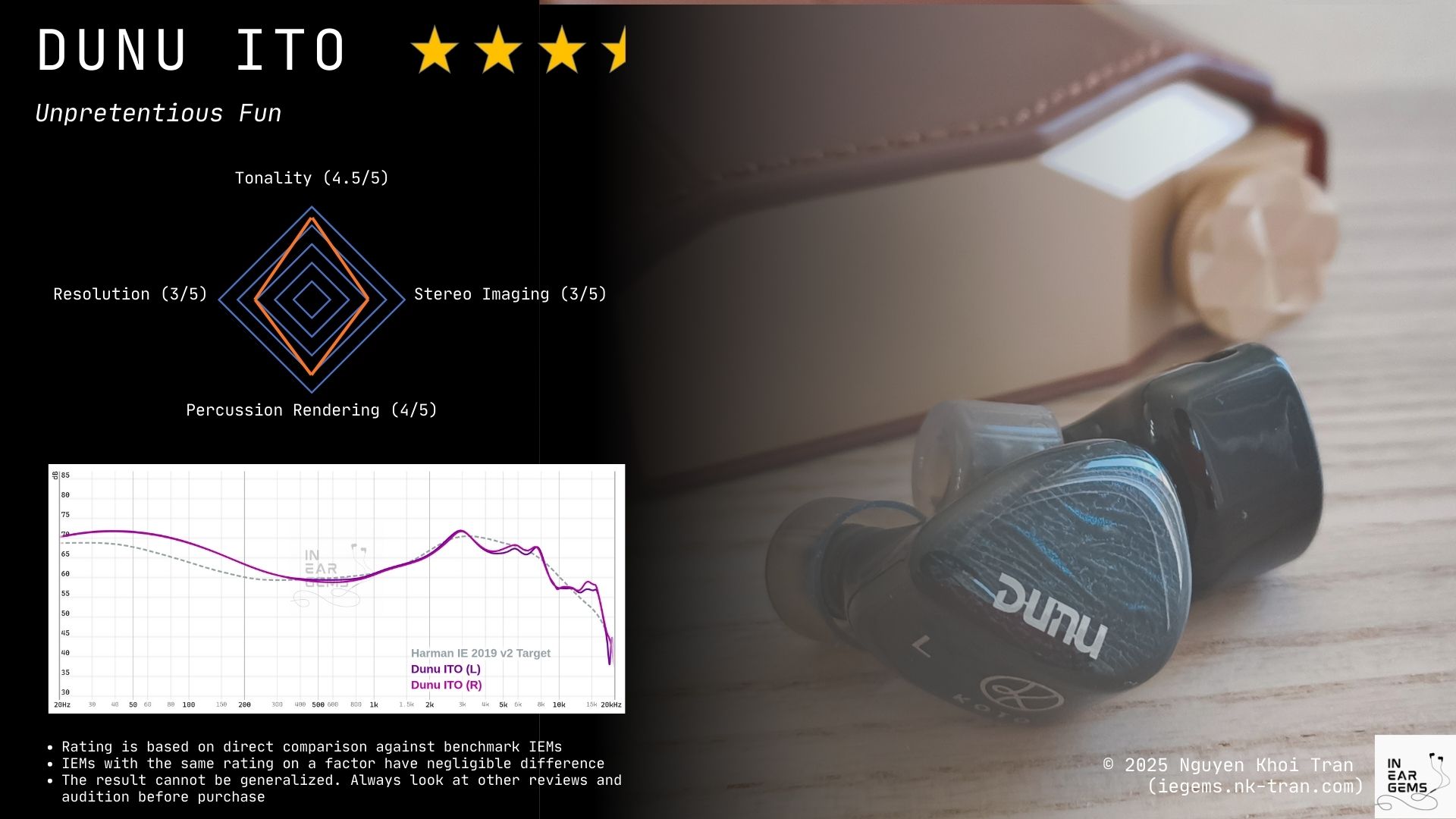
Dunu ITO - Unpretentious Fun
What’s the point of an IEM? To reproduce music as neutrally as possible, letting the recording shine through without coloration? Recent research and community efforts toward target curves like Harman, Diffuse Field, and others have brought us closer to that ideal of scientific correctness. But shouldn’t an IEM also be fun? Adding character to music without outright distorting it? Perhaps it’s time for something unpretentious—neither trying to be the pinnacle of scientific accuracy nor throwing all refinement out the window. In this spirit, let’s examine how the Dunu ITO fares.
Forewords
- What I look for in an IEM is immersion. I want to feel the orchestra around my head, track individual instruments, and hear all of their textures and details. I’m not picky about tonality, as long as it does not make the orchestra, violin, cellos, and pianos sound wrong.
- I rate IEMs within with a consistent scale from 1 (Poor) to 3 (Good) to 5 (Outstanding). An overall ranking of 3/5 or above is considered positive.
- Ranking list and measurement database are on my IEM review blog.
- The terminology for subjective impressions in this review is based on the Audio Wheel for reproduced sound defined in the technical report ITU-R BS.2399-0
- This review is based on a review sample from Hifigo (Thank you!). I have no affiliation with or financial interest in Dunu or Hifigo.
- The unit has already been launched on Hifigo web store at a price of $199.99.
General Information
The Dunu ITO was designed in collaboration with Kaji Kaji, a famous Japanese headphone reviewer. The IEM underwent five tuning revisions across six months with feedback from audiophiles at Canjam Singapore, resulting in its final tuning that aims for a bold, full-bodied sound signature optimized for rhythm-driven genres like Rock, Hip-Hop, and Electronic.
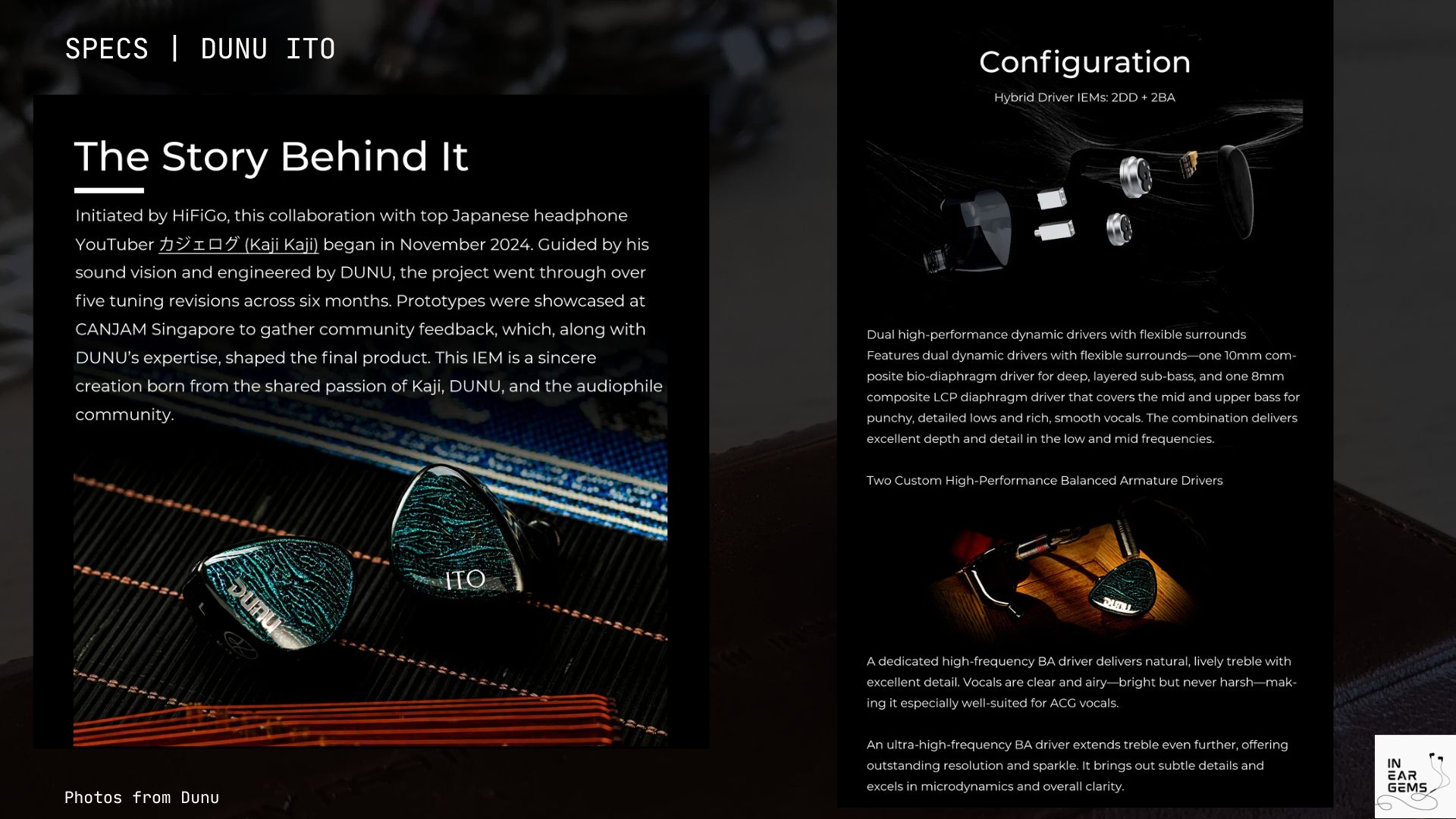
Internally, the ITO features a quad-driver hybrid configuration with 2DD+2BA setup: a 10mm composite bio-diaphragm dynamic driver, an 8mm composite LCP diaphragm dynamic driver, and two customized balanced armature drivers. This configuration allows for the dual dynamic drivers to handle deep bass and accurate mids while the independent balanced armature drivers handle high-resolution treble and ultra-high frequencies. The IEM has a frequency response range of 5Hz~40kHz with THD+N of <0.5%@1kHz. The IEM has an impedance of 37Ω@1kHz and sensitivity of 105dB/mW, making it quite easy to drive with most DAC amps while not being overly sensitive to reveal unwanted noise and hiss.
In the Box
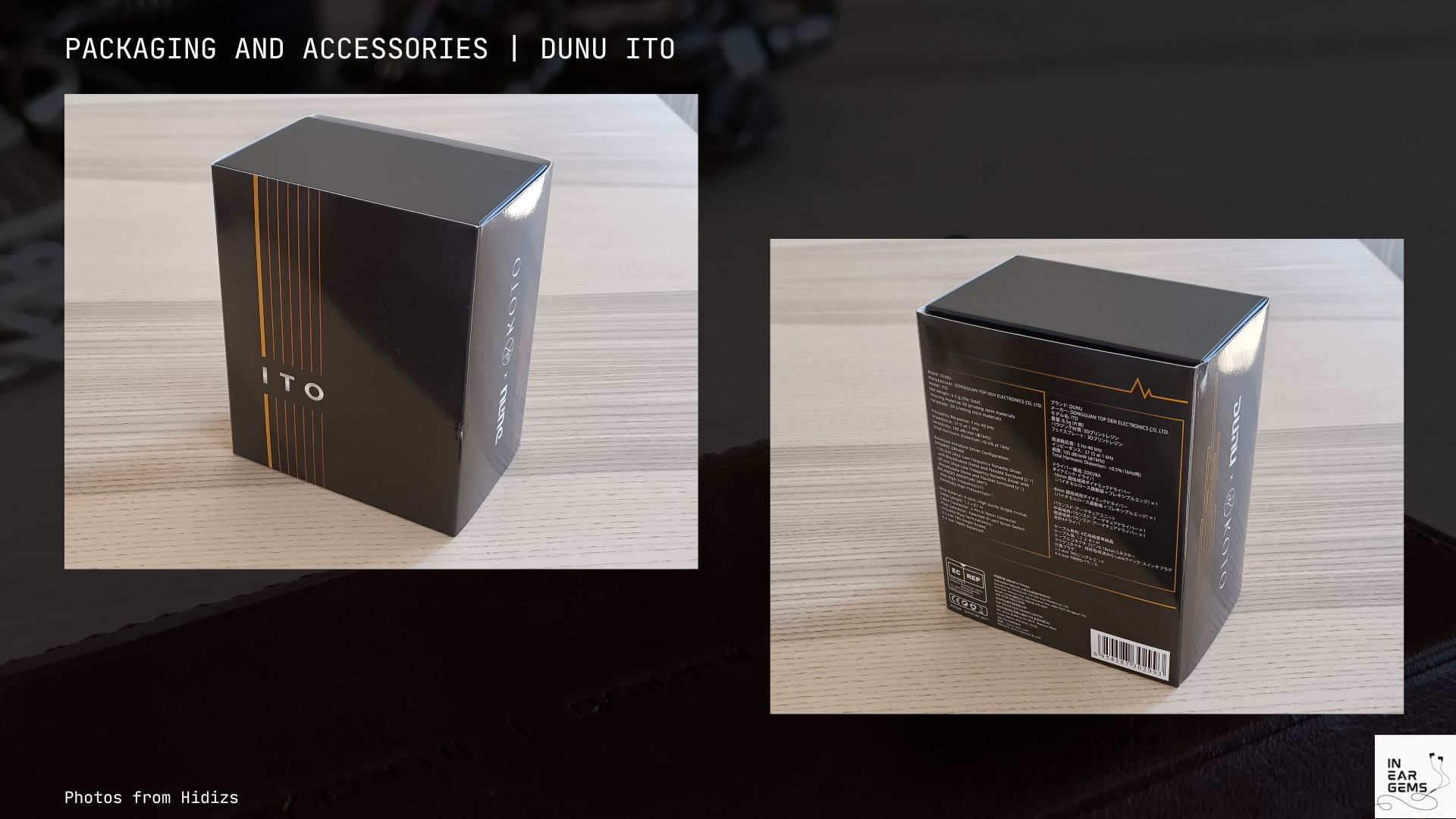
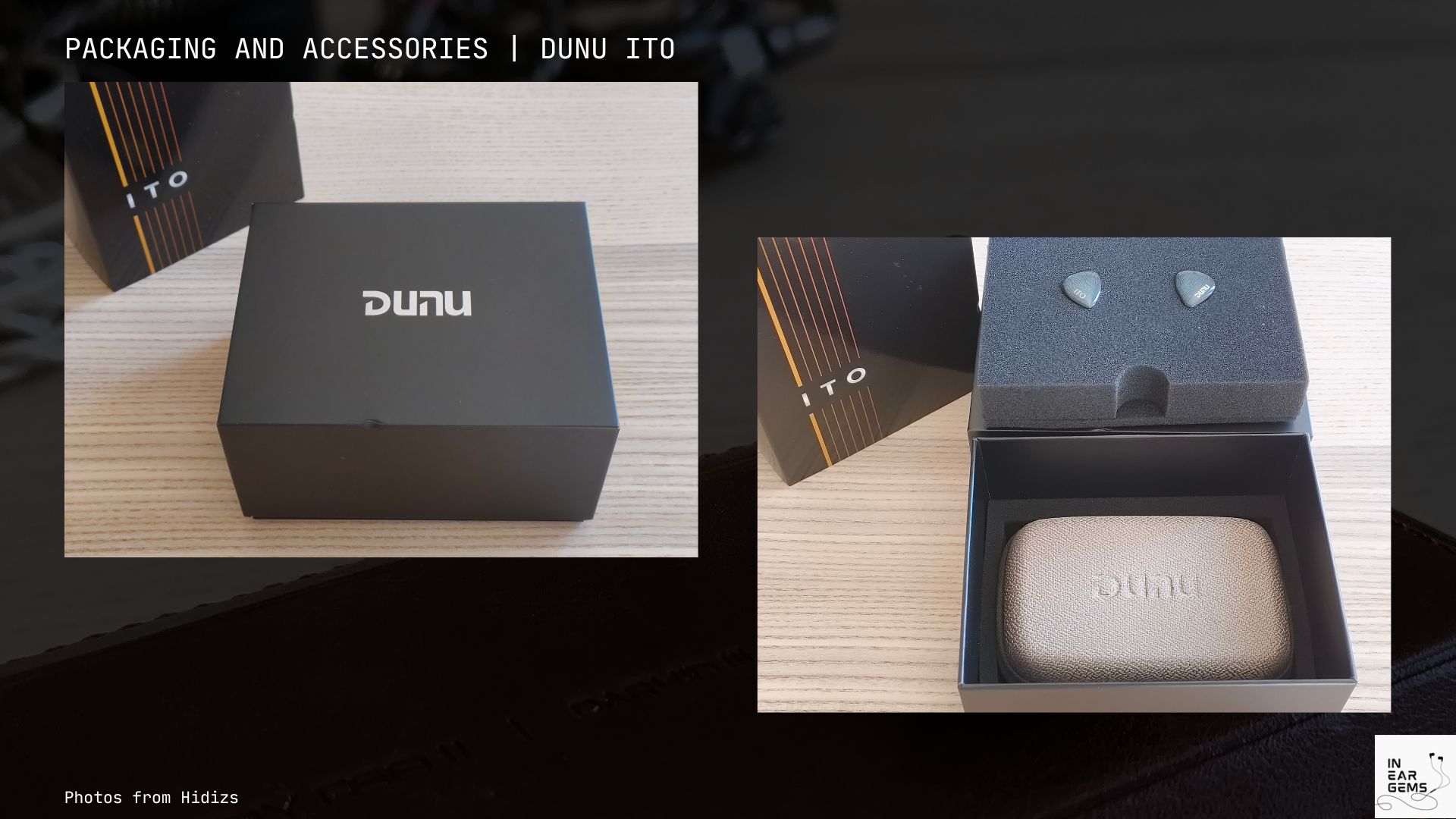
The Dunu ITO comes with a comprehensive set of accessories:
- High-purity 4-core single-crystal copper cable (22AWG Litz braided structure)
- Three types of silicone ear tips
- 3.5mm single-ended plug
- 4.4mm balanced plug
- Patented Q-Lock Quick Switch interchangeable termination system
- Carrying case
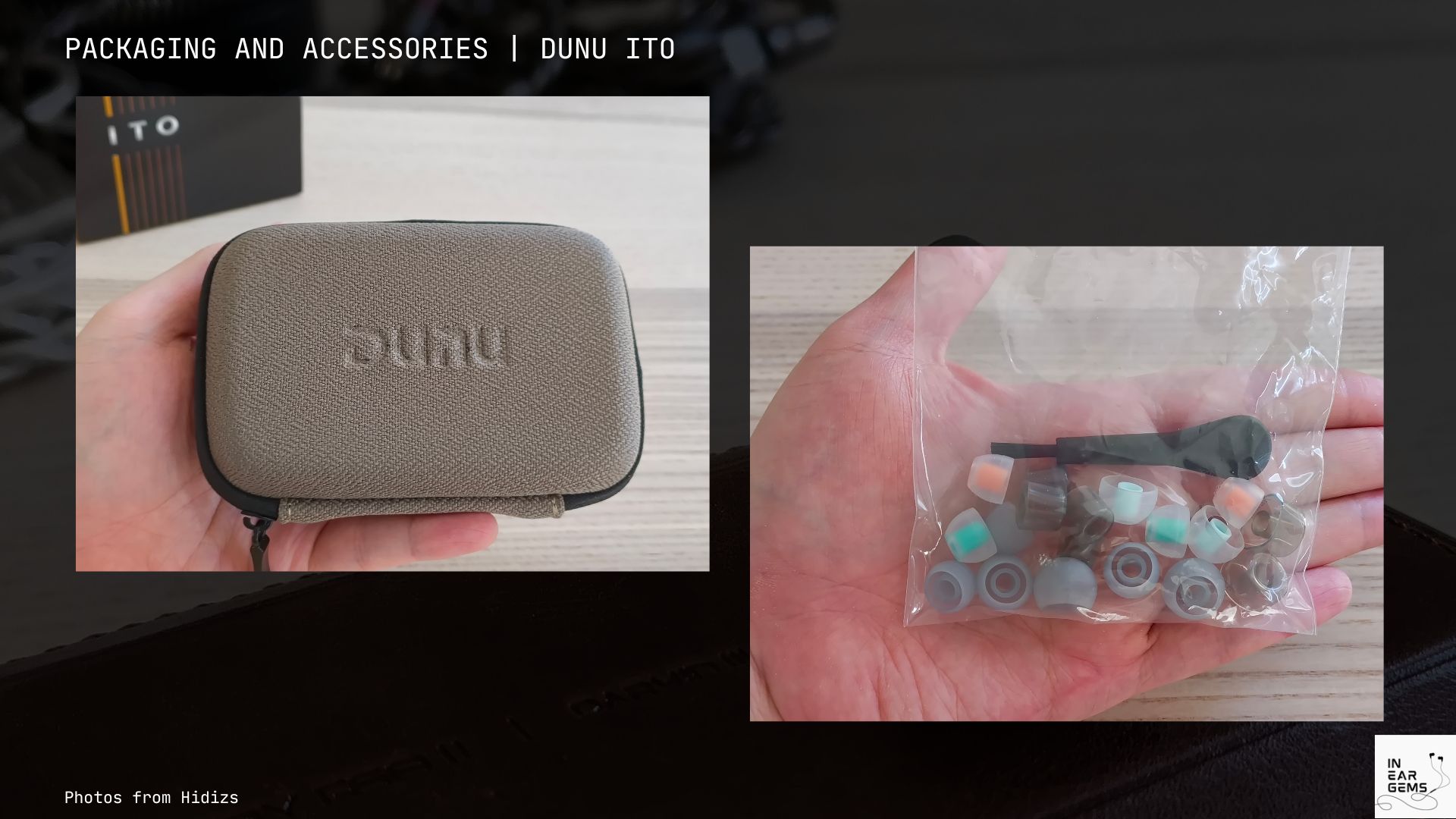
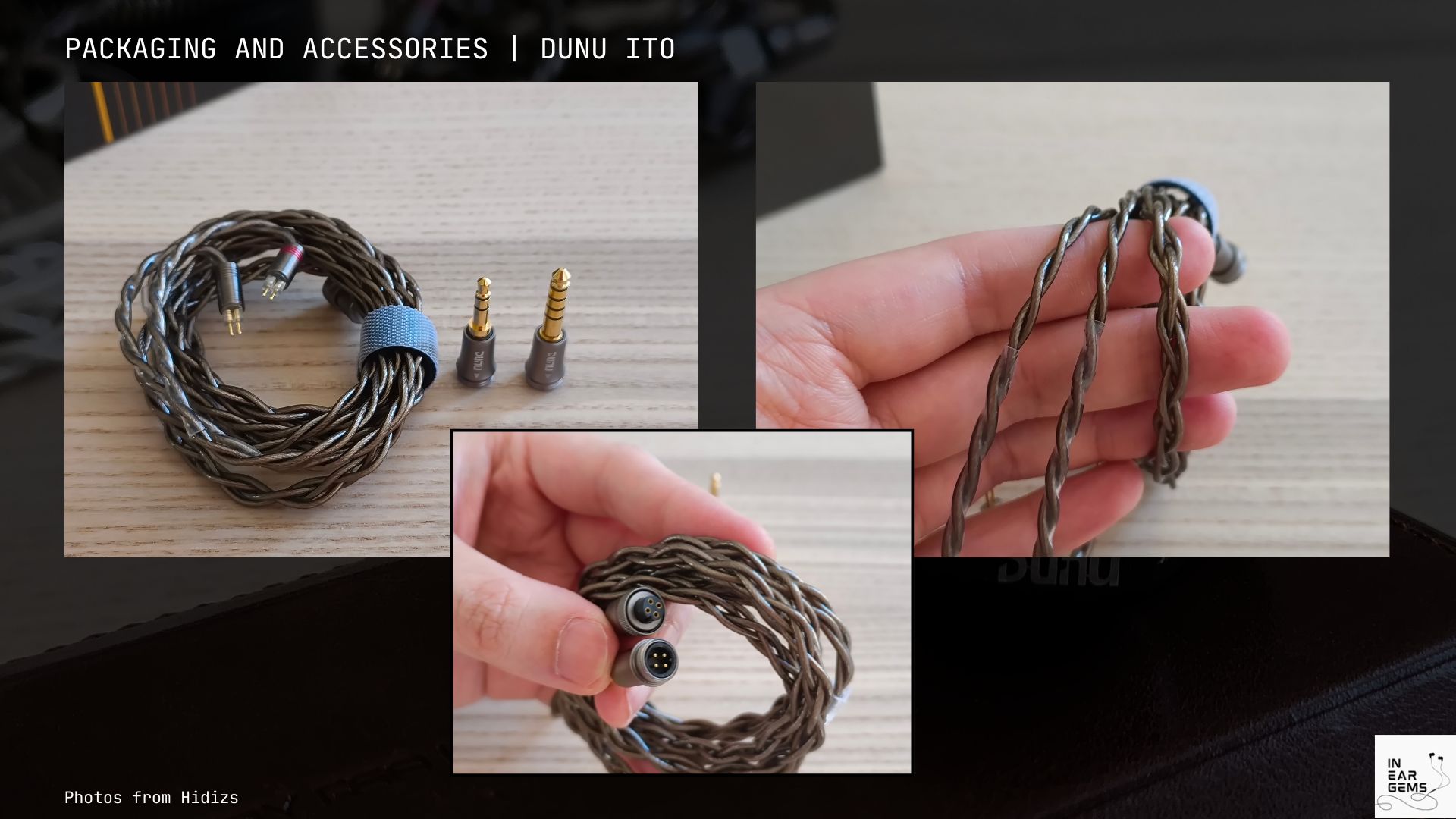
The accessories included are top-notch as is typical for Dunu products. There are plenty of items included, and they are of high quality. The included cable is quite good - it’s a little bit stiff, but not bad and does not hold memory. The included carrying case is not fancy, but it’s usable and the construction feels good.
Experience
5.1 Physical Handling
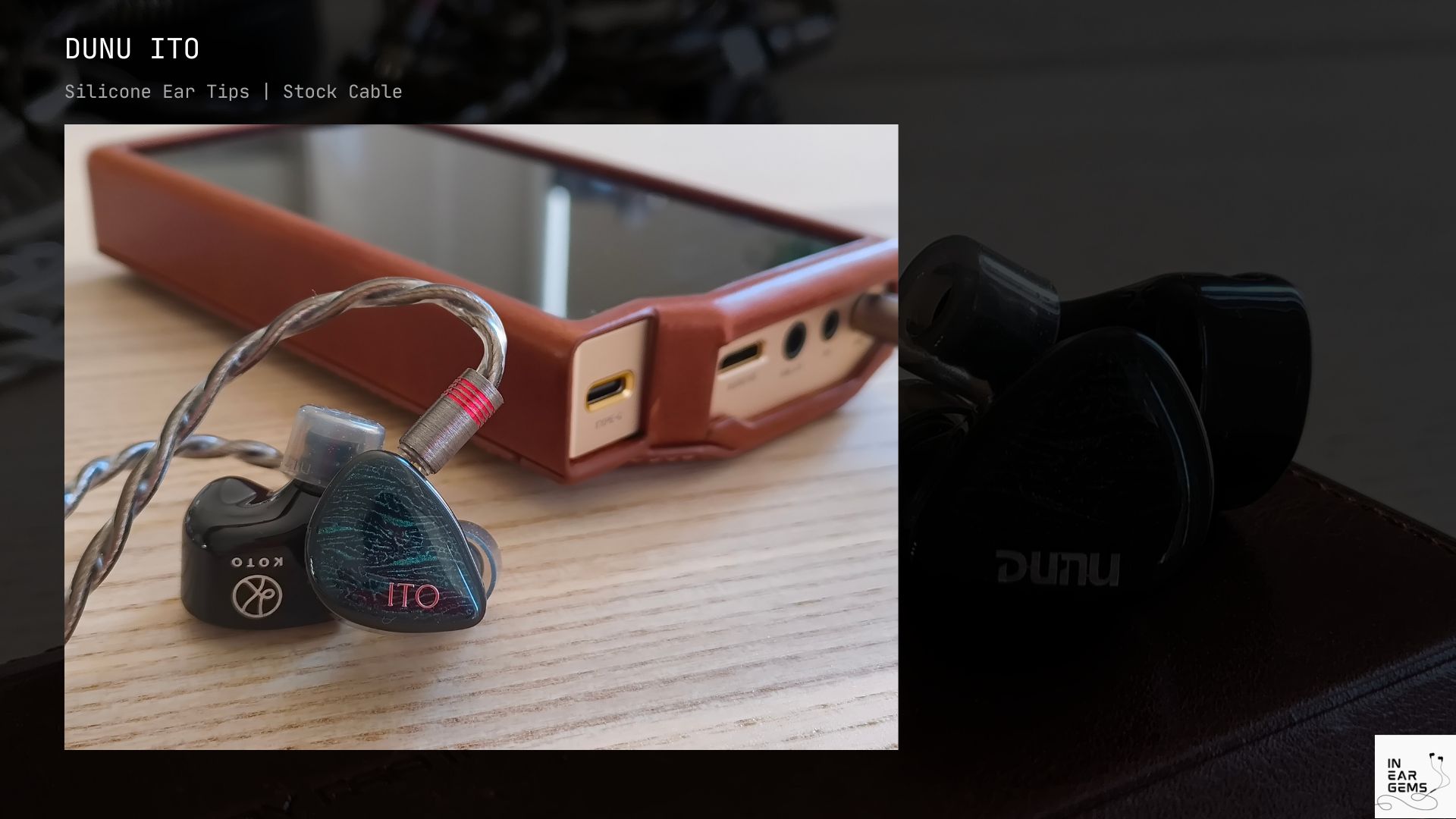
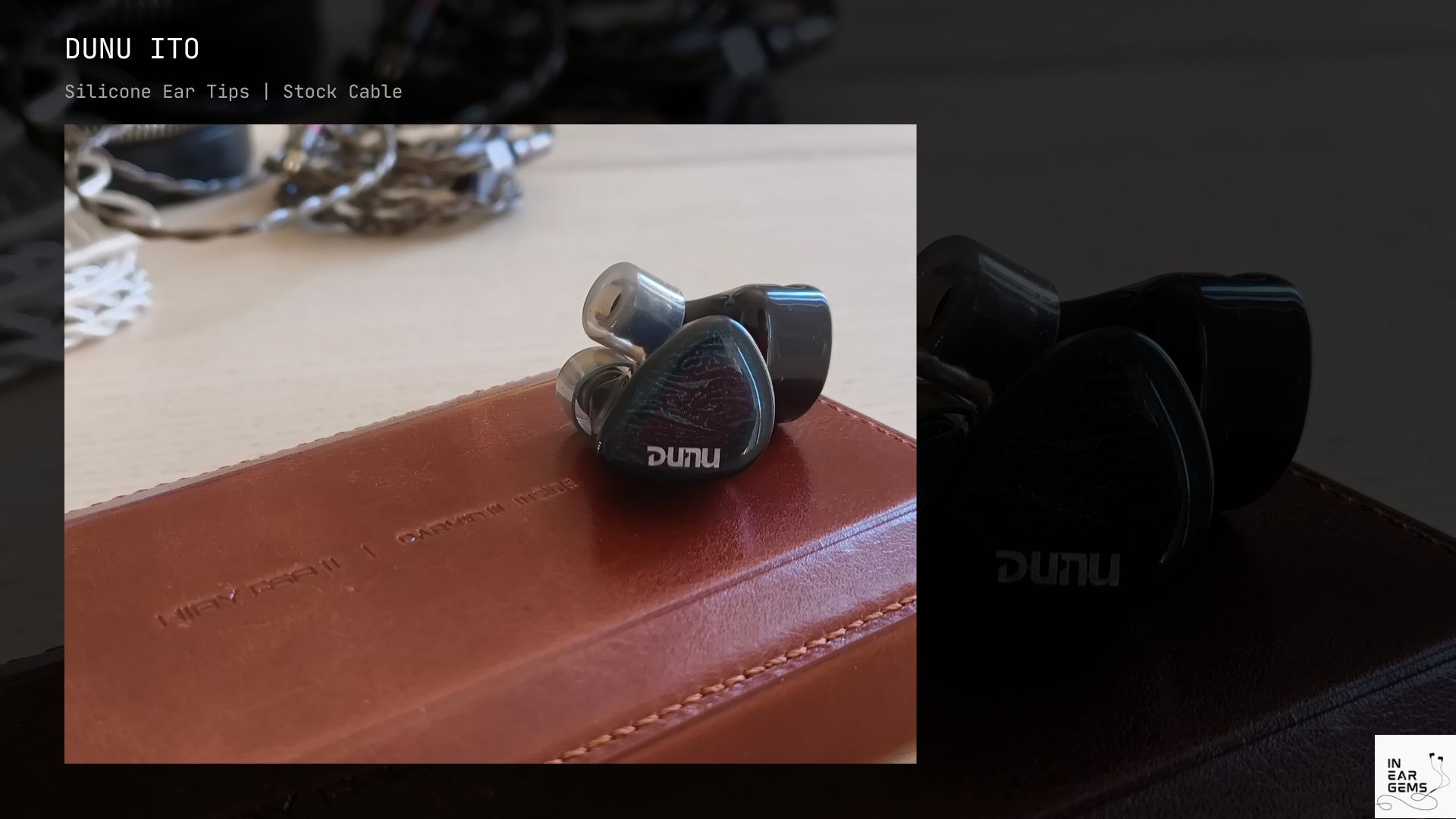
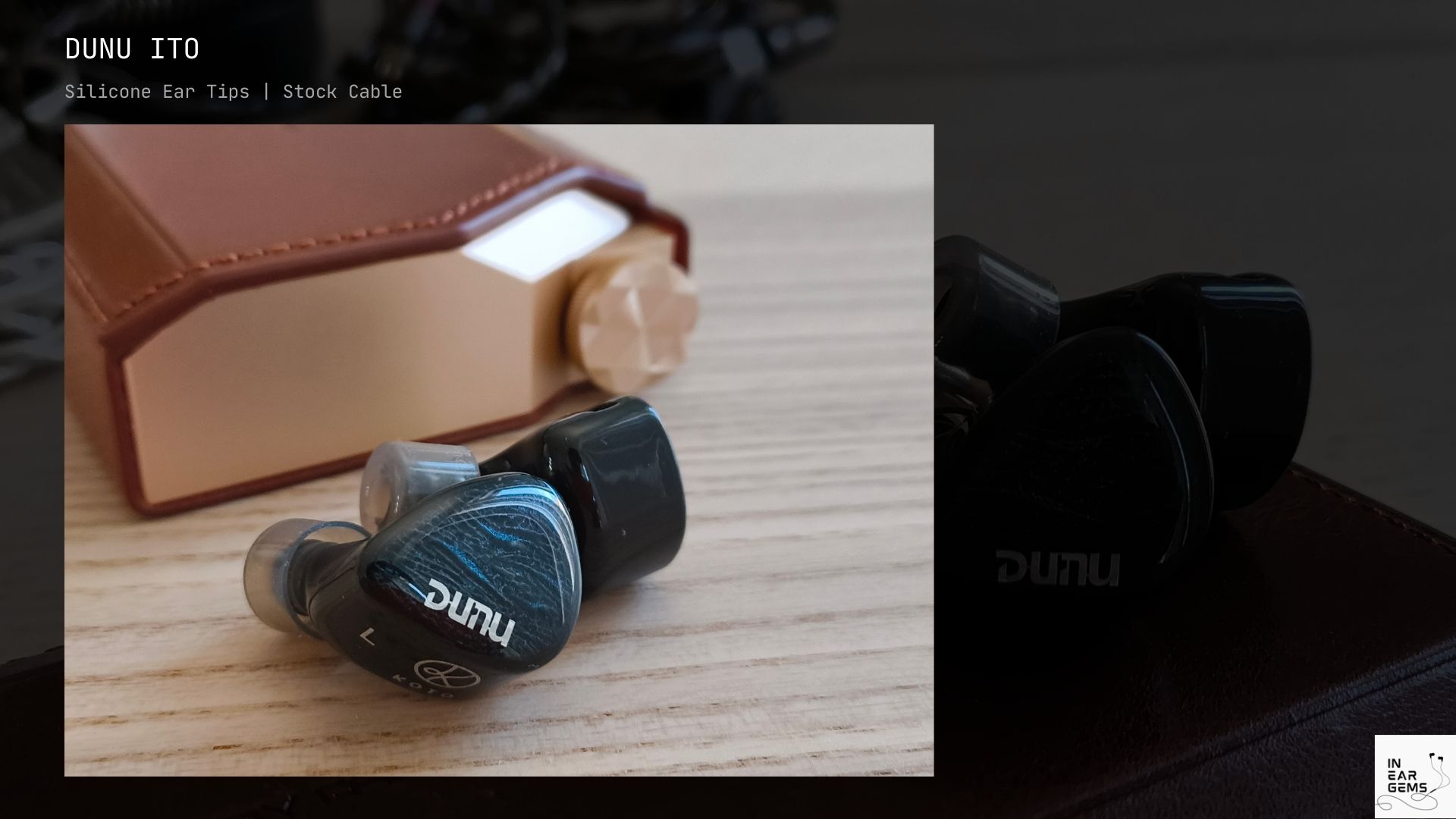
The Dunu ITO is quite comfortable to wear for extended periods. The earpieces are not large, so they don’t stretch the ear’s concha significantly, and the nozzles are not too large either. I would say it’s average in terms of fit and comfort - not terrible, but also not outstanding. The IEM provides surprisingly good noise isolation, especially when using the included S&S ear tips, which made it hard to hear sounds from the surrounding environment.
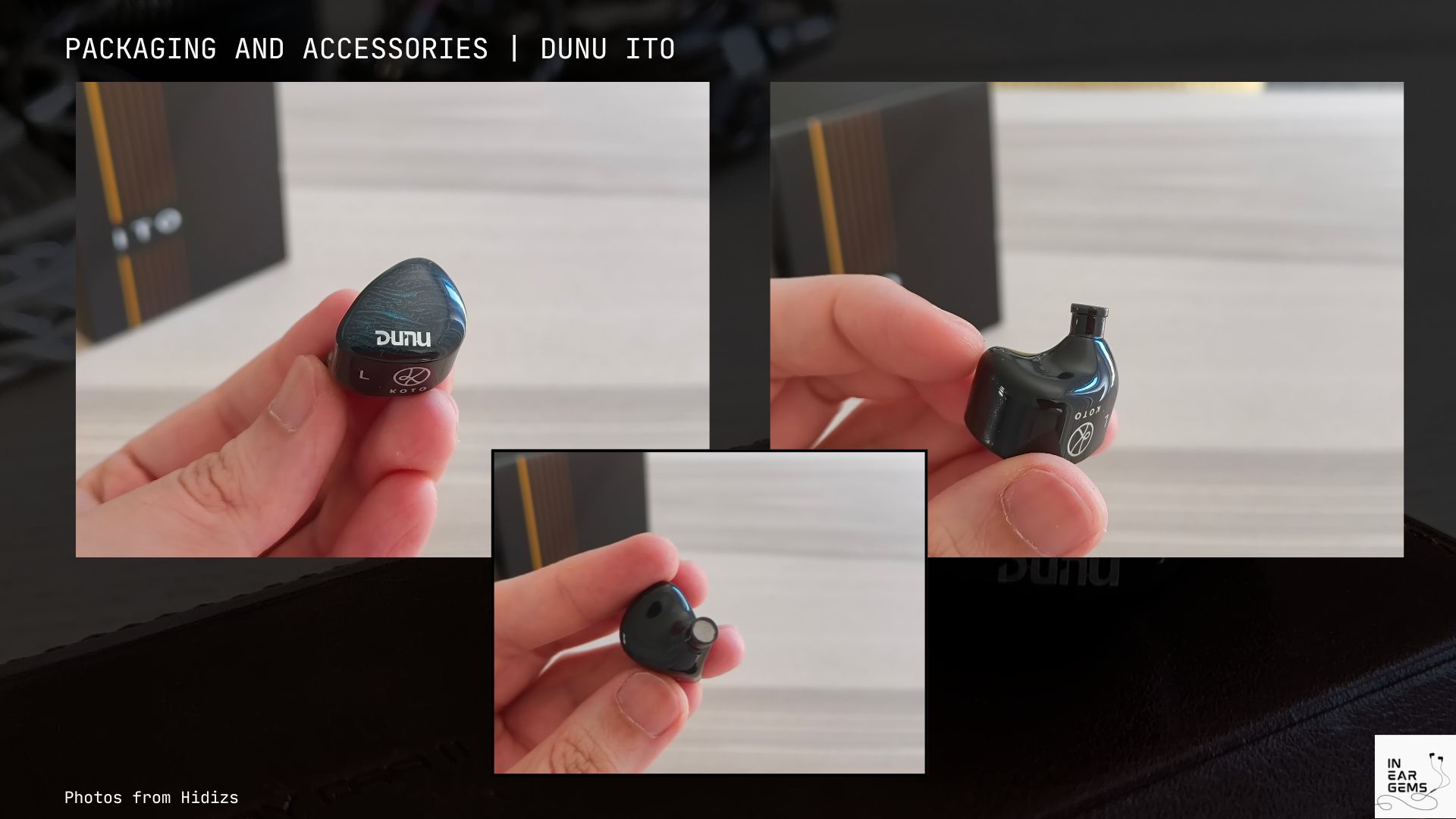
The included S&S ear tips are a good choice - they’re soft, which makes them more comfortable, and they seal surprisingly well with this IEM. The cable quality is good, as noted in the “In the Box” section, with the high-purity 4-core single-crystal copper cable having a 22AWG Litz braided structure. The cable is a little bit stiff but does not hold memory, making it manageable during use.
5.2 Sound Signature & Tonal Balance
The Dunu ITO presents a bass-focused V-shaped or even L-shaped tonal balance, with emphasis on both the bass and upper midrange regions. The overall signature is warm and full-bodied, with the bass being more prominently emphasized than the upper midrange. However, the upper midrange is also pushed forward to provide balance against the bass, creating a sound that’s engaging for rhythm-driven music. At moderate-low volume levels, the midrange tends to take a step back relative to the bass and upper midrange, but becomes more balanced at moderate to moderate-high volumes.
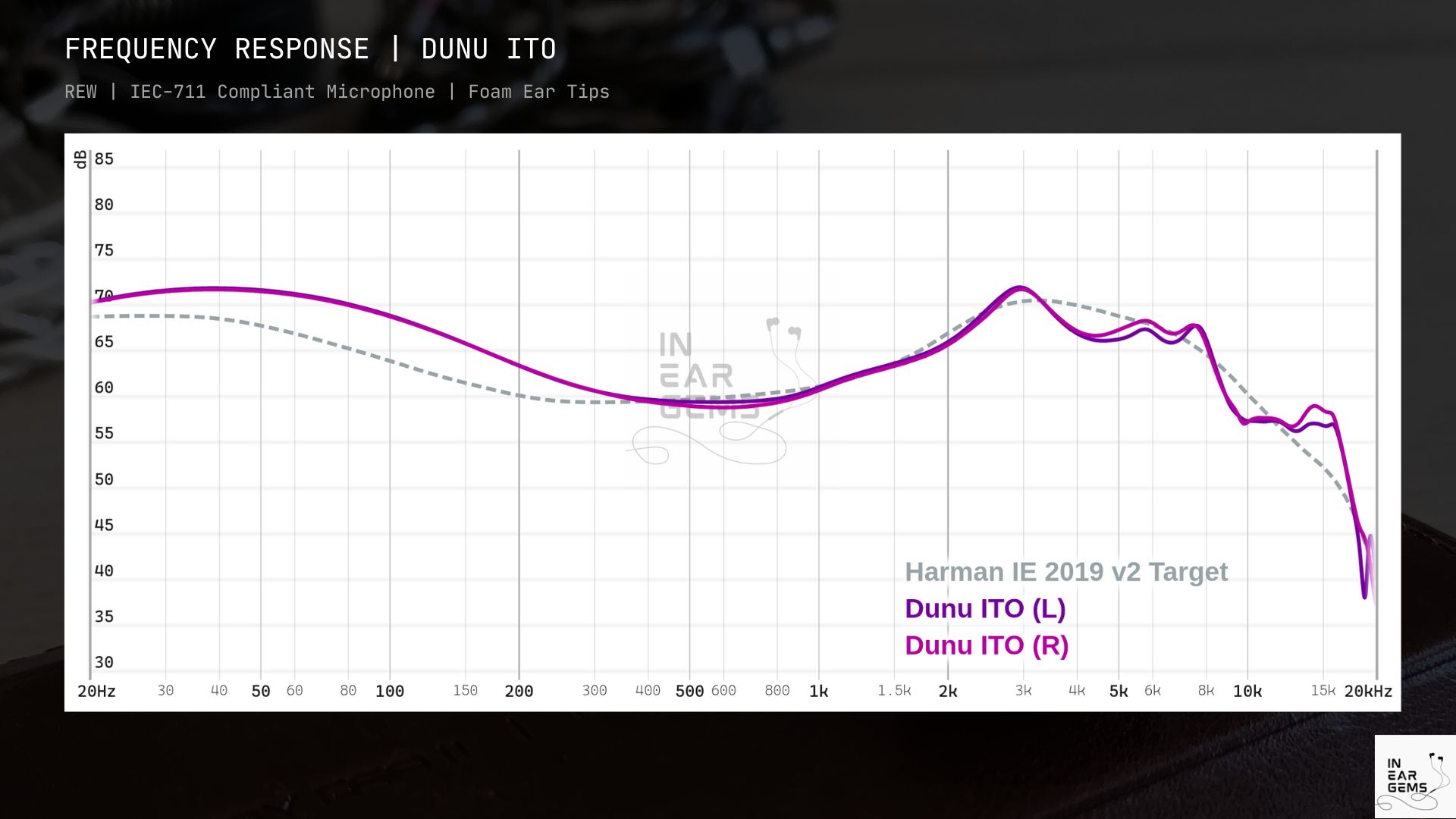
The bass presentation is prominent and well-controlled, providing a solid foundation for the mix. On “Shivers” by Ed Sheeran, the bass is emphasized but doesn’t overwhelm the mix. The midrange, while slightly recessed compared to the bass, maintains natural tonality - Ed Sheeran’s voice sounds natural without any muffle or harshness. The upper midrange emphasis helps vocals and instruments cut through the mix, as evidenced on “Playing God” by Polyphia where the guitars still manage to cut through despite the prominent bass line.
The treble is more subdued compared to the bass and upper midrange. While cymbals and hi-hats might seem less crisp than usual, they’re not completely overwhelmed by the bass. This creates a presentation that’s engaging for rhythm-driven music without being harsh or fatiguing during longer listening sessions.
The IEM handles different genres with varying degrees of success. On “Kiwi wa Boku ni Niteiru” by See-Saw, the IEM renders Chiaki Ishikawa’s voice as vibrant and clear despite the bass-forward signature. On solo acoustic pieces like “Ciaccona from Bach’s Violin Partita No. 2 in D Minor” performed by Kavakos, since there’s no prominent bass line to balance against, the upper midrange emphasis can become more noticeable relative to the mid- and lower-midrange, creating a slightly thin and bright sensation. The violin tone feels biased toward upper midrange, making it feel ever so slightly brighter than natural and slightly lacking body, though this is more of a nitpick.
The IEM shows good control with tonality across different instruments. On “Synchro BOM-BA-YE” by Tokyo Kosei Wind Orchestra, there are no timbre issues across the whole brass orchestra, and the tonal balance of treble maintains clarity without harshness, even with the bass emphasis creating great power for lower brass instruments.
Technical Performance
6.1 Resolution
The Dunu ITO’s resolution performance varies depending on the complexity of the music. With complex, overlapping recordings, the IEM’s resolution does suffer. The macro resolution (separation of elements in complex mixes) is only okay - it’s not easy to follow individual parts, but at the same time, the whole track does not feel unbearably mushy or undefined. For example, on “ABC feat. Sophia Black” by Polyphia, it’s not easy to detect the overdubs of voice lines. The track doesn’t collapse, but the ITO struggles to clearly separate all the overlapping elements.
The micro resolution (details in individual voice lines or instruments) also suffers quite a bit. It’s just not easy to hear any nuance or microdetails, so the whole presentation feels slightly overly smoothened. The micro details like the texture and subtle details such as the “bite” at the note attack are not well emphasized, particularly noticeable in the violin performance on “Ciaccona from Bach’s Violin Partita No. 2 in D Minor” performed by Kavakos.
ITO’s resolution is okay with less complex music, where the fewer elements allow the presentation to maintain clarity without being overwhelmed by the limitations in macro and micro resolution.

6.2 Soundstage & Imaging
The Dunu ITO creates a soundstage that can project quite large and out-of-head if the track provides the right cues. For example, on “Original Sound Effect Track - Memory from Gundam Seed Destiny OST album,” the brass section at the beginning sounds like it comes from outside, to the front right of my head. This illusion persists across the entire track, making it feel like I’m sitting in the middle with most sound within my head, but some elements from speakers from outside.
The spatial positioning (ability to pinpoint where the sound is within the virtual sound field) is only average. I can tell the overall direction, but it’s not easy to pinpoint exact position or distance. The overall presentation is like a large “cloud” of sound. On “Shadow of Baar Dau,” the presentation makes me think of a “cloud of sound” within and around the head, which creates great sense of ambience but not very precise.
The imaging quality is good (Blessing 2 IEM level) on my scale from good (Blessing 2) to great (CFA Andromeda 2020) to outstanding (AFUL Cantor). I rate it as good because the sense of depth and ambience is noticeably better than the Blessing 2, but the relatively cloudy presentation held the spatial performance back a little bit. The presentation is a bit cloudy, making it somewhat challenging to pinpoint exact positions of sounds with precision, which affects its performance in FPS games.
6.3 Bass Performance
The Dunu ITO excels with its bass-forward presentation, particularly in rhythm-driven genres. The amount of bass is prominent, though not overwhelmingly so. The bass line carried by bass guitar and drums is very prominent in the mix, yet other instruments are still able to cut through thanks to the emphasis in the upper midrange, as demonstrated on “Playing God by Polyphia.” The ability of this IEM to control that bass quality is also quite decent. On “A Reckoning in Blood from The Ghost of Tsushima OST,” the bass drums from 2:50 are full of power yet remain controlled, leading to a powerful presentation. The actual bass, such as the low pitch rumble right from the beginning of the track, is also well presented.
The IEM conveys “epic” bass lines with impressive power and control. The bass quality is quite nice, and it’s definitely one of the better ones in reproducing the texture and resonance of cellos, as noted on “Now We Are Free by 2CELLOS.” The bass emphasis creates great power for lower brass instruments, as heard on “Synchro BOM-BA-YE by Tokyo Kosei Wind Orchestra.”
However, it does not have the most texture and control either. There is some mushing over nuances and textures in the low-pitch rumble as well as in the bass portion (the sustain and decay) of drum hits. The control of the bass could be more “grippy” as evidenced on “Strength of a Thousand Men (Live) by Two Steps from Hell,” where the bass is quite prominent but could have better texture and control. Overall, still good bass and dynamic performance.
Conclusions
The Dunu ITO represents a refreshing departure from the pursuit of clinical neutrality in IEM design. Rather than trying to be a transparent window to the recording, it commits to its fun, engaging signature and executes it well. It’s an IEM that doesn’t apologize for making music enjoyable, even if that means stepping away from sterile targets that many other IEMs chase.
The IEM succeeds as a rhythm-driven music companion with its V-shaped, bass-forward signature. The bass is prominent but controlled, the midrange is natural and engaging, and the treble, while more subdued, still provides enough air to prevent the presentation from becoming claustrophobic. Despite its obvious bass emphasis, the ITO remains well-tuned across various genres.
However, the IEM has limitations. The resolution suffers with complex, congested passages. The soundstage, while large and immersive, is somewhat “cloudy,” making precise imaging challenging. The bass, while powerful and controlled, could offer better texture and grip.
For its price point of $199.99, the Dunu ITO offers good value for those who prefer a fun, bass-forward signature that doesn’t sacrifice overall musicality. It’s particularly suitable for fans of Rock, Hip-Hop, Electronic, and other rhythm-driven genres. It’s for those who want something unpretentious and honest in their audio experience.
Based on my rating scale, I would rate the Dunu ITO as Good (3.5/5), recognizing it as a well-executed product that commits to its intended character and delivers on its promise of unpretentious fun.